
Translated material
NATO approved a large -scale reform program
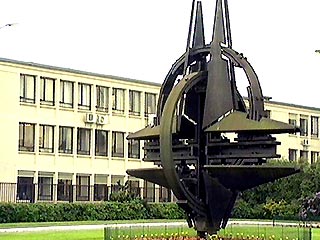
The defense ministers of NATO countries approved on Thursday a program of large -scale reforms of the Alliance Military Organization. The Alliance decided to get rid of the legacy of the Cold War - the military structure will be radically simplified to better comply with modern realities.
In particular, the ministers at a meeting in Brussels agreed to reduce the number of military bases of the Alliance by 40%. In addition, according to ITAR-TASS, the total number of headquarters in the United NATO forces will be reduced in the coming years from twenty to eleven. According to the representative of the headquarters of the alliance, in the midst of the Cold War the number of headquarters and command centers of NATO reached 78.
A decision was made to transfer all operational issues to the maintenance of one strategic command in Mons (Belgium). The second strategic command in Norfolk (north-east of the United States) will be assigned the tasks of further implementation of military reform, training in command staff, and increase the operational compatibility of the alliance forces.
At the operational level, two headquarters of the combined operational-tactical groups of ground-based base (in Italy and the Netherlands) will be valid. A smaller permanent headquarters (in Portugal) is also preserved, which will specialize in the preparation of naval operations.
At the tactical level, out of thirteen, six headquarters are preserved, designed to manage large mixed compounds.
The funds exempted by reducing the number of headquarters and command centers will be aimed at eliminating current spaces in the military-technical equipment of NATO forces, the alliance is indicated in the commander.
Sergey Ivanov flew to Brussels
Russian Defense Minister Sergei Ivanov flew on Thursday in Brussels, where on Friday will take part in a meeting of the Russia-NATO Council at the level of heads of military departments "Twenty".
According to ITAR-TASS, the meeting participants will discuss the issues of the interaction of Russia and NATO countries in the fight against international terrorism, "joint activities in the field of non-strategic missile defense, as well as other problems that have a direct impact on the process of forming Euro-Atlantic Security."
In Brussels, Ivanov’s meetings are planned with the heads of military departments of the United States, Great Britain and Belgium.