
Translated material
The zipper is 110 years old
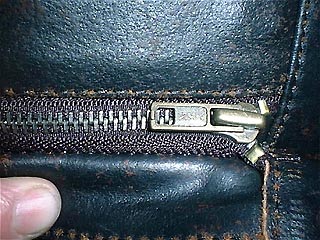
Everyone is familiar with the "lightning". Surely each of us has at least one "lightning" on clothes or on a bag. It is easy to use, although it happens that it sees at the most inopportune moment. Without it, we can no longer imagine our daily life. However, few people know that on Tuesday (August 19), our little "toothy assistant" marks 110 years, reports DPA.
Invented "Lightning" American engineer Whitecomb Leonard Jadson, who in 1893 registered a patent for a new invention. In the same year, he presented his brainchild at a worldwide exhibition in Chicago. A year later, together with his partner, Lewsi Waker Jadson founded in the city of Hoboken in a suburbs of New York, Walker Universal Fastener Company, the world's first lightning-type factory. However, the success did not come to the rhinestone - the "lightning" was still far from perfect, often seized and unfastened.
The breakthrough occurred only 20 years later. The American engineer of Swedish origin, Gideon Zundbek improved Jadson’s invention and gave “lightning” the kind that she has preserved so far: two flexible strips of fabric with metal or plastic to the edges, which are pressed against each other with a wedge.
Soon, the victorious procession was already impossible to restrain an extremely practical fastener.
How many "lightning" is now produced in the world annually, no one knows. Experts believe that the account is hundreds of millions. Approximately 80 percent of "lightning" make low -paying workers in Asia, Africa and South America - often these are children who are forced to work for a non -piece -based basis for large textile factories.
In industrialized countries, the number of fasteners manufactured daily is also measured by thousands. They are used in various kinds of textiles. According to the Union of Connecting and Fasteners (VBT), last year German industry produced metal and plastic fasteners worth about 80 million euros.
Meanwhile, "lightning" has long been used not only in pants, jackets and other clothing items. In recent years, many famous designers have again discovered a zipper-chip. This practical household item penetrated even into hairdressers: Viennese stylist Michael Danler, for example, uses it as a kind of hair accessory to maintain the form of new -fangled hairstyles.