
Translated material
Lukashenko is in no hurry to enter a ruble in Belarus
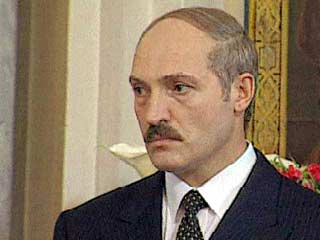
The Belarusian President Alexander Lukashenko refused to force foreign exchange integration with Russia. In response to the call of Vladimir Putin, to immediately sign an agreement on the introduction of a single currency Lukashenko said that first it was necessary to document a single economic space and sign a constitutional act.
At a meeting with the chairman of the National Bank of Belarus, Peter Prokopovich, who reported to the president on the receipt of the draft agreement from Moscow, Lukashenko said that the introduction of the Russian ruble should be linked to the implementation of other agreements stipulated by the agreement on the creation of a union state. "This applies to the creation of a single economic space and equal conditions for business entities and the peoples of the two countries, the adoption of the constitutional act of the Union State, and the implementation of other events that have not yet been implemented," the Belarusian leader said.
According to Vedomosti , this is very reminiscent of the story with the introduction of a non -cash Russian ruble in the Republic. “Technically, we were ready to introduce it from July 1, but recently the president returned the draft decree on this to the economic departments about this with the proposal to weigh all the pros and cons,” says the official of the Belarusian National Bank.
A source in the President of Russia says that the Kremlin does not regard Lukashenko’s words as a negative answer to Putin’s message, and the message itself should not be perceived as an ultimatum. "Work with Belarus will continue, including in those areas that the Belarusian president said," the source said. But the Deputy Prime Minister of the Russian government Alexei Kudrin at the end of July told Vedomosti that the ruble agreement should be signed as quickly as possible. Otherwise, according to Kudrin, go to the ruble from January 1, 2005, as the presidents agreed earlier, Belarus will not have time for technical reasons.
The Secretary of State of the Union State Pavel Borodin still hopes that a single currency will be introduced, but admits that this can take a lot of time. "Now is the wrong time, as in the USSR, when the Politburo resolved the issue in one day. Now the economy runs a ball and has a lot to agree on," says Borodin.
The chief economist of the Three Dialogue Evgeny Gavrilenkov believes that the discussion of a single currency is a political shade, so to discuss the terms of introducing a single currency prematurely before resolving all political issues. In general, shifts on the introduction of a single currency are difficult to expect without achieving political consensus.