
Translated material
A new Tungusky meteorite flies to the ground
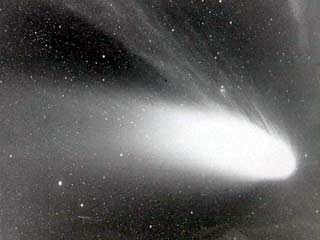
In November, earthlings are waiting for a complete lunar eclipse, "star rain" and the approach of a comet, one of the fragments of which, according to scientists, was a Tungusky meteorite. This was told by ITAR-TASS by the leading researcher at the Institute of Astronomy of the Russian Academy of Sciences Alexander Bagrov.
According to him, at the beginning of the month of the peak of activity, a meteor stream Tauride from the constellation Taurus will reach the peak stream. "This is far from the most intense meteorine stream, but in the absence of cloudiness it will be possible to enjoy the beauty of the phenomenon," said astronomer.
In mid -November, the Earth will enter the phase of the activity of the Leonid meteor stream, famous for dense "star rains", when thousands of meteors per hour fall to Earth. “It is mentioned in ancient chronicles,” Bagrov noted. The most intense starfalls this year are expected in the pre -through hours on November 13 and 19.
On the night of November 9 , a full lunar eclipse can be observed throughout Russia. It will begin at 2:33 Moscow time, the completely lunar disk will disappear from the sky at 4:18 Moscow time.
On November 17, the fragmentsof the coma Enke will come closer to the ground, but only astronomers or the owners of telescopes will be able to see them. In 1786, when a comet was opened, it could be observed with a naked eye. But soon she fell apart, some scientists believe that one of the fragments of Comet Enke in 1908 exploded over the Tunguska taiga.
The secret of the Tunguska meteorite
The Tunguska meteorite is a large celestial body meeting with the ground. The clash occurred on June 30, 1908 in the deaf Siberian taiga in the area of the Podkamennaya Tunguska (Krasnoyarsk Territory). Early in the morning, at 7 hours 15 minutes of local time, a ball of fire flew across the sky - a car . He was observed by many residents of Eastern Siberia. The flight of this unusual celestial body was accompanied by a sound reminiscent of the peals of thunder. The subsequent explosion caused a concussion, which was felt in numerous points on an area of over millions of square kilometers between Yenisei, Lena and Baikal.
The first studies of the Tunguska phenomenon began only in the 20s of the last century, when, headed by L.A. Four expeditions organized by the USSR Academy of Sciences were sent to the place of the fall. It was found that around the place of the fall of the Tunguska meteorite, the forest was laid by a fan from the center, and in the center part of the trees remained standing in the bud, but without branches. Most of the forest was burned.
Subsequent expeditions (there were about 20 of them) found that the area of the fallen forest has a characteristic form of a “butterfly”, the axis of the symmetry of which coincides well with the projection of the meteorite flight from the east-yugo-east to the west-north-west.
The total area of the fallen forest is about 2200 square kilometers. Computer calculations showed that the angle of inclination of the trajectory was 30-40 degrees, and the explosion did not occur when the body collides with the earth's surface, but even before that in the air, at an altitude of 5-10 km. At many geophysical stations of Europe, Asia and America, air waves were observed, which reached the scene of the explosion, and at some seismic stations an earthquake was registered. It is also interesting that in the territory from the Yenisei to the Atlantic, the night sky after the fall of the meteorite was extremely bright (it was possible to read a newspaper without artificial lighting at midnight). In California, a sharp decrease in the transparency of the atmosphere in July-August 1908 was also noticed.
The explosion energy assessment leads to a value exceeding the energy of the Arizona meteorite, in which a huge meteorite crater with a diameter of 1200 m was formed. However, no meteorite crater was found at the site of the fall of the Tungusky meteorite. This is due to the fact that the explosion occurred even before the contact of the celestial body with the earth's surface.
Although the study of the mechanism of the explosion of the Tungusky meteorite is not yet completed, most scientists believe that this body, which had great kinetic energy, had a low density (below the density of water), small strength and high volatility, which led to its rapid destruction and evaporation as a result of sharp braking in the lower dense layers of the atmosphere. Apparently, it was a comet, consisting of frozen water and gases in the form of "snow", with interspersed with refractory particles. The comet hypothesis of the meteorite was proposed by L.A. Kulik and then developed by academician V.G. Fesenkov based on modern data on the nature of comets. According to him, the mass of the Tunguska meteorite is at least one million tons, and the speed is 30-40 km/s .
In the area of the Tunguska catastrophe in the soil, microscopic silicate and magnetite balls were found, outwardly similar to meteorite dust, and representing the substance of the cow’s nucleus sprayed during the explosion. The night glow could be associated with the scattering of sunlight with the dusty tail of the comet in the upper layers of the atmosphere.
The Tunguska meteorite, or, as it is often called in the scientific literature, the Tunguska fall, has not yet been studied. Some research results still require their explanation, although they do not contradict the comet hypothesis. Nevertheless, over the past decades, other hypotheses have been proposed that have not been confirmed in detailed studies.
According to one of them, the Tunguska meteorite consisted of "anti -ity". The explosion observed during the fall of the Tunguska meteorite is the result of the interaction of the "substance" of the Earth with the "antisatterness" of the meteorite, which is accompanied by the release of a huge amount of energy. However, the assumption of such a nuclear explosion contradicts the facts that in the area of the Tunguska fall there is no increased radioactivity, that there are no radioactive elements in the rocks that would have to be if there really were a nuclear explosion.
The hypothesis was also proposed that the Tungusky meteorite was a microscopic black hole, which entered the ground in the Tunguska taiga, pierced it through and left the land in the Atlantic Ocean. However, the phenomena that should have occurred at such an event (not to mention the possibility of the existence of black holes of small mass) - a blue glow, an elongated form fell out of the forest, the lack of loss of mass and others - contradict the facts observed during the Tunguska fall. Thus, this hypothesis turned out to be insolvent.