
Translated material
Downting Dauning Street on Iraq was the result of the struggle of various British intelligence structures
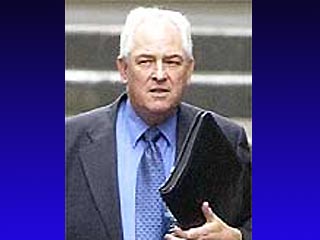
While British Prime Minister Tony Blair began on the eve of the investigation of pre -war intelligence failures , the former leading specialist of the Ministry of Defense of Mass destruction Brian Jones said that the Dauning Street dossier is a key point for the conviction of society in the need for war - "misleading the chemical and biological combat effectiveness of Iraq."
Jones, who, before retiring last year, headed the military intelligence department (DIS), the department of nuclear, chemical and biological weapons, claims that experts did not succeed in their attempts to ensure that their points of view are reflected, writes on Wednesday (translation of the article on the website inopressa.ru ).
Brayn Jones, who is expected to be the main witness in a new investigation, claims: "In my opinion, in the preparation of a dossier in September 2002, intelligence analysts from DIS won, and as a result there was a document that misleading about the capabilities of Iraq."
He calls on the Prime Minister to betray the publicity intelligence data, on the basis of which the government claimed that Iraq actively produces chemical weapons and could start a chemical attack 45 minutes after receiving the order. Jones "very doubt" that one of the specialists in chemical and biological weapons saw intelligence reports.
Last week, Daunning Street rejoiced when Lord Hatton considered the statements of the journalist of the Air Force television company Andrew Gilligan that the dossier was “embellished”, but Jones’s statements support the BBC statement and others that the dossiers did not take into account the fears of intelligence representatives.
Being aware of the American investigation related to the war, Blair said that the Investigative Committee will consider the "collection, analysis and use of intelligence" in the UK before the conflict in Iraq. Meetings of a committee of five people, chaired by Lord Batler, will be held in a confidentiality atmosphere. Liberal democrats refused to support the investigation, saying that its spectrum is not wide enough.
Jones was precisely the person whose decision to testify Naekton’s commission, since he said that he filed a complaint about the dossier official. The government tried to submit his complaints as part of the normal process of internal “discussions” in DIS and stated that other structures of the intelligence community are able to better assess the reliability of the statements about 45-minute readiness and the production of chemical weapons.
But today Jones shows that he was not alone, and states that all military intelligence officers, the best British analysts, in the field of weapons of mass destruction, agree that these statements should be “challenged”. Moreover, the United Intelligence Committee (JIC), which allowed to include controversial statements in the dossier, does not have the experience necessary to make a competent judgment on this issue.
Jones makes it clear that John Scarlett, heading JIC, is personal responsibility for including disputed statements in a brief presentation of the dossier, which was used to justify the war in Iraq. It was Scarlett's estimates that allowed Alistair Campbell to “turn the probability into confidence” in Blair's preface to the document, adds Jones.
He says that back in the days of government dossier in September 2002 he foresaw that there would be no large arsenals of weapons of mass destruction. He filed a complaint in the official order so that he and other experts would not be made "scapegoats" in case of failure.
In his article, Jones warns that intelligence analysts cannot be blamed for the lack of significant finds in Iraq, and emphasizes that the “leadership of the intelligence community”, the head of the Mi-6 and Mi-5 and John Scarlett are responsible for the dossier.
The Great British government on Tuesday finally gave an answer to the report of the intelligence and security committee prepared in the fall of last year regarding the work of intelligence on the eve of the war. The government for the first time admitted that it “understands the grounds” for criticizing the committee on the fact that the statements of 45-minute readiness made in the dossier “allowed discrepancies”, in particular, regarding the installation of weapons of mass destruction on a distant radius missile. But the government said that this statement did not connect with ballistic missiles.
Powell, perhaps, would not support the invasion of Iraq, knowing that Hussein does not have weapons of mass destruction
US Secretary of State Colin Powell said in an interview with The Washington Post on Tuesday that he might not support a military action against Iraq if he knew that Saddam Hussein had no mass destruction weapons. With his statement, Powell put in the difficult position of President Bush, writes on Wednesday the publication Corriere Della Sera , the translation of the article of which is published by Inopressa.ru .
The Washington Post asked an insidious question: "You would have advocated the intervention of Iraq if you knew that Saddam did not have such a weapon?" The head of American diplomacy answered honestly: "I do not know, since the existence of such arsenals was the last argument that turned Iraq into a real threat to the region and for the world. The absence of such arsenals changes political calculation, changes the answer to the question."
But after these words, which suggested a change of position, the Secretary of State realized that he should "adjust the fire." He emphasized in his interview that Saddam Hussein "intended to nevertheless acquire weapons of mass defeat and made attempts to preserve the possibilities for its production in case the UN canceled sanctions against Iraq."
Powell also emphasized that after a while he would have such a weapon: "He created rockets and unmanned planes to use them in the future." He also recalled that the former head of the inspectors in Iraq David Kay , a man who declared that there were no arsenalov, was convinced that Hussein "posed a huge threat with his plans and his enterprises." In conclusion, Powell said: "History will confirm that the war was the right decision."
In an atmosphere of suspicions and accusations surrounding Bush, the statement of the Secretary of State had an effect of an exploding bomb, writes Corriere Della Sera. A year ago, Powell presented a controversial report to the UN about the weapons of the mass destruction of Saddam Hussein, saying that the report is based on facts, on reliable intelligence data, but today, it seems, he departs from his words.
A phone call from the White House, which received a few hours after the release of the Washington Post, forced Powell to call up a press conference, during which he returned. “I don’t think that the decision to go to him would undergo a change in war,” Powell said. “Hussein’s desire and opportunity to find this weapon was obvious, and the president did not want to take risks, and we all agreed with him. We still agree,” the Secretary of State said.
Despite clarifications, the “incident” with Powell can have negative consequences for Bush, the Italian edition believes. The announcement that Bush will entrust the investigation of an independent commission, which will complete the work only after the November elections, will only strengthen skeptical moods. The split in the administration will delve into, where the Hawks would like Powell's resignation. The confrontation with the Democrats on the issue of transferring powers to Iraqis will be hardened. All this happens against the background of the fact that for the first time, according to polls, less than half of the Americans support Bush strategy.
At the same time, the gross mistake of the Secretary of State may push Bush to quickly come to the compromise with the UN on Iraq. Bush on the eve was received in the White House of the UN Secretary General Kofi Annan, who confirmed that the mission would be sent to Iraq to find out whether there are conditions for the national elections, which is insisted by the Ayatollah Ali Al-Sistani, or only 18 regional electoral districts, as the head of the American Civil Administration Paul Bremer proposes.
“There are some disagreements on the deadlines, on June 30,” said Annan, “and on the mechanism of the formation of a new government, but I hope that the UN can help overcome these disagreements. We all agree that sovereignty should be restored as soon as possible.”
Annan said that the mission to Iraq will be sent in the near future, but emphasized the need to ensure its security. Bush, in turn, agreed that the UN should play a "vital role" in Iraq. He also added: "I am optimistic about the future Iraq and the world."