
Translated material
In Sweden, the corpses of people will turn into flowers (technology)
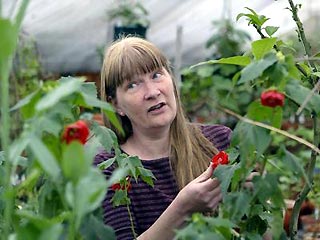
The Swedish biologist Suzanne VIIG offers to make compost from the bodies of deceased people, since, in her opinion, the environment is contaminated with traditional burial methods, the site N24.de writes.
“Initially, nature was conceived that the dead remained on the ground, become the prey of animals and gradually turn into the soil,” she says. Therefore, the bodies of deceased people should be turned into compost, on which their relatives can grow flowers instead of the monument.
"Plants are the best monument. When a close relative dies, one can imagine that a beautiful flower grew out of the molecules of his body," the biologist believes.
According to the method developed by VIIG, the remains of the dead will be frozen at a minus 196 degrees in a special structure resembling a crematorium, then using mechanical shaking, turn into coarse -grained powder, which then must be dried and cleaned of metal impurities. Thus, about 25 kg of granular powder of light pink color remains from the body weighing 75 kg.
The powder can be used as a fertilizer - an example of this can be seen in the VIIG garden, where she raised rhododendron from the remains of her cat.
Oddly enough, the idea of VIIG clearly has a great economic potential. The authorities of the city of Yonkeping in the south of Sweden decided to rebuild the old city crematorium according to the biologist’s plan, since its invention, already patented in 35 countries, turned out to be more profitable than the construction of a new crematorium. A similar installation is intended to be built in the Netherlands.
Viig also hopes for interest in the invention of countries such as Norway, Great Britain and Germany, where environmental protection plays an important role, as well as Muslim states in which cremation is prohibited by religion.
Swedish designers have already submitted projects of special vessels for powder, which should be less than coffins, but more than urns.
Suzanne Vigig herself has already firmly decided to turn into flowering plants after her own death.