
Translated material
Star warrior
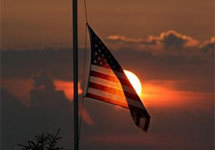
Ronald Reagan first participated in the presidential campaign in 1976 - at the age of 65. In a stubborn struggle, he lost the struggle for nomination from the Republican Party Gerald Ford, who in the final lost to Jimmy Carter. Four years later, he became a favorite of the Republicans and defeated Carter, receiving 489 votes of electors against 49. Those who were subsequently called the "Democrats of Reagan" and whose voices today any candidate of a resort was voted: he received the support of trade unions, women and youth. He also managed to persuade the Catholics and those who usually do not vote at all-Protestants-fundmentalists of the Bible belt.
He had a gift of belief. He spoke with the people simply and clearly, because he simply and clearly thought.
Reagan came to the White House during the global retreat of America. In Angola and Ethiopia, pro -communist governments strengthened their position thanks to the Cuban troops and generous Soviet support. Cambodia was occupied by Vietnam. The monarchy collapsed in Iran. In Afghanistan, more than a hundred thousand Soviet soldiers were performed "international duty". "Discharge" changed the frank expansionism of Moscow. The US economy was in a deplorable state.
Ronald Reagan made the main thing that was required in these conditions: he returned faith in their strength to the Americans. The heritage of Reagan is usually called a "conservative revolution." “The state will not solve our problems,” he said in an inaugural speech. “The state is a problem in itself.” He was a consistent supporter of the deregulation of the economy, the strengthening of federalism, that is, the expansion of state powers, and the promotion of private initiative. And "Reaganomics" worked. Over the eight years of the Reagan presidency, inflation decreased from 12.5 to 4.4 percent, 18 million new jobs were created, taxes were reduced by a total of 25 percent. At the same time, however, the administration saved on social programs and subsidies to the States, and the federal budget deficit in 1986 reached an astronomical figure of $ 221.2 billion. Nevertheless, for a second term, he was elected by a majority that has not yet happened in the history of the United States: in the board of electors, he received 525 votes, and his rival Walter Montagil is only 13.
Reagan considered the moral values of Christianity an immutable imperative. Everyone remembers his characteristic of the Soviet Union as the "Empire of Evil", but few know that he called him so in the speech at the Congress of the National Association of the Evangelists on March 8, 1983 in Orlando - a speech dedicated to the main problem of abortions. Speaking of the "Empire of Evil", he spoke of the immorality of the Soviet leaders: "Soviet leaders openly and publicly announced that they recognize only that morality that contributes to the implementation of their course on the world revolution." He argued that he only calls a spade a spade, because any euphemisms in this matter is a sign of weakness of the free world in the face of totalitarianism.
But in the same speech, the US president stated his desire to agree with Moscow: “I am going to do everything that I can, in order to convince them of our peaceful intentions, remind them that the West refused to use its nuclear monopoly in the 40s and 50s for the sake of territorial acquisitions, and now offers a 50 percent reduction in strategic missiles and the complete destruction of nuclear missiles of the average radius of the ground base ".
He was almost childishly convinced that in his personal meeting with the Soviet Secretary General he would be able to turn him into his faith; In this sense, he looks like Yeltsin, who believed that the bureaucrats are mutating water and only interfere with the leaders to negotiate. In 1981, on a hospital bed, barely recovering after the assassination, Reagan wrote a letter to Brezhnev’s letter: “Mr. President, are we really our peoples, which you and I, should not be engaged in the elimination of the obstacles that prevent the most secret aspirations?” He also wrote to Andropov, and when Chernenko took his place, he wrote in his diary: “I have some kind of underlying feeling that I should talk with him about our problems as a man with a man ...” The attempt was a success with Gorbachev. He dreamed of showing him America, imagined how they would fly by helicopter together over a working suburbs, and then he would sit down a helicopter, and they would go into the house and talk heart to heart with its owners, and Gorbachev would understand everything.
For three years, Reagan and Gorbachev met five times and in December 1987 they signed an agreement on the liquidation on the global -based nuclear missiles on the global -based nuclear -based range.
He was a man of irresistible charm and inexhaustible good nature. People who personally knew Reagan call him an exemplary gentleman and an ideal leader. He was equally friendly with everyone, but at the same time terribly lonely - he remained a stranger among the burned Washington bureaucrats. A sense of humor never cheated on him. When on March 30, 1981, after the Hinkley's attempt, he was taken to the hospital with a bullet to the hospital, he looked around the surgeons crowded around the operating table and asked them before taking anesthesia: "I hope you are all republicans?"