
Translated material
How smashed "New World"
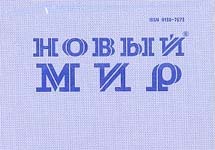
July 26, 1969, 35 years ago, in the magazine "Spark", led by Anatoly Sofronov, the famous article was published, "Against what is the" New World "?", Subscribed by 11 writers, including Mikhail Alekseev, Sergey Vikulov, Anatoly Ivanov, Peter Proskurin and others, who headed magazines, who headed the magazines. The protective-patriotic direction-"Moscow", "Contemporary" and "Young Guard".
The object of harsh criticism was the flagship of the thaw of the New World magazine, led by Alexander Tvardovsky. According to the authors of “Letters of Eleven”, “It was in the“ New World ”that blasphemous materials appeared that cast doubt on the past of our people and the Soviet Army (there was neither the“ shot ”of the Aurora, nor the“ date of birth ”of the Soviet Army), mocking the difficulties of the growth of Soviet society (the novel by V. Voinovich“ Two Comrades ”, I. Grekova“ On the Testing ”, Roman N. Voronov“ Youth ” Zheleznodolsk ", etc.). In critical articles by V. Lakshin, I. Vinogradov, F. Svetov, S. Rassadin, V. Cardin, and others, published in the New World, the tendency of a skeptical attitude to the socio-modal values of Soviet society, its ideals and conquests is not stipulated ... Proletarian internationalism so sweet hearts of some critics and writers, grouping around the "New World", cosmopolitan ideas. "
The authors of the letter argued that the writers and critics of the "New World", "Hiding behind the crackling phraseology ... opposed such fundamental moral and political forces of our society, as Soviet patriotism, as the friendship and fraternity of the peoples of the USSR, as a socialist in content, the national art of socialist realism."
The literary denunciation of the “light” was accompanied by a well-coordinated campaign in the newspapers, close in spirit to “letter 11”: “Soviet Russia”, “socialist industry”, “Lenin Banner”, “Literary Russia” and others. Explicitly inspired letters, the signatures of various “groups of workers”, ominously warned: “If you leave. If not, if not, if not. You will leave, then the anger of the people will sweep you. "
Then, in the 69th, the “new world” was still allowed to make excuses and publish in the 7th issue the return article “From the editorial office”, which indicated the inadmissibility and injustice of political accusations against the magazine. But this delayed the end for only a few months. As later the former deputy Tvardovsky in the New World, critic Aleksey Kondratovich, “they lost that small game in the New World. But this win was also expensive. Probably, it was this loss that finally convinced us that we had to finish with us. In an open battle, in the battle of ideas, minds, they couldn’t win. We couldn’t win. The unfair business is always more difficult, you have to go into all the heavy ones, and in these conditions the defense becomes such that it can be broken anywhere ... There was only one thing left - to pay us rudely, by force - to disperse us differently and there was no salvation for bossy pride. ”
It should be noted that the “New World” criticized the system very moderate, calling to return to the “Leninist party norms and, veiled, to“ socialism with a human face ”.
Soon it was a good reason to complete the "stripping of the information field." At the beginning of 1970, in Italy, the author of Twardowski's poem "by right of memory" with a sharp criticism of Stalin was published without the knowledge of the author. On February 9, 1970, the Bureau of the Secretariat of the Union of Writers of the USSR brought out of the editorial board of the "New World" the most devoted associates of Tvardovsky - Vladimir Lakshin, Alexei Kondratovich, Igor Vinogradov, Igor Satsa - and "strengthened" the editorial board of people, obviously unacceptable for the Twardovsky. After that, it was difficult for Tvardovsky to stay in the journal, and on February 12, Alexander Trifonovich filed an application for care.
They said that Brezhnev himself gave consent to his resignation, so that the persecution of the magazine was obviously conducted with the knowledge of the first person of the state. Thus, it was possible to avoid an international scandal in connection with the possible direct removal of Tvardovsky, who enjoyed great authority in the country and in the world. As one of the leading authors of the New World, Vasil Bykov, emphasized, the magazine did not repent, did not recognize non -existent mistakes, and to the end remained true to the democratic traditions of Russian journalism and the humanistic direction of modern literature. "
At that time, “thick magazines” in many respects played the same role that television plays in the formation of public opinion today. After the liquidation of Tvardovsky’s editorial board, there was no rostrum for criticizing Stalin, for the true show of the abominations of Soviet life, the difficult situation of peasants, workers, and the dominance of bureaucracy.
The death of the "thaw" of the "new world", to some extent, is comparable to the elimination of independent television represented by NTV in 2001, carried out on the initiative of the first person of the state and under the supervision of its administration. They started with relatively soft attempts to change the editorial policy, and three years later they end up with the expulsion of the residues of independently thinking journalists and programs from the company, which allow themselves with the Academy of Sciences. And in the ezopian language the whole "new world" was held.