
Translated material
Since 1980, 2006 people (Chronicle) have died in the disasters of the Tu-154 aircraft
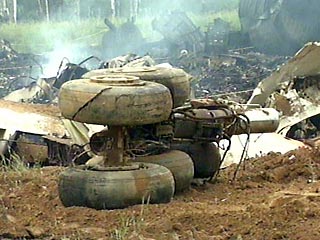
Since 1980, 2006 people have died in the disasters of the Tu-154 aircraft.
Over the past 20 years, the Tu-154 aircraft fell into a plane crash 19 times. In total, since 1986, more than 70 emergency accidents with Tu-154 various modifications have occurred in Russia and the CIS.
On July 7, 1980, immediately after taking off from the Alma-Ata airport, the Tu-154B-2 fell to Earth. 163 people died.
On October 15, 1984, on the runway of the Tu-154 Omsk Airport, he collided with a fuel. 150 people burned.
On July 10, 1985, after departure from Tashkent, Tu-154 broke into a corkscrew and crashed near Uchkuduk. 200 people died.
On May 23, 1991, when landing at the Leningrad airport Pulkovo, the passenger airliner of the Tu-154 crashed, following the flight Sukhumi-Leningrad. When landing, the plane sharply reduced the speed and hit the ground. On board were 164 passengers. 12 people died, of which two children were hospitalized 34 people.
On July 20, 1992, the Tu-154 airliner had an accident at the Tbilisi Airport, which operated on the Tbilisi-Mineral Wates on the route with a commercial cargo on board. 30 people were killed in the disaster, among the dead seven crew members and six people who accompanied the cargo. The rest of the victims are residents of the village of Alekseevka, on the residential buildings of which the plane fell. The possible cause of the disaster is the overload of the aircraft.
On February 8, 1993, Iran Air and the Iranian Air Force fighter collided over Tehran. 130-135 people were killed.
On January 3, 1994, at 6:58 a.m. local time in Irkutsk, the Tu-154 aircraft, onboard number 85656, which executed the flight along the route Irkutsk-Moscow, crashed. After taking off, at a distance of 30 km from the runway, the ship commander first announced the fire of the engine, and then, after the decision to return to the Irkutsk airport, the loss of control. Tu-154 fell 11 km from the runway, near the village of Momona, on the livestock farm. One farm worker died, the other was wounded. The crew (nine people, including four flight attendants) and 111 passengers (including one child, 17 foreigners - citizens of Germany, China, Austria, India and Japan) died. On board the aircraft there was a supply of fuel for 5 hours of flight, in the air the plane was 12 minutes.
On June 6, 1994, the Tu-154M of the China North-West Airlines broke up in China (near the city of SIAN). 160 people died.
On December 7, 1995, the Tu-154 aircraft crashed in the Far East. 96 people died. The plane flew out at 2:45 pm from Yuzhno-Sakhalinsk in Khabarovsk. There were 88 passengers on the plane, including five children, eight crew members. At 3:11, the connection with the plane was unexpectedly interrupted, it disappeared from the radar screens. On the same day, information came from the Far Eastern Regional Center of the Ministry of Emergencies that 75 km west of the village of Grosevichi, located on the coast of the Tatar Gulf, was recorded a glow and a plume of smoke. Search groups flew into these areas. The wreckage of the crashed Tu-154 were discovered on December 18, 1995 a few tens of kilometers from the coast of the Tatar Strait. At a meeting of the Government Commission, in February 1996, it was announced that the cause of the death of the aircraft was the presence of a longitudinal crack on the right wing of about 2 m long, and therefore the machine exceeded the permissible roll and fell into a corkscrew.
On August 29, 1996, when landing at the Norwegian airport, Longgiyer at Spitsbergen, a Russian Tu -154 aircraft broke out, on board which was a combined Moscow crew and 131 passengers - miners of the Arctikugol trust, returning from vacations to mines, which Russia rents from Norway. 141 passengers and crew members died. To search for the bodies of the dead from Russia to Norway, a team of rescuers of the Ministry of Emergencies arrived. The disaster investigation was completed in early December 1999. Russian pilots are found guilty.
On December 15, 1997, when landing at Sharji Airport (United Arab Emirates), the Tu-154 Tajik airline exploded. Of the 86 passengers of the aircraft, mainly tourists from Tajikistan, one person survived.
On August 31, 1998, when taking off from the airport of the capital of Ecuador Kito, the Tu-154 Cuban de Avicion Cuban airline crashed, 70 people were killed.
1998 : the German Tu-154 collided with the American S-141 above Namibia, 33 people were killed.
On February 24, 1999, in China, as a result of the catastrophe of the Tu-154 aircraft, which belonged to the Chinese regional airline "Istrn", 64 people were killed. The plane exploded in the sky over the province of Zhejiang in East China. The Tu-154 liner has made the Chongzin-Weenzhou internal flight. Suddenly, the connection with the ground services broke off, soon a signal of 110 was heard in the control room, meaning that an explosion occurred. The wreckage of the aircraft fell 30 km from the Wenzhou airport.
On July 3, 2001, near Irkutsk, when a landing 20 km from the airport and 5 km from the village of Burdakovka, the Tu-154M passenger plane, which executed the flight of Yekaterinburg-Irkutsk-Vladivostok, crashed. On board the airliner were 136 passengers, among them six children and nine crew members. Immediately after the fall of the aircraft, tanks with fuel exploded, after which the plane burned almost to the ground. The Russian Emergencies Ministry confirmed the death of all passengers and crew members. According to the conclusion of the Special Government Commission of July 10, 2001, the crew error was the cause of the death of the aircraft: the disaster occurred due to the unintentional withdrawal of the aircraft when landing on large angles of the attack, which led to the dumping of the aircraft and its transition to a corkscrew with the subsequent clash with the ground.
On July 4, 2001, the Tu-154 passenger aircraft, on board of which there were 136 passengers and nine crew members, crashed near Irkutsk. All people on board died.
On October 4, 2001, the Tu-154 passenger aircraft, which performed the Tel Aviv-Novosibirsk flight, was shot down by Ukrainian air defense forces over the Black Sea. All passengers and crew members - 78 people - died.
On July 2, 2002, the Tu-154 Passenger “Bashkir Airlines” and a cargo Boeing-747 collided in the sky over Germany. All people on board, mostly children flying to rest in Spain were killed. 71 people died: 57 passengers, of which - 52 children, and 12 crew members.
On February 12, 2002, as a result of the Tu -154 aircraft disaster, 117 people were killed in Iran - 105 passengers and 12 crew members.