
Translated material
The Washington Times: The presence of the United States in Central Asia is profitable for Russia, and while the Kremlin will wait
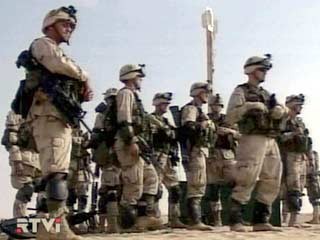
Recently announced by President Bush, the largest reduction in the US Armed Forces in Europe after the Second World War and their transfer to the United States and other regions of the world - perhaps a gift for Russia, writes The Washington Times (translation on Inopressa.ru ).
The Kremlin will not say this, but the increase in the American military presence in the "hot spots" of Central Asia in the long run, it may very well be brought dividends of Russia at the expense of the United States, the American newspaper is confident.
In the short term, the United States and Russia have common interests in Central Asia, but the fight against militants and the spread of weapons in the region can lead to unexpected results.
Fighting the threat, Washington and Moscow, perhaps, have a very different idea of the future of Central Asia. There is no doubt about America’s determination to fight international terrorism and the spread of weapons regardless of the country and the region, but there are doubts about how the world changes in the confrontation of these threats. As for Central Asia, Russia is playing a gambit, during which the United States will discover and, hoped, destroy these threats, but in the process they will become an unpopular and unwanted political and military player in the region.
The decision of the Bush administration on the withdrawal of 70 thousand military personnel from Europe and Asia since 2006 and their transfer to the United States, Eastern European countries, which have recently joined NATO and Central Asia (the expected strengthening of the military presence in the former republics of the USSR) is not very concerned about the Kremlin.
Of course, the nationalists hastily announced the aggressive United States "tightening the ring." On the other hand, the Russian Minister of Defense Sergey Ivanov expressed the position of a political establishment: "I see nothing wrong with these plans. No grandiose movements are expected."
In addition to the issue of an unpleasant issue for increasing NATO’s military presence in the Baltic countries, Washington and Moscow are largely looking at the same that it really matters in the current international situation: the struggle against international terrorism and the non -expansion of mass destruction.
NATO aircraft using the airspace of Lithuania are for the Kremlin the issue of offended pride, but the danger of religious fundamentalism in Central Asia and the Middle East is more obvious.
A new or enhanced American military presence - in the form of military bases or mobile units - in countries such as Uzbekistan, Kyrgyzstan and Azerbaijan, creates a number of political problems, predicts The Washington Times. The political elites in Central Asia, to one degree or another, are limited to legitimate in the eyes of the people they rule. Corruption is common at all levels of power, and economic development is not encouraging.
Compliance with human rights is also not a strong side. Few in these countries have strong civilian feelings. In short, Central Asia is weak and subjected to the calls of radical Islamists, which can create political and social structures, which have never seriously engaged in the regimes.
The United States needs to consider how close their relations with these regimes should be during the fight against terrorism and the spread of weapons. If this aspect is not thought out, the United States, due to a noticeable military presence, will be perceived as a strong ally of the unpopular governments of the region. Instead of finding threats, the American military can involuntarily create them.
However, the combination of weak and unpopular regimes with an increase in a terrorist threat is the worst scenario for such modes that will be clamped between the military superpower, pursuing their goals in the field of international security, and the local population dissatisfied with the ruling elites and foreign military presence.
Most likely, the Kremlin is counting on just such a scenario. It is expected that the United States will come to the region in the near future. America can achieve some success in the detection and destruction of elements of international terrorism, but political costs will be great. The reputation of the country in the region will be strongly tinned, and people may begin to overthrow local regimes. In such circumstances, you can take a strong position in Central Asia.
Historically, Russia in Central Asia was never loved, but this is a country with a mentality that is understandable to local leaders and the local population. Independent states and former Soviet republics are difficult to imagine that they will someday ask for a long-term protection such a country as the United States, and Russia is always nearby.
Russia does not see the problem of resolving and even helping the United States in the fight against international terrorism and the spread of weapons of mass destruction in Central Asia, perfectly realizing that the United States either at some point would want to leave the region or ask them to leave. Russia will be happy to wait for the end of the American mission in Central Asia, moving in the wake of America until Central Asia is ready to rush into the arms to Russia.