
Translated material
Iran rejected the IAEA requirement to curtail a nuclear program
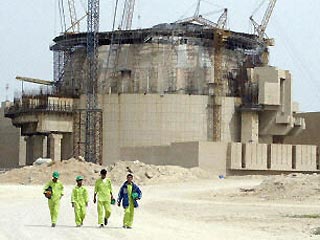
On Sunday, Iran rejected the IAEA requirement to stop working on the enrichment of Uranus, reports Reuters.
In the case of interference in the resolution of the UN Crisis, Iran, Iran put forward the threats to stop the access of international observers to their atomic facilities.
“No one will affect and will not be able to force Iran to change his decision,” said Hassan Rukhani, secretary of the National Security of Iran, at a press conference in Tehran, on Sunday.
"In the event of the intervention of the UN Security Council in the resolution of the situation and the possibility of imposing sanctions, we, for our part, will cease to comply with the articles of the additional IAEA protocol," Rukhani emphasized.
On the eve of the Council of Management of the International Atomic Energy Agency in Vienna adopted a resolution demanding Iran until November 25 to turn all programs for the production of enriched uranium.
The Magate also demanded that Iran allow the agency’s inspectors to study projects and provide them with all the necessary information.
As the head of the Iranian delegation, Khosein Musaviyan, immediately at the end of the council, Tegeran will decide within two to three days to resume or further suspend Uranus enrichment. However, the answer followed the very next day.
Meanwhile, the head of the US delegation in the IAEA Jackie Sanders said that in case of failure to fulfill the resolution until November 25, Iran’s issue would be discussed in the UN Security Council. "This decision (IAEA) makes it clear to Iran that the continuation of his programs for the development of nuclear weapons will inevitably put him before the Security Council," she said.
Meanwhile, Minister of Energy of the United States Spencer Abraham emphasized that, according to the IAEA, about 110 countries of the world do not have sufficient means of monitoring radioactive materials that can be used to create "dirty bombs".
In this regard, Abraham recalled the “global initiative” to prevent the threat of nuclear materials in the hands of terrorists, with which he spoke in May this year, and again confirmed the US willingness to allocate up to 450 million dollars for the implementation of this initiative.