
Translated material
The Government of the Russian Federation approved the ratification of the Kyoto Protocol
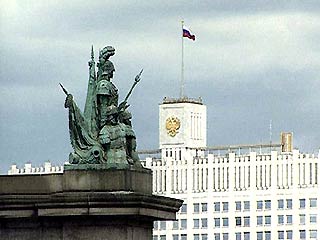
The Government of the Russian Federation on Thursday generally approved the draft federal law on ratification of the Kyoto Protocol. Now the draft law will be submitted to the State Duma, and after the law is accepted by the parliamentarians and the president, a protocol providing for the restriction of greenhouse gas emissions, will enter into force.
The Financial Times , which is published by Inopressa , claims with reference to a "high -ranking source in the government" that Russia is ratified by the Kyoto Protocol in the coming weeks.
- Kyoto Protocol: a market solution to ecological problems
- arguments of opponents of ratification: ecology, economics and politics
By decision of the Government, within three months, the ministry and department will prepare proposals on the integrated plan of actions to exercise obligations and rights arising from the Kyoto Protocol, Interfax reports.
At the same time, the government did not support the proposal of the director of the Institute for Climate and Ecology of the Russian Academy of Sciences Yuri Israel to include a scientific climatic program in Russia. Deputy Prime Minister Alexander Zhukov, who chaired the meeting, said: "This issue requires study, from which sections and parts it will consist."
The Kyoto Protocol provides for restrictions on the release of greenhouse gases outside the exceeded quota. According to the protocol, industrialized countries will limit the issue of carbon dioxide and five more greenhouse gas by 5.2% compared to 1990. They should reach these indicators by 2008 or, at the latest, by 2012. The agreement, signed in 1997 in the Japanese city of Kyoto, will enter into force only if it is ratified by countries, which account for 55% of global emission.
The United States, which accounts for 35% of global emission, refused to participate in the Kyoto process in 2001; This was one of the first decisions made by President Bush. This made the voice of Russia, which accounts for 17.4%, decisive.
Having ratified the protocol, Russia will give the green light of the European scheme of quotas for the release of gas.
FT notes that if the protocol is ratified, then the EU leaders can soften criticism of Putin’s internal policy aimed at increasing the concentration of power in the Kremlin. It can also help Russia get the support of the EU when joining the WTO.
Experts diverge in whether it is worth taking a kyotsky protocol
Care to restrict the allocation of greenhouse gases by industrial enterprises - a stick about the two -edges. Until now, there is no consensus among experts about whether Russia needs to ratify the Kyoto Protocol and what consequences possible ratification will be fraught with.
So, the Foreign Ministry believe that Russia’s refusal to ratify the Kyoto protocol could lead to not only political, but also economic costs.
And the presidential adviser to the economy Andrei Illarionov, on the contrary, believes that it is ratification that damages the national interests of Russia. According to ITAR-TASS, Illarionov called the ratification of the Kyoto protocol "forced political decision."
The main task for the coming years was the presidential adviser called "minimizing the consequences of the adoption of the Kyoto Protocol." According to his calculations, the main negative consequence is a decrease in the growth rate of the economy, forced to reduce harmful emissions under the pressure of the protocol. Illarionov called on the Russian authorities "to be honest with the people, realizing that this would affect every Russian."
But the head of the Higher School of Economics, Yevgeny Yasin, advocates ratification of the Kyoto Protocol. On the air of the Echo of Moscow radio station, he stated that such a step can bring Russia to Russia at present and the next ten years. Since Russia is a “relatively clean country” from the point of view of emissions into the atmosphere of the so -called “greenhouse gases”, “we could receive income from the sale of quotas,” he explained. Illarionov believes that such forecasts are too optimistic, and Russia will exhaust its quotas by 2008.
Most experts agree that the final decision on the Kyoto Protocol will be politically justified. Academician of the Russian Academy of Sciences, director of the Institute of Global Climate and Ecology, Yuri Israel indicates that the Kyoto protocol "does not have geophysical and scientific justification, and this is clearly proven by scientists." President Vladimir Putin is still advanced for ratification.
Prime Minister Mikhail Fradkov said that the discussion on the feasibility of Russia's ratification of this document may be continued in the Duma. “Probably, there is a difficult discussion in the Duma,” the head of the Cabinet of Ministers suggested.