
Translated material
Swedish scientists investigated the phenomenon of the farting herring
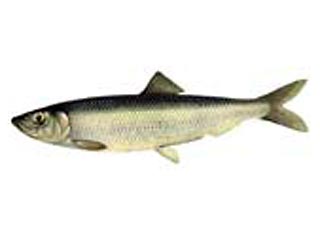
If someone seems strange to someone that serious scientists in Scotland publish a study of the fusion of herring, then what can be said about the fact that they had practically surpassed the Swedish scientists who discovered the same phenomenon?
Bob Batti from the Scottish Association of Oceanology was surprised when he made this discovery with two researchers from Canada - Ben Wilson and Larry Dill. Thanks to him, they received the "ignobelian prize" (a playful imitation of the Nobel Prize) for the incredible in biology. Today, the Launobel Prize laureates begins in the UK, and Batti and Wilson will take part in it, writes The Guardian newspaper, the translation of the article of which is published by the Inopressa website.
Dr. Batti, working in the Oceanological Center near Oban, and his colleagues studied whether the herring could recognize the sounds made by predators, as whales and dolphins can do. Using infrared lighting, video cameras and underwater microphones, they examined the behavior of the herring during the day. “We heard these rattling sounds, which were heard only at night, every time we saw tiny gas bubbles that appeared at the tail of the fish,” Betty says.
"We also found that the fish produce the more bubbles, the more other fish are near them. In other words, they like to scare in the company," says Wilson.
As Batti explains, analyzing gas bubbles using chromatography, they found that it was air that the herring captured from the surface, and this has nothing to do with bloating.
Batti believes that for herring, farting is a way of night communication and a way to maintain the integrity of the pack. In the daytime, they exchange visual information, for example, reflecting the light from mirror scales. Herring and her relatives produce gas bubbles when they are attacked, but the activities discovered by Dr. Batty and his colleagues serve several other targets.
In the philistine view, this discovery seems to add a little to scientific knowledge, but it is not notable. As Dr. Batti points out, during echolocator studies, oceanologists who are trying to determine the quantity and size of fish are noted by air bubbles, so the information about when and how much air is produced is interesting for them.
And the Swedes were interested in this phenomenon, because the sailors of the Swedish fleet heard strange sounds of unknown origin, and were afraid that they could come from the Russian submarine, and they asked scientists to figure it out. As a result, another scientific work appeared, confirming that the herring of the Baltic Sea is no better, and also “behaves indecent,” writes The Guardian.