
Translated material
Independent: British intelligence recognized part of the Iraqi dossier conclusions "erroneous
The British press on Thursday talks in detail about the mistakes in the Iraqi Dossier, compiled by British intelligence for Prime Minister Tony Blair and served as the basis for the participation of Great Britain in the Iraqi campaign.
The British United Intelligence Committee (JIC), which compiled a dossier led by his chairman John Scarlett, was forced to revise him after the search for weapons of the mass defeat of Saddam Hussein was unsuccessful, writes Independent (the translation of the article publishes inopressa.ru ).
The Committee admitted that a number of assumptions about the chemical, biological and nuclear potential of Iraq and his ballistic missiles were either “wrong” or “unreasonable”.
The results of the revision of the dossier conducted in December 2004 were represented by the Parliamentary Committee on Intelligence and Security, which controls the work of intelligence agencies, in its annual report. "We are concerned about the number of mass destruction intelligence on Iraqi weapons, which now we need to refuse," the parliamentarians say.
According to the Republic of Intelligence and Security, the United Intelligence Committee revised the Iraqi Dossier after the MI-6 intelligence service began to change its position on the Iraqi intelligence, and the special commission, which took place in Iraq with the search for the OMP, could not find it.
The new report completely refutes information regarding the creation of nuclear, biological and chemical weapons.
The publication recalls that in the September dossier of 2002, the United Intelligence Committee claimed that "Iraq is implementing a program for creating weapons of mass destruction." Now, according to the new conclusions, this "does not correspond to the truth, and Iraq did not create nuclear weapons."
With regard to chemical weapons, the Committee in 2002 stated that "Iraq may have retained some reserves of chemical reagents: Iraq is able to produce a significant amount of mustard gas in several weeks, a significant amount of dawn and gas VX for several months." According to the latest conclusions, it is recognized that "although the opportunity to produce a certain number of reagents probably still existed, this judgment (the possibility of producing chemical weapons - approx. Ed.) Was unreasonable."
Speaking about biological weapons, the Committee then argued that "Iraq is able to produce new biological agents for several days," since "at the moment, Iraq has at the disposal of a certain number of biological agents who either remained since the Gulf of Persian or received as a result of modern production." Now, the publication writes, the committee insists that "Iraq had double -purpose objects, which could resume the production of biological weapons, but not at the time indicated by the United Intelligence Committee." Moreover, notes the publication, no evidence was found to activate this production.
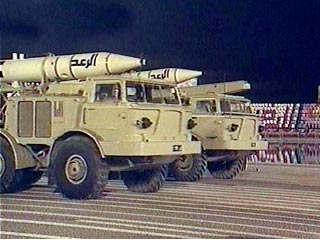
The same fate befell data on ballistic missiles. Earlier, the committee stated in the dossier that "Iraq has up to 20 Al-Hussein ballistic missiles." Now it is reported that this statement was "unreasonable." However, the second statement of the time that "Iraq has authorized the development of missiles whose range exceeds the UN Limit (the SB) of 150 km" is now recognized as "partially justified."
In addition, the United Intelligence Committee was mistaken in assessing the intentions of Saddam. In September 2002, it was stated that "Saddam could use chemical or biological weapons against the forces of the coalition, neighboring states and his own people. Israel may become its first target." As a result of the review, the committee came to the conclusion that the data that formed the basis of this statement was completely erroneous.