
Translated material
In Russia, rabies spreads
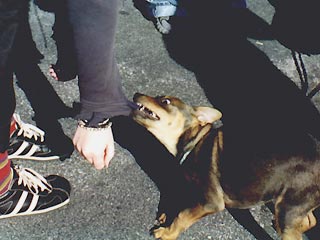
The prophylactic measures do not allow reducing the incidence of rabies of animals and people, the chief sanitary state doctor of the Russian Federation Gennady Onishchenko states.
"Having analyzed the epidemiological situation in rabies in the Russian Federation and the effectiveness of the organizational and preventive measures, it was found that the work to combat this infection is carried out in the insufficient volume and does not allow reducing the incidence of animals and people," the document of the chief state sanitary doctor of the Russian Federation, Gennady Onishchenko, published on the official website of the Federal Service for Supervision of Supervision the field of consumer protection and human well -being.
According to Onishchenko, "the number of hopeless dogs and cats is increasing, their capture and isolation are unsatisfactorily carried out." Also, in a number of constituent entities of the Russian Federation, regulatory legal acts regulating the rules for maintaining pets have not yet been adopted, Interfax reports.
The sterilization of hopeless dogs carried out in Moscow is emphasized in the message, “does not help reduce their number,” in addition, the city is slowly under construction for hopeless animals.
The document provides data that in 2003-2004, the country registered 7561 cases of diseases and death of animals from rabies, which is 17% more than in previous years. At the same time, "in January-February 2005, the epizootological situation has deteriorated significantly," the message says.
A particularly dysfunctional epizootological situation still takes place in the Central, South, Volga and Ural federal districts of the Russian Federation. In the Moscow region in 2004, 91 cases of animal rabies were registered, in January -March 2005 - 55 cases.
"Only in 2004, the number of people who received various damage from animals with a diagnosis of rabies or with suspicion of this disease amounted to 6201 people," the document says.
In 2004, 17 people fell ill and died of hydrophobia, the document said, in February-April 2005 there were 4 deaths from rabies, including 3 in the Moscow region.
"The main reason for this provision is the unsatisfactory organization of sanitary -educational work among the population about the epizootological situation in rabies," the document says.
In order to strengthen the fight against rabies, to prevent people's diseases, this infection with the heads of administrations of the constituent entities of the Russian Federation is recommended to adopt regulatory legal acts governing the rules for the maintenance of pets, as well as to oblige managers of the relevant services to carry out a set of work on the livestock of dogs and cats, conducting preventive vaccination for them, the allocation of sites for their walking, creating and equipping brigades for debuggaging Neglecting animals.
In addition, Onishchenko recommended that the heads of the regions "distinguish the necessary allocations for the construction of places of detention of hopeless and suspicious animals, as well as cremation furnaces for the disposal of animal corpses."
"The Ministry of Agriculture of the Russian Federation recommend organizing annual preventive vaccination against the rabies of agricultural animals in the volumes necessary to ensure epizootological well -being," the document says.
Onishchenko sent the relevant letters with the recommendations of Moscow to Yuri Luzhkov and the governor of the Moscow Region Boris Gromov.