
Translated material
12 new Moon Saturn
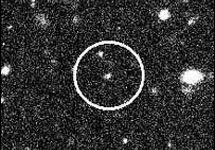
Astronomers found 12 new moons from Saturn, bringing the total number of its natural satellites to 46. Almost all new satellites (except for one) rotate around Saturn in the direction of the opposite rotation of the main large moons, and this indicates that these celestial bodies were free, and then captured by gravity of the giant planet.
Thus, Jupiter, a planet that is still the record holder for the number of moons in the solar system - at the moment has 63 famous satellite, Saturn has 46, Uranus - 27 and Neptune - 13.
The last moons were found last year with the help of the Japanese telescope " Subaru " installed in Hawaii. Observations confirming the opening were made last month on the gemini north telescope (Northern Twin), which is also located on the Hawaiian Islands.
The well-known discoverer of the satellite giant planets Dave Jewitt ( University of Hawaiii) explained in an interview with the BBC News website that the new discoveries were made during the implementation of the detailed review of the external planets aimed at expanding our understanding of the history of the solar system.
Recently found satellites were most likely formed in the main asteroid belt located between the orbit of Mars and Jupiter (and therefore are stone, not ice blocks), and then they were scattered under the influence of Jupiter's gravity and, as a result of some incomprehensible processes, moved in the end to Saturn.
“The key question is how they were captured by Saturn,” says Juitt. “The current models created to describe the captures of the planets of new satellites are not able to explain why they reach the orbit of such remote planets. New discoveries should deepen our knowledge of satellite systems in general and ultimately should lead to an understanding of how such small irregular bodies are captured by gravity Giant planets.
The astronomers have recently been convinced that all four giant planets of the solar system: Jupiter, Saturn, Uranus and Neptune - have a rather large and comparable number of small irregular satellites. All this is weakly connected with the mass of the planet and its location. These observations remain inexplicable.
Sources:
Twelve New Moons for Saturn - BBC News