
Translated material
EXIT-Polls data: Dutch voted against the European Constitution
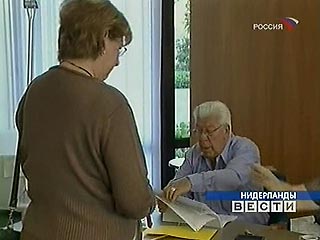
According to Exit Polls, the Dutch said "no" of the EU constitution, RIA Novosti reports.
According to preliminary information, 62% of 11.6 million of the votes of citizens of the Netherlands had the right to take part in the referendum. According to polls at the exit from polling stations (Exit Polls), 63% spoke out against the adoption of the EU constitution and 37%.
The percentage of those who rejected the Constitution of the EU was even higher than expected on the basis of surveys on the eve of, and higher than in a referendum on May 29 in France.
Official preliminary voting results will be known on Thursday.
On June 6, it will be announced whether the referendum is recognized as valid, and its final results will be published.
Observers believe that such a significant superiority of opponents of the Constitution, which is shown by Exit Polls, leave no doubt that the majority of those who took part in the referendum of the Dutch voted "against".
In the Netherlands, the referendum is advisory, and after its results become known, the country's parliament has the right to independently approve the Constitution. However, most large parties, both from the ruling coalition and opposition, decided to reject the constitution if the country's population vote against it.
The Prime Minister of the Netherlands, Yan Peter Balkenende previously called for compatriots to make his own choice. He announced his “disappointment” by the outcome of the vote in France , simultaneously emphasizing that the process of ratification of the Basic Law of the EU should continue.
“Voting in France gives us even more grounds to say“ yes ”in a referendum, since the EU constitution is a forward road,” he said. Despite the clear choice of France, it is still too early to talk about the failure of the Constitution, Balkenend believes.
Meanwhile, according to recent studies, the negative outcome of the referendum on the Constitution of the European Union in the Netherlands is also likely as in France. According to polls of public opinion conducted on the eve of voting, 57% of the Dutch were inclined to speak out against the Basic Law of the EU. 43% were ready to say “yes” of the EU constitution. According to the results of a study by the order of the Netherlands of the broadcasting corporation, the number of opponents of the Constitution in the Netherlands increased by June 1 to 60%.
At the same time, no resignation of a referendum will follow. The Prime Minister of the Netherlands, Yan Peter Balkenende a few days ago, said that in the event of a deviation of the EU constitution in a referendum, neither he himself and none of the ministers would resign.
The Dutch supporters of the deepening of European integration very calmly perceived the deviation of the constitution.
“No catastrophe happened,” the former president of the European Central Bank, VIM Deysenberg, told RIA Novosti. “The European Union will still function on the basis of existing agreements, the integration process will continue.”
“Just at first there will be a period of“ licking the wounds ”, and then - negotiations will begin again to take a small step forward,” he said.
"The whole development of Europe since 1948 has happened this way: three steps forward, two steps ago. In the end, we have been moving forward," said Vim Deysenberg.
He believes that the Dutch voted against the EU constitution for irrational reasons: aversion to instructions from Brussels, dissatisfaction with political hystblishment. “This is a vote of protest, and politicians should listen to it,” he said.
At the same time, the former Director of the ECB is confident that the provisions of the EU constitution are beneficial for the European, as they reduce the number of the European Commission, make the decision -making process more effective.
“The text of the constitution was a compromise,” Deyenberg said. Pressing the rejection of the Constitution in referenda in two countries (the Netherlands and France), he called "completely groundless and naive" statements that the EU would break up.
“Do not worry about the euro and nothing changes for the European Central Bank, and it will continue to function as well as before,” Deenberg concluded.
The development of the economy and the exchange rate of the European zone depends on the results of the referendum in the Netherlands
According to a number of economists, not only the fate of Euroconstitution is decided at the referendum in the Netherlands, but the further economic prospects of the European zone and its currency - the euro are determined. The course of the Unified European currency in relation to the dollar continues to quickly decline during the ongoing reaction of market participants to the decision of the French population to reject the EU constitution. The European currency has already fallen to the level of $ 1.22 per euro, and 1.20 per dollar is expected . In Russia, one euro already costs 34.84 rubles.
Fears have intensified regarding the possible slowdown of European integration processes. Some experts also fear that political uncertainty in the EU can cause a decrease in the investment attractiveness of the European region.
Some economists and analysts are concerned that the unclear of the future of the European Constitution can affect the decrease in the popularity of the Euro as an alternative dollar of the reserve currency among the central banks of the world. The fall of the euro is also facilitated by general pessimism about economic growth in the eurozone. According to a survey of leading economists today, the European Central Bank at its meeting on June 2 may announce a decrease in the forecast of GDP growth in Eurozone by 2005.
EU expansion may stop
One of the main developers of the Euroconstitution project, the former Belgian Prime Minister Jean-Luke Deen, does not exclude the possibility of stopping the process of expanding the European Union in the event that citizens of the Netherlands, following the French, will say no to a constitutional agreement at the referendum on June 1.
"Indeed, there is a danger of a sharp stopping of the expansion process against new members, since the expansion is also associated with a negative reaction (those who do not approve of European concern ratification)," Deen said in an interview with Le Soir.
“A new environment is needed so that this expansion can be assimilated,” says the Belgian politician who is currently a member of the European Parliament.
At the same time, he did not exclude the possibility that in the event that the population of other founding countries refuses to support Euroconstitution, this may, in particular, inhibit the process of entering the organization of Bulgaria and Romania, not to mention Turkey, which is the Candidate State.
DENN urged not to experience illusions. "Europe will enter during the crisis, instability and confusion," the former Belgian Prime Minister predicts. “This is like a ship without a captain and a steering wheel,” he said figuratively, pointing out the existence of a problem of leadership in the EU.
At the same time, Deenn expressed the conviction that the crisis period, which will be associated with a significant loss of time for the EU, will be overcome.
"I hope that the current leaders of all levels will find a means to take control of the situation again," said the European Parliamentary.
He considers it necessary to complete the process of ratification of Euroconstitution in all EU member countries. After that, according to DEN, the result should be summed up. In the event that France remains the only country that will say “no” of the EU constitution, the Belgian politician believes that this will create problems, primarily for France itself.
The President of the Czech Republic considers the further ratification of the EU constitution already meaningless
The Czech Republic President Vaclav Klaus considers it meaningless to the further process of ratification of Eurocation after France rejected this document. Now the adoption of this law in other EU member countries is inappropriate, the Prague City press service, the residence of the President of the Czech Republic said.
The position of the head of state is supported by the largest opposition party of the republic - the Civil Democratic Party (GDP), which enjoys the greatest support among voters. Vaclav Klaus and GDP warn against the consequences of the possible creation of a centralized superpower based on the EU.
The Czech government, fearing, as if a bad example of France, has not become contagious for the Czech electorate, has already announced the possibility of ratification of the EU main document by voting in parliament. This year, referendums about the EU constitution will also be held in Portugal, Luxembourg and Poland, and in the next - in the UK, the Czech Republic and Denmark. In other EU countries, including Germany, the fate of the pan -European constitution will decide national parliaments.