
Translated material
The second day of the EU summit: the seven -year budget of the European Union is discussed according to the crisis scenario
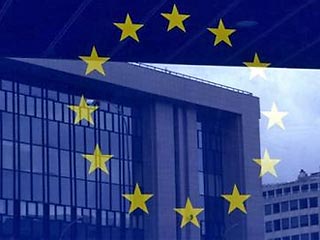
On the second day of the EU summit in Brussels, the heads of the EU member countries discuss the EU promising frame budget for 2007-2013. And while forecasts about the crisis nature of the development of negotiations on the issues of the promising budget are confirmed - the morning meeting ended without achieving significant progress and an hour ahead of schedule. After a small break, the heads of state and governments of the EU resumed discussions in the format of a working lunch.
According to informed sources, presented by the chairman of the summit, the Prime Minister of Luxembourg Jean-Class Junker, a compromise plan has not yet reached its goal. “There is no progress,” one of the participants in the consultations told reporters on the basis of anonymity.
At the summit, sharp conceptual discrepancies were revealed between several groups of countries . They are especially clearly manifested in the positions of France, Great Britain and the Netherlands. France seeks to reduce compensation payments from the British EU budget, and London insists on revising the expenditure of the budget and, first of all, the EU general agrarian policy. Paris receives the largest compensation through this program.
According to the official representative of President Jacques Shirak, proposed by the compromise plan to reduce compensation payments of Great Britain, "are insufficient." Although he admitted that the last proposals of the chairman of the summit of Jean-Claude Junker "may form the basis" for the final agreement. In turn, the official representative of the British Prime Minister Tony Blair said that the compensation of Great Britain and its size were “fully justified”.
“Negotiations are very, very difficult,” the head of the European Parliament Socialist faction Martin Schulz, the head of the meeting of socialists, emphasized in the meeting. He stated that he was not an “optimist” regarding the positive outcome of discussions on a promising budget due to the “rigidity” of the approaches of Paris, London and The Hague.
Now, as noted on the sidelines of the summit, it all depends on its chairman and one of the most experienced European leaders - the Luxembourg Prime Minister Jean -Claude Junker. Only by his decision can he stop the current search for the compromise by budget and to complete the summit ahead of schedule, or extend his work for an indefinite time in order to try to convince leaders of the need to achieve a positive result, ITAR-TASS reports.
A few minutes before the meeting, the Prime Minister of Sweden Yoran Persson said that he was “tuned in pessimistic” regarding the chances of accepting the budget at the current meeting at the top. He spoke out for transferring this question for a year in order to "give extra time for negotiations."
As “one of the most difficult meetings at the top” in history, the current summit, who participated in the development of a compromise on the budget, called the Minister of Foreign Affairs of Luxembourg, Jean Asselborne, called the current summit. Nevertheless, the business atmosphere of the first day of the summit is considered here, creates a certain basis for the development of a solution that will not enhance the crisis within the EU, adding to it the budget-economic component.
Recall that on the first day of the Summit on Thursday, the EU leaders decided regarding the Constitutional Crisis of the EU, which is based on two principles: continuing the process of adopting the EU constitution while taking a pause for reflection. The EU leaders were forced to admit that the initial schedule for the adoption of the Constitution would not be withstanded, and the previously established deadline for its approval will be postponed from November 1, 2006 to a later time.
The immediate consequence of such a decision was the immediate transfer for an indefinite period of planned referenda in Denmark and Ireland. At the same time, information appeared that in the middle of next year, at the summer summit of the European Union under the chairmanship of Austria, a decision would be decided about what to do with the EU constitution after a “pause”.
The conclusion of participating in the work of the Summit of Independent Experts boils down to the fact that the leaders did not abandon the prospects for the adoption of the current EU constitution, but for an indefinite time, the process of approval for an indefinite time, which have not yet been expressed under this document. In the developed approach to the EU constitution, which was called the head of the European Commission Jose Manuel Barrosa "Plan D", there are no number of key elements. They must be specified and specified in the coming months.
Independent: Blair was in isolation due to British payments to the EU
Tony Blair was at one of the most difficult diplomatic dinners in the history of the EU, where the leaders of 25 states clased against the backdrop of a fierce conflict due to the future expenses of the bloc. Blair, who was sitting at the same table with his worst enemy in the budget war - President of France Jacques Shirak, came to yesterday's lunch, consisting of four dishes, determined to defend Britain's payments in the EU, which amounts to 4.6 billion euros a year, which the remaining 24 countries opposed, writes the publication of Independent (the translation on the website inopressa.ru ).
Today's impasse will throw a shadow at Blair’s presidency in the EU, which will begin in two weeks, and will question the opportunity to carry out key reforms in the next six months. But Blair’s spokeswoman categorically rejected the need for a quick agreement: "We do not need an agreement on the current summit." And Foreign Minister Jack Stri rejected the proposal to freeze the issue of payments until 2013, and then link it with the reform of agricultural expenses as "unacceptable for us." He said: "Reducing payments is more than justified, and if necessary, we will use the right of the veto."
France and Germany are tuned against Blair, and before arriving in Brussels, German Chancellor Gerhard Schroeder said that there was no excuse to reduce British payments. But the good news for Blair was the statement of the leader of the German opposition Angela Merkel, who stated that Schroeder in vain put pressure on Britain, forcing her to refuse to reduce payments to the EU, not at the same time putting pressure on France in order to reduce her agricultural subsidies.
Luxembourg offers to freeze the contribution of Britain at the level of 4.6 billion euros, without increasing it during the financing period to about 7 billion, which would mean losses of 14 billion euros over seven years. Britain claims that in the absence of inflation protection and other consequences of new proposals, it will lose 25 billion euros.
It is expected that Britain will offer to abandon the contributions of 10 new countries that have joined the EU last year. This will be approximately 3.5 billion euros in seven years, but will not suit France. It is also possible that Britain will agree to freeze payments, which will actually mean their decrease, since inflation is growing, says independent.
British payments
Margaret Thatcher achieved reduction in Britain's contributions to the European Union in 1984. France President Jacques Shirak want payments to increase in stages or at least remain at the level of 4.6 billion euros until 2013. Other EU countries agree with this.
Unified agricultural policy
Agricultural subsidies eat 45% of the EU budget. The Unified Agricultural Policy brings the greatest benefits to France farmers, and this country opens against the reductions proposed by Tony Blair. Blara is supported by Sweden, the Netherlands and Finland. Shirak is most other EU members.
Budget
The EU spends about 1 billion euros per year, or 1.1% of the total GDP of its members. The European Commission wants to increase this figure to 1.26% in the budget of 2007-2013. Observers believe that this is unlikely to succeed.