
Translated material
The dying drawings of the Sicilian "witches" sentenced to burn at the fire were found
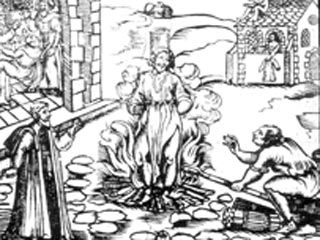
In the Sicilian Palazzo, which once served the headquarters of the Spanish Inquisition, dozens of drawings were discovered, left there as “witches” sentenced to burn at the stake.
Drawings and inscriptions, which are a desperate scream for help, were found on the walls during restoration work in the Palazzo Sterior in Palermo. With their help, a nightmare of many women who languished in these walls in anticipation of their fate several centuries ago appeared as in reality, writes Daily Telegraph (translation on the website inopressa.ru ).
One of the doomed wrote: "It’s cold, it’s hot, because the malaria burning is devouring me, my insides are shaking, my heart and spirit are weakening.” The drawing on the wall depicts a typical Autodaf ritual (Auto da Fe in translation from Spanish - "Act of Faith"), during which the monk calls the bell, declaring the names of the emptied to death. In the capital of Sicily, which was then under the rule of Spain, the spectacular ceremonies of Autodafe - the execution of the Inquisition - were held in the city port.
On one of the drawings in the Palazzo, which belonged to the Inquisition from 1623 to 1782, during the period when she tried to prevail over the Roman Catholic Church, a ship with sailors was depicted, and on the other - a man in chains and the nose of the ship. Thousands of victims of the Inquisition rotted in these walls until they came to die a terrible death. In total, 188 people - mostly women - were burned at the stake "in the name of the Lord" for refusing to repent.
The newspaper La Repubblica reported that in 1907, removing the upper layer from the walls with his bare hands, the ethnologist Giuseppe Pitre discovered hundreds of inscriptions and drawings on the ground floor where the prisoners were held. However, he was puzzled by the fact that he did not find any signs left by women accused of witchcraft. Now, gently removing the layers of paint and plaster, experts found the drawings of women in the basement.
However, the horrors in this building began long before the Inquisition. Traces of erosion on the facade of the Palazzo, as established, remained from cells with skulls of aristocrats, rebelled against Charles V of the Spanish in 1530. These cells hung for 200 years on the tower and were removed only after the suppression of the Inquisition in 1782 by the governor of King Domenico Karachiolo.
At the end of the restoration in 2007, the Palazzo will become the Museum of the Inquisition.