
Translated material
Demography: Consider the Muscovite

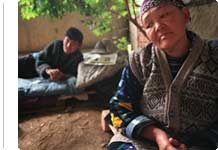
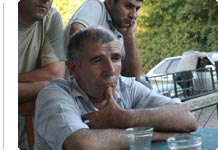
 Start and win Yuri Suleimanov, 72-year-old Armenian, and Oktay Mammadov, 45-year-old Azerbaijani, passionately rooting for the Moscow Lokomotiv. Both 15 years ago came to Moscow from Azerbaijan: Suleimanov fled from interethnic enmity, Mammadov from unemployment. Armenian Suleimanov lives in a community of relatives in the south-west of Moscow, in Vostryakov, and Mammadov among his own in the northeast, in Golyanov.
Both Vostryakovo and Golyanovo are places of compact residence of national communities. They are not yet isolated from the city around them: Russians still live nearby, who do not want and cannot leave their new neighbors. But soon there will be much more representatives of minorities, and real ghetto may appear in the capital with a clear division into their fuckers. With egregious poverty and crime.
While they tried to ban migration with the help of registration, police raids and other worthless means, the demographic crisis has become almost the main problem of the central regions of Russia. And the rich Moscow, attracting many inhabitants of the former USSR, especially. As it became known to Newsweek, Vladimir Putin will soon create a demography commission, which will be headed by Deputy Prime Minister Alexander Zhukov. Its task is to make sure that in Russia there is no ghetto inhabited by the "alien element." “We need migrants,” explains Newsweek -saved source in the government. - But only those who will come to Russia forever and can have children. Those who can at least in the second generation turn into Russians. In Russians not by nationality, but in the broad sense. One must think how to resettle them, how to adapt, how to teach their children so that they mix with the indigenous population and do not turn into an isolated society. ”
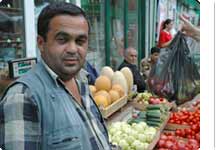
 The problem is that the economy - and wider, society - now needs completely different migrants. Most, according to statistics, come on average for 8 months and take an average of $ 600 to their homeland, then return to work again. A specialist in social and political geography from the Institute of Geography of the Russian Academy of Sciences Olga Vendina - the author of the study “Moscow Ethnic” - believes that Russia, and especially the capital, needs unskilled personnel. The city wants migrants to work not by teachers and doctors, but by janitors, sellers, builders - hard work, small salary, no prestige. With their hands, the metropolitan middle class makes inexpensive repairs in its apartments and refuel its cars.
They say - migrants, they mean - Caucasians. Over the 13 years that passed between the censuses of 1989 and 2002, the share of Russians in the capital decreased from 90 to 85%. 90% is an almost constant value in the past 50 years. And now the balance is easily broken. Jews became much less (now there are about 0.7% against 2.1 in the late 1980s and 6% in the 30s), as well as Germans and Baltic states. And Ukrainians and Tatars - the second and third largest ethnic groups in Moscow - in total now only half a percent more than Armenians, Georgians and Azerbaijanis combined. Their share in the population of Moscow over 13 years increased by 5 times - from 0.9 to 4.5%. According to Olga Vendina, they turned into the most noticeable ethnic group of the capital. It is so noticeable that none of the Muscovites will never believe that “these” are only miserable 4.5%.
How the ghetto is formed
What is good now is fraught with serious consequences in the near future. Visitors learned to hate the police to themselves, and to praise it out loud. They are able to collectively defend themselves from the raids of nationalists. Soon, probably, they will learn not to notice the pompous indigenous Muscovites. These migrants will have to be turned "into Russians in the broad sense of the word."
“I categorically do not want to be a Muscovite. I am an Azerbaijani, Bakanets, I was and I will be, no matter how much I live here, ”says a 35 -year -old man. He is at home - on a typical Moscow street in the Eastern District. It is full of his compatriots, and he feels confident in his dislike for the locals. Only the name does not want to give a surname - you never know what. Previously, when he only arrived in Moscow - and it was 12 years ago - he looked after Russian girls. But he never got married. “I will choose from my girlfriend. I do not want to be a second -grade husband under his wife’s wife, ”he clicks.
Living is easier to live. 35-year-old Karim Abdulov tells how he was accepted in other areas of the capital. “That's how I went to the warm camp, I talked with skinheads,” he shows to a large scratch on a shaved head. - This is here, in Golyanov, they are not. They know that there are a lot of Azerbaijanis and that we can answer. And the police guard us. ” Around - his second homeland, gray high -rise buildings of the 70s, bus station and a ring road.
 There is no ghetto yet, but there is already folklore about them. Folklore, of course, is terrible - for example, a nationalist of the nationalist from the capital's district Maryin Roshcha, who was famous on the Internet. His story, issued for the truth of life, about how the Ahmed and Movsar brothers first bought shops, then their cousin became a district police officer, and his wife became a passportist. “The area has turned into a kind of branch of a cheerful southern town. Men walk in slippers through the streets, cheerfully interprets about their affairs - the author is more and more annoyed. “Recently, right under my window, a good -natured family opened a peculiar local night club for its fellow countrymen.” Of course, everything ends tragically - visitors to the "Club" rush to the locals with a cry of "Bely Belykh!" And finally capture the area. Under the pamphlet - comments of the same Nazi fantasers, discussing how to destroy the “rams” and how to get rid of their corpses.
In fact, the degeneration of the usual poor quarter into ethnic occurs gradually. It does not begin with the arrival of migrants, but with the collapse of the infrastructure and a decrease in the number of educated people to 30%. The share of rented or sold apartments is increasing: they are freed by those who no longer want to live in a “bad” area, and those who completely sank. Migrants enter this housing.
Round residents begin to divide people in the color of passport and skin when the share of such new settlers reaches 10-11%. This is enough for the districts of the district to dismantle which of the visitors who are, and the labels were hung on them. In our area, “bad neighbors” are considered Caucasians. When the number of these “bad guys” reaches a critical level (Western sociologists believe that 17%, but for Russia this percentage has not yet been determined), the reputation of the region is completely deteriorated. Everyone except migrants leave, and the quarter turns into a ghetto, where poverty and crime are concentrated.
 Fortunately, Muscovites, in particular, Russians in general over the past fifteen years have become especially difficult to climb - even more than in 1989 - and very rarely change their place of residence. The ghetto is not needed by the communities themselves - they are too diverse. The Armenian Professor will prefer to live among the Russian, Jewish or Georgian professors, and not among Armenian workers. “We will balance this for several more years, but I do not presume to predict when a fracture can come,” Vendina predicts.
But the more we will put pressure on migrants, the closer we will find ourselves to the ghetto. The hatred of migrants is similar to hatred for limiters in Soviet times. They were also exploited and also despised. They were never counted for their own, no matter how hard they tried.
Baku Azerbaijanis
At work, in the Azerbaijani restaurant "Kristina" in Golyanov, he wears a card "Sasha, Administrator" on his chest. In fact, he is not Sasha, but Judgment by the name of Gasimov: "Sasha is only for the restaurant." He came to Moscow from the city of Khachmas in North Azerbaijan 10 years ago. He speaks with outsiders, like Yeshua at Bulgakov, everything around him is “good people”.
First, one moved, without a family, although he went to a friend (“My friend Ashur, a Jew, called”) to work for good money (“I am a very high qualification of a cook”). And it was housing ("My friend Vanya, Russian, helped"). The wife, a sixth grader and a daughter-orch, arrived two years later, when the head of the family found permanent housing (“A good Russian woman helped, Valentina Vasilievna”), issued registration and received all the documents legalizing the family.
For 10 years of life in Moscow, Gasimov changed five apartments: four in Golyanovo and one on Sokolina Gora - all in the Eastern District. It is easier to find a job and housing - through friends in the community. Sudyib himself helped to settle here more than one ten tribesmen. And to visit the Russian neighbors - “good people” - does not go.
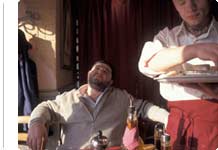
 Oktay Mammadov, the one who is rooting for Lokomotiv, also considers himself a Muscovite - simply because he has been living here since 1990. He is “bombing” on the red “penny” of the age of independent Azerbaijan, but still decent enough to come to it in a small national cafe in the backyard of the Cherkizov market. A variety of people gather here: from the owner of the wholesale vegetable base to sellers from the market, they drink tea and watch football. The police do not bother them, he knows that the Golyanov Azerbaijanis has no problems with registering. But Oktay would still like to live in his homeland. Each person lives better among his customs: "I can fulfill them, and no one will look at me wrong." He married his daughter in his homeland - they were noted there as it should. And they live with a son -in -law also in Azerbaijan - more familiar there.
The eldest son move to Moscow was hard. He did not know Russian well, and in the 8th grade of the school did not want to take him. “Yes, and he does not need an education at a school where teachers in the market at the same time work by sellers. What will they teach him - trade? Azerbaijanis themselves know how to trade. "
The inhabitants of Golyanov, perhaps, are not very delighted with their neighbors, but there is no mass resettlement from the district yet. Although there are, of course, those who left. “I am not worried, because I have nowhere to go anyway,” Mikhail Elistratov, a 30 -year -old car mechanic from Golyanovo, says with a laugh. He was born here, here and came in handy. He found his wife, here lives with her and a five -year -old son. “And Azerbaijanis ... Well, they are different. They come to our service. Someone is normal - well, like us. Someone on the show -off - the king of the mountain is straight. " Two Azerbaijani families are rented in his house, who bought housing in the center of Russian families. "These neighbors with children, quiet, do not yell."
But such a forced and wary ethnic truce is unlikely to last long. Soon, there will be much more representatives of “minorities” in the capital. Now, when registering in the registry office, the share of newborns from Russian parents is only 55%, and 4 years ago there were 70%of them. According to the head of the Moscow migration program, Sergei Smidovich, the point is not the number of children in the family, there are simply more than migrants more people of childbearing age - visitors are mainly 29–40 years old. Migrants have many children - this is good, Smidovich says, if not for them, Moscow would be the first in the list of Russian cities with critically low birth rate. And the bureaucratic spell adds: "We need to make them Muscovites." In the center and in the west of the capital it turned out.
Baku Armenians
 In Soviet times, the geography of the resettlement of the peoples of the USSR in Moscow was not ethnic, but social. Workers - among them the Tatars prevailed - settled near industrial areas, where housing for limiters was built. Employees - for the most part Russians, Armenians and Jews - settled in the city center and in new cooperative regions in the south -west and north -west. Among the party nomenclature, Ukrainians prevailed, who preferred quarters along the government Kutuzovsky Prospekt. Then the ideas about the prestige of the districts were formed.
From the time of the last Soviet census, the border of resettlement has changed. Now the map has both traditional ethnic addresses and new, “social” - in accordance with changes in income sources. The “new” Muscovites-Ukrainians now settle along the outskirts and in the Moscow areas outside the Moscow Ring Road (among migrants there are many builders working at the construction sites near Moscow), Armenians and Azerbaijanis prefer to live closer to large markets. So, for example, the Azerbaijani community was formed in the same Golyanov: this initially a poor area adjoins the cyclopic Cherkizov market.
The Baku Armenians, who have been living in the Vostryakovo microdistrict in the south -west of Moscow for more than 15 years and are officially considered Russians and Muscovites, this address generally appeared “for ordering”, and now the candidate for the title of the first Moscow ghetto.
By the decision of the Moscow city committee and the city executive committee in 1989, a group of refugees from Baku - both Armenians and Russians - were settled together. Part is in the new Cheryomushki, on the street of Nametkin, part is in Vostryakov. In the mid-1990s, both groups, again by the decision of the authorities, were connected in Vostryakov, although those that were richer, remained in the now prestigious cherries in the shadow of the Gazprom skyscraper.
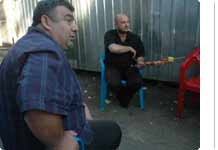 The 21-year-old Bakanets Artem and his classmate Sasha (lawyer by education and a musician by vocation) are too young to remember the details of life in Baku. Remember the spirit. Something there was exactly like here, in Vostryakov: the same barbecue in the evenings (“But we are quietly sitting, we don’t interfere with sleep”), the same respect for parents, backgammon, after all. “My grandmother says, Moscow spoils people,” says Artem. - But this is only a weak character can be spoiled. Those who remember Baku, I think, this damage will not affect. But our neighbors, who have already been born here - who is 13-14 years old - the influence of Moscow is noticeable on them. ” They smoke, stagger idle, do not play sports.
Armenians, unlike Azerbaijanis, are very trying to give their children higher education. Artem - a third -year student of the Faculty of Medicine of the University of Friendship of Peoples, came on the second attempt, but on the budget - free - a place. Sasha graduated from the Moscow Juracadmate, he is a criminalist, he still works as a specialist in the bank in the consumer department (“But this is temporary!”). “In my group, people of 20 nationalities,” says Artem, “there are Yerevan Armenians, so they pull me: they say, if you are an Armenian, so why are you talking in Russian? And we are used to Baku that Russian is a language of interethnic communication, a language that everyone understands. Why is it to separate? "
The guys say that the community is open for neighbors. On the barbecue, which the Vostryakovites often recall, there are, according to Sasha, both Solntsevo and university friends.
But officials consider the compact settlement of the Baku Armenians in Vostryakov a mistake. It would be more correct to spray the community in all ten districts of the capital, reflected by Sergey Smidovich from the Moscow government, for example, by quotas of 100 people per district.
The resettlement of Vostryakov is already coming, but sluggish. Not the Armenians leave, but the indigenous inhabitants of the microdistrict, who do not like that there were a lot of Armenians, Smidovich explains. But the hostility to visitors, as a rule, is still not so strong as to agree to the areas where the authorities offer to change is completely out of town.
 But the Russians are ready to intervene “Movement against illegal immigration” (DPNI), it appeared three years ago, immediately after mass clashes with Armenians in Krasnoarmeysk near Moscow. Director of the local tobacco factory Armenian, and there are many of his compatriots in the city. There were conflicts before, but in 2002, a household quarrel in a cafe grew into a multi -day war with victims.
The emblem of the organization on the site is an innocent road sign “Stop prohibited” - in form they try to move away from the Nazi style. This is dangerous, human rights activists warn. Alexander Verkhovsky, the head of the Analytical Center “SOVA”, dealing with the problems of extremism in Russia, complained to Newsweek that the DPNI is “PRP and lawyers of nationalism” who could get to the heights of the authorities, like Le Pen in France. They participate in the courts of nationalists and migrants, actively conduct PR events and study various scientific studies from the field of sociology and ethnic conflictology. And the representative of the DPNI, Alexander Belov, generally says that he is welcoming skinheads at his rallies in order to dare them from lawlessness.
Belov even read the study of Wendina, but his essence reproduces very approximately: “If the non -Slavic population is more than 5%, then the indigenous people feel uncomfortable. If more than 30%, then the Russians begin to leave. ” Belov and one of the theories of criminal sociology voluntarily quoted: “When an emigrant enters the civilized from a traditional society, he disappears taboo and he commits crimes.” And since the state does not deal with interethnic problems, then skinheads and football fans with mounts will be engaged in them, the nationalist predicts.
Armenian Yuri Suleimanov and Azerbaijani Oktay Mammadov, therefore, chose Lokomotiv that he, unlike CSKA and Spartak, does not have his own nationalist support group. At his stadium adjacent to the Cherkizovsky market, no one will shout the famous cry: “Russia - for Russians, Moscow - for Muscovites!”