
Translated material
Hurricane Katrina will cost the American authorities up to $ 100 billion
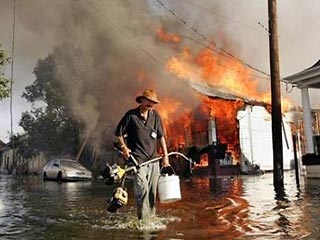
The expenses of the US government in connection with the hurricane Katrina may well reach $ 100 billion, many times higher than the costs of eliminating the consequences of any other natural disaster, as well as the amount of $ 21 billion allocated by New York after September 11, 2001.
"There is no doubt that the current expenses will significantly exceed the expenses of New York to eliminate the consequences of September 11," said Senator Jad Gregg, the Republican from New Gampshire and the chairman of the Senate budget commission.
Representatives of the administration reported that operations to save people and eliminate the consequences of the elements in Louisian and Alabama cost more than $ 500 million a day, and expenses continue to grow, reports The New York Times , the article published byInopressa .
Less than four days after the Congress approved the allocation of $ 10.5 billion for extraordinary assistance, the White House officials said that in the next two days they would ask to allocate an even larger amount.
Information agencies, referring to the members of the Congress, report that President Bush will probably ask to allocate another $ 40 billion. However, representatives of the administration emphasize that even their second request will only be temporary “pluging holes” until a complete assessment of the consequences is made.
Although the time has not yet come for comprehensive calculations, the costs will probably destroy Bush plans to reduce the federal deficit, and possibly plans to further reduce taxes.
On Monday, the leader of the Senate majority, Bill, Help Rushed to postpone the vote regarding the abolition of inheritance tax - a step, from which he won 1% of the wealthy citizens, but which in practice would deprive the treasury of $ 70 billion a year.
The leaders of the Senate and the House of Representatives are also now reviewing their expenses prepared for $ 35 billion in the next five years for the social protection programs, such as Medicaid, student loans, grocery cards and social payments to low income families.
These reductions now look politically unacceptable for Bush and republican lawmakers who are trying to resist criticism of the federal government for insufficient assistance to the unfortunate victims of the hurricane. "Democrats think that this is the most inappropriate time in order to reduce taxes for the top and cut social benefits to those who are at the very bottom," says Thomas Cannes, the head of the Democratic Party team at the Democratic Party of the House of Representatives.
Budget analysts say that the scale and unique character of the hurricane "Katrina" distinguish it from all previous natural disasters. Here are some examples of expenses:
- providing housing about a million inhabitants for several months or even a year;
- obligations to compensate for a significant share of property losses not covered by private insurance;
- Providing health and education services for hundreds of thousands of people who are forced to leave their states.
The costs of providing medical care to low -income people are usually divided by the federal government and government governments. However, representatives of the administration say that the federal government will take on all expenses regarding the evacuated people, and the existing norms of granting the right to help will be softened.
“Katrina” may well be a turning point for the federal budget, ”says Stanley Collender, a budget expert from Washington. “Now, measures can become standard that have never been considered as possible.”