
Translated material
The Synod of Catholic Bishops discussed the problem of marriage and sexual morality
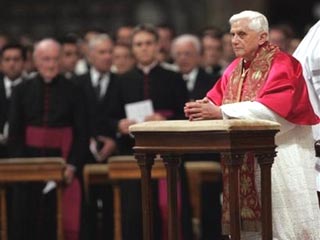
As already reported , meetings of the Synod of the bishops of the Roman Catholic Church are held in the Vatican . Before its completion, only a few days remain. For three weeks, the Catholic and secular media have covered the main topics discussed at a meeting of bishops who arrived in the Apostolic capital from all countries of the world. They tried to make forecasts about the future fate of the church. At the same time, many journalists seemed to forget that the Synod is an advisory body and decisions made by it come into force only after their dad is approved by Pope, today in an article published in NG religions .
Observers note that the work of the Synod significantly revived the introduction of the so -called hours of free discussion in the regulations of the meetings. After each session, any of the participants could offer a discussion of a topic not provided on the agenda. Thanks to this, really acute and urgent problems were voiced.
The communion was originally called as the main topic of the meeting, and the bishops considered all the questions related to it in great detail. In particular, at one of the meetings, the head of Ukrainian Greek Catholics Cardinal Lubomir Guzar made a rather bold proposal. He believes that the Catholic Church should approve the joint commission of the liturgy with Catholics and Orthodox and, accordingly, resolve the joint communion of believers of the two churches.
However, the public's close attention was attracted by other, “matrimonial” issues, especially related to Tselibat (celibacy of the clergy) and the termination of church marriage among the laity. Recall that in the Catholic Church, the whole clergy - both black and white - cannot marry. This problem for the Catholic Church over the past decades is one of the most acute.
The inability to marry the majority of potential priests from the adoption of the dignity. It is with this that a serious personnel crisis is associated, whose evidence is a tangible lack of Catholic clergy in most countries of the world.
The archbishop of the city of San Paulo Cardinal Claudio Humel drew attention to the fact that in Brazil, where Catholicism was once a dominant denomination, about 30% of the population turned into Protestantism . According to the cardinal, the main reason for the transition is a noticeable lack of Catholic priests, so the adoption of a dignity with married men would be saving for the church.
In turn, representatives of the eastern Catholic churches, where the marriage of priests is allowed, also call on to the dedication to the dedication of married men. However, according to observers, Pope Benedict XVI in this matter, apparently, will remain a conservative. Pontiff's position was tried to voice the Patriarch of Venice Cardinal Angelo Schol, who referred to the encyclical of Pope Paul VI "Sacerdotalis Coelibatus" ("On the Celibence of Priests"). In this encyclic, released in 1967, Pavel VI called Tselibat "form of imitation of Christ" and "proof of the shepherd's love for the church."
However, the same Angelo Schola called "too harsh" the current position of the Catholic Church on the question of diluted Catholics who entered into a new marriage. For the Church, the divorce itself is a sin, but the re -conclusion of marriage is considered as an act of a doubly sinful one, leading to excommunication from the participle. Obviously, such conservatism in this matter repels people from the Church and further exacerbates the crisis that exists in it.
The personnel issue in the Catholic Church also affected the developed countries of Europe, where they are trying to rectify the situation by inviting priests from Eastern Europe, in particular from Poland and Croatia. On the Synod, this practice was stiffly criticized by a number of hierarchs. In their opinion, this kind of "migration" of the clergy deprives the regions with pastoral custody, equally in need of priests.
Journalists illuminating the work of the Synod paid increased attention of the new message of the new message of Pope Benedict XVI outlined for November. It is expected that it will be affected by the problem of homosexuality among the clergy. Apparently, the pontiff will once again show himself as a conservative in this matter and oblige the bishops to carefully check the persons entering the theological seminaries. Those who are inclined to such sexual relations will be denied an admission to study, and the restrictions will allegedly affect only those who "will prove that for at least at least three years they lived in chastity." At the same time, the procedure for verifying the fact of three years of abstinence from sexual contacts is not completely understandable.
In Catholic circles, it is believed that the problem of homosexuality among the clergy can be dealt with by canceling or reforming the Tselibat Institute. However, the experience of other Christian churches shows that this problem is not solved in this way. Thus, the priests of the Anglican church were initially not forbidden to marry, but, despite this, today homosexuals are widely represented among the Anglican clergy and hierarchs. This problem is urgent for Orthodoxy , where there is no mandatory celibacy.
Most likely, the Catholic Church will not be able to solve all problems in one fell swoop: to bless the divorces and resolve marriage for the clergy, the author of publication in NG religions believes.