
Translated material
The faces we choose
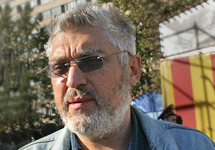
I fought for the great party of liberals for twenty years
Gabriel Garcia Marquez
In the time of the Gorbachev perestroika, the Secretary of the USSR himself and many of his then supporters (not sure that like-minded people) loved to say that under socialism we still did not live, therefore, to criticize it, socialism, for what was happening in the country from 1917 to 1985 and the next few more years. Rhetoric had no particular success, as subsequent events showed. Too many people, as a result of the described about the seventy -year period described at all, did not want to listen to any socialism anymore. Moreover, the practical decisions of the authorities then again did not like too many in meaning and in terms of results, and not in ideological justifications.
Nevertheless, in the public consciousness, the idea that socialism can be two types-Stalin-Maoist, half a Polopotovsky and with a "human face" somehow rooted. But liberalism, as the main antithesis, is about the same and similar to the "bestial grin." Sometimes, even in the eyes of those who sympathize with him, he looks like a strong triumph, and, they say, "let the loser cry." I will sincerely be happy to be mistaken, but, indeed, the feeling is that this opinion is widespread. But it is wrong in all points.
First of all, liberalism should be distinguished as a social structure, and liberalism as a certain political project. Liberalism as a social structure is, in fact, just democracy, i.e. The right of most citizens to decide what power will be in the country, and the right of a minority in any next elections to become a majority. This is a wide civil consensus regarding, first of all, free, passing through a strict procedure, carried out with regular frequency and with an unknown election result in advance. This once liberal idea in many countries is adopted by conservatives, socialists, and Christians, and "green", and even communists. After all, she gives a chance to victory to everyone, while all insures for the persecution by the authorities for political reasons. Therefore, it became part of the "social contract", which is beneficial to both society as a whole and its different components separately. Unfortunately, we have no such consensus yet. Not only on this issue, but also on many other, sometimes no less important. But wide consent on basic civilized principles is the basis of civil society, and, consequently, a prosperous state.
That is why, for example, I categorically condemn the attempt to accuse young National Bolsheviks of trying to seize power. The seizure of the premises and the seizure of power are very different things. If not, it turns out that in Russia today is an office - like Paitsa in the empire of the Genghisids, who owns it - he and the prince. And then, if V. Putin is not in the Kremlin, then he is not the president. And if, nevertheless, the president is even outside the Kremlin, then these guys are “sewing a matter” or, at least try to charge a much more difficult than the one that they deserve. Those. Personed for political reasons. And I cannot but protest against this, firstly, for fundamental reasons, and secondly, in pragmatic-today they, tomorrow, others, including my like-minded people and myself.
The continuation of this example illustrates well the meaning of the consensus in question. I have not been and will never be either a Bolshevik or a nationalist. And in those years when the Limonovites chanted "Stalin! Beria! Gulag!" My relationship with them sometimes took more than conflict forms. But now E. Limonov and his colleagues talk about the freedom, justice and human rights. And in these matters I agree with them. Therefore, a tactical alliance with them is not unprincipled for me. This is a liberal consensus - after all, neither I, nor they, with me, are nothing good about Stalin, Beria and Gulag are talking. And free political competition in a free honest election is just a chance for everyone. Citizens will vote for nationalism and Bolshevism - which means that we have such voters and so we worked with them. The main thing is that the elections are, and that their winner is not appointed in advance. Including because only under these conditions does a liberal political project have chances.
And in this sense, liberalism is also not at all the same as it appears in the form described at the beginning of the column. Liberalism is not at all a right -wing political project. In fact, he is a centric, sometimes even levocentric, not to mention the fact that the Law -Leo scale itself in politics is rather a phenomenon of the nineteenth - the beginning of the 20th centuries. At one time, it was the liberals, seeking freedom, for the first time formulated the thesis about the social state, and defending human rights, demanded both the right to education and the right to equal payment for equal work, and much more, which is now associated with a socialist project. This is normal - times are changing, and the liberal project of the XVIII - XIX centuries. In many countries it has become everyday life, and those who protect its meanings today are naturally called conservatives there. And where the general vector, in the framework of a free civilized choice, moved to the left, the consensus was reached on liberal political and socialist economic principles. For example, in Denmark. The Danes want to live like this. They have the right. There are not only beggars, but also poor in the Russian sense of the word. But there are 68%taxes. Don't like it? Do not live in Denmark. Or try to convince most of the Danes that this is wrong. Many do so. They could not. And in the homeland of Scandinavian socialism, in Sweden, they were able to. There, after decades of the victories of the Social Democrats, about twenty years ago, liberals came to power. And, among other things, the legislative maximum taxation was established - 50%. And, although since then the Social Democrats have been in power repeatedly, they did not try to cancel this norm. And it is clear why: it seems very important and correct too many voters.
Another example. According to the model, compiled by liberal (and not conservative) experts, the government M. Tetcher carried out privatization. And the main element of the competition for the right to receive ownership some objects were managerial and investment components, and not money to the budget. Mines, only about money, left one pound. But so the fact that the problem of mining strikes as a crisis factor has not existed in England since then.
In general, it can be argued that liberalism as a political project, oriented on a personality, is always very fake and tied to this society in these circumstances at the moment. In it, in comparison with conservatism and socialism, there is little preference and practically no eternal truths. If someone prefers pre-protection and calls her confidence in the future, there is nothing wrong with that. This is also normal. It is abnormal - by force to impose a lack of freedom for others for the sake of confidence in the future only for themselves and their personal children.