
Translated material
Archimandrite John died (peasant)
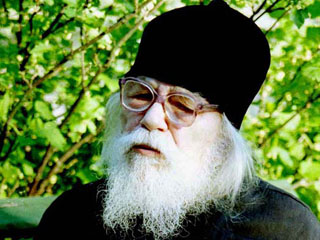
Archimandrite John (peasant) passed away. He died at the age of ninety -five years on Sunday morning, when worships were performed in all the Orthodox churches of the country in honor of the "small Easter" - this is what Christians call every Sunday day, the prototype of which is the resurrection of Christ. Together with Father John, a whole era in the life of the Russian Orthodox Church has sunk into oblivion, it is noted in the necrologist who today was widespread by the Interfax agency.
Archimandrite John was revered by the whole Orthodox Russia as an old spirit. Every day for almost four decades, hundreds of people came to the Pskov-Pechersky Monastery in order to share their troubles and joys with the priest, ask for advice in difficult circumstances, hear his authoritative pastoral word, measure it with a strict measure of himself and his life. Among those who visited the elder were ordinary parishioners and representatives of the political, scientific and cultural elite of Russia. In August 2000, visiting the Pskovo-Pechersky Monastery, President Putin visited his father in his cell. Books of Archimandrite John dedicated to various aspects of spiritual life diverged in thousands of print runs not only in our country, they were translated and spread abroad.
The oldness in itself is the phenomenon of mainly monastery life. It involves the leadership of a moral increase in a person through advice and instructions by a more spiritually experienced old man, to whom the student fully entrusts himself. The feat of old age is especially difficult, not without reason in the history of the Russian Church, there were very few people who committed it. The traditions of old age were transferred to Rus' in the 18th century with Athos Monk Paisiy (Velichkovsky), who was glorified several years ago in the face of saints. The most famous successors of his affairs were the Optina elders, the elders of the Glinsky and Sarov desert, from where the Monk Seraphim of Sarov also came out.
The elder could be a monk and white, i.e. A married priest - but necessarily a prayer book, ascetic ascet. And most importantly - he had to have the gift of love for God and his neighbors. Father John was abundantly endowed with this talent. He did not push away from himself, even people guilty of the most serious crimes. Almost to the very death, being already very weak, Archimandrite John continued to accept those in need of his help and advice. He compared senior ministry with paternity, believing that the confessor helps a person morally revive and indicates the path to the likening of God.
Archimandrite John possessed protrusion and gift of reasoning, so rare in our time. It was his spiritual authority that made it possible to significantly reduce the intensity of passions and ideological speculations, inflated around the assignment of an individual taxpayer's individual number around Russia. The firm and balanced position of Father John, who more than once spoke with the statements that the number was not assigned by the state, and sin excommunicates the person from the Creator, allowed to avoid the split among believers, to preserve church unity.
He passed away on the day when the Russian Church performed the solemn glorification of the great host of the new martyrs and confessors of the Russian 20th century. Many of them were contemporaries and teachers of Father John, most of which came for the time of the most severe God -fighting persecution. For the loyalty of the church, he paid five years of forced labor camps, which makes him involved in the feat of confessors.
He was gone to Nakunun. A small cell was empty, the walls of which are hung with dozens of icons - silent witnesses of prayers and the works of the old man. But in thousands of hearts, there was a memory of him, his books remained, which are an invaluable indication of the path to a true update, inspiring hope.
“Life is now difficult, a flutter of frightening information shakes the already fragile balance. So that we do not react so painfully to these from the enemy, we must firmly believe that only God rules the world, and try, it is possible to live according to the commandments of God,” wrote Father John to one of his spiritual children.
It seems that this instruction is especially important today to remember, emphasizes in the necrologist.
Reference
Archimandrite John (Kentankin) was born on April 11, 1910 in the city of Orel in a large family and was the eighth child with parents. The boy was named in honor of John the Desert, whose memory is celebrated by the church on this day.
Since childhood, Vanya Koratyankin went to the temple and was in obedience to the Archbishop of the Oryol Seraphim, known for his monastic severity. In 1945, in the temple at the Vagankovsky cemetery in Moscow, Ivan Koratyankin was ordained a deacon, then Patriarch Alexy I in the Izmailovsky Church ordained him in a priest. Here he served until 1950, until the authorities arrested him on charges of anti -Soviet agitation and sent seven years to the camps for seven years.
Father John was released ahead of schedule in 1955. After the liberation, he was sent to serve in the Pskov diocese, then transferred to the Ryazan diocese. In 1966, Priest John was accepting monasticism, and since 1967 he became the inhabitant of the Holy Assumption Pskov-Pechersky Monastery, where he worked until the last day.
In recent years, due to age and illness, Father John was not able to accept those who wanted to talk with him, but letters from different parts of the world continued to come to the address of the monastery, and he answered many of them. These answers have already stood several printed publications in many languages: those people who did not see the old man find their comfort and help in them, but read his book “Letters of Archimandrite John”.