
Translated material
The Times: the Kremlin plans a large robbery in Yakutia
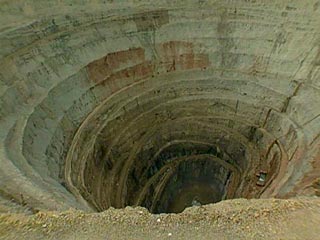
The Museum "Treasury of Yakutia" has a collection of 14 diamonds the size of a golf ball, including an Olonkho diamond of 130.85 carats, worth 500 thousand dollars. The pebbles like these turned Yakutia from a bear angle inhabited by shepherds and fishermen, to a prosperous center for the development of deposits, which supplies 23% of unprocessed diamonds in the world - only Botswana is inferior only to Botswang's production.
However, the Yakut diamonds turned out to be the last target chosen by the Kremlin during the campaign to return state control over the strategic resources of Russia and the regions striving for autonomy, writes The Times (full text on the website inopressa.ru ).
The Kremlin’s heavy tactics are damaged by relationships with the Yakuts, the Asian people, who was conquered by the Cossacks 400 years ago. “Diamonds are our money, our bread,” says Baghdaryn Sulbe, a 78-year-old specialist in the history of the Yakut people, who spent two and a half years in the labor camp in the 1950s. “We are not separatists, but we are fighting for the future of our people.”
After the collapse of the Soviet Union, the Yakut diamond deposits were united in the framework of one company "Alrosa". The federal government, which at that time was weak, received 37% of the shares, and the Yakut government left itself 40%. The rest went to the ALROSA employees.
Now the Kremlin wants to increase its share to 50% plus one promotion in order to take control from the company's management in this way, and Yakutia has a profit from Yakutia. The federal authorities insist that these actions will allow them to transform the most opaque industries of the country.
Finance Minister Alexei Kudrin promised within six months after the transition of a control package of shares to the government to cancel the state monopoly on the trading of diamonds. However, the Yakuts bite into their storage teeth, in fear of losing control of a source of 60% of the region’s income, the newspaper writes.
Local lawmakers demanded that Yakutia save his share, and President Putin personally guarantee compensation for any loss of income. A group of education workers formed the "Popular Front" of Yakutia-Alros, which held several protests against the Kremlin plan.
Ivan Shamaev, a 54-year-old school principal, who heads the group, said: "We understand that these actions are not taken in order to strengthen the Russian state, but in the personal financial interests of forces in the Kremlin."
Until recently, Yakutia has successfully opposed the reform project. However, the Kremlin activated its attempts after the adoption of the law last year, according to which the heads of regions are not elected by direct voting, but are appointed by the president.
The head of Yakutia, Vyacheslav Shtyrov, should now obey the Kremlin, otherwise next year he risks losing his work when his current term will end. Putin even visited the last month in Yakutia, where he met with him and invited him for further negotiations to Moscow this month.
Analysts consider the Kremlin plan as another strategic step after the renationalization of Yukos and Sibneft, private oil companies. Despite the denials from the Kremlin, rumors are not exhausted that the Kremlin plans to use the company "ALROSA" to buy Norilsk Nickel from the metallurgical oligarch Vladimir Potanin.
The federal authorities agree to leave her share for Yakutia and plan to buy off the shares of employees of Alrosa. However, the Yakuts show no desire to give the main production unit of the Yakutalmaz company.
It belongs to the Yakut government, which gives him to Alrosa for $ 350 million a year. “Having lost it, Yakutia will be in economic depression,” says Vasily Vlasov, deputy of the Yakut parliament.