
Translated material
"Hamas" officially called the candidate for the post of Prime Minister of the Palestinian Autonomy
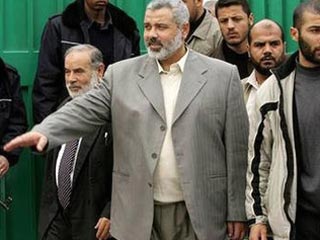
The Hamas movement nominated its candidate for the post of Prime Minister of the Palestinian Autonomy. As expected , they will be 43-year-old Ismail Hania, who headed the Hamas list in recent parliamentary elections.
The next Saturday, the parliament of the new convocation will be sworn, after which he will have approved the candidacy of Hania, which will form a new government. Hania is considered a “pragmatist” and gained popularity among the masses for his calls to combat corruption in the power structures of the Palestinian National Administration.
Speaking recently in Gaza, he said that the government that will form Hamas will be a “technocratic national coalition cabinet”, which will restore the legality in the Palestinian autonomy. He also made it clear that Hamas would deal with the high salaries of former deputies of parliament and PNU officials. "
Earlier it became also known the name of the candidate for the post of speaker of the Palestinian Autonomy Parliament. They became Abdel Aziz Dauik, professor of geography from Hebron. About ten years ago, he performed the functions of an official representative of militants deported from Israel to Lebanon. “Hamas” belongs to the majority of places (72 out of 132) in parliament, which gives the group the right to appoint a speaker from its members. According to the Palestinian Constitution, it is the speaker of the parliament that replaces the head of autonomy if for some reason he cannot fulfill his duties.
Meanwhile, as the Asharq Al-Awsat , published in London, writes in London, the leaders of the Fath traffic in the elections expressed a desire to join the government coalition that Hamas will form. However, to create the Khamas coalition government, several conditions must fulfill, including the recognition of Israel’s right to exist, compliance with existing agreements with Israel and support peaceful Arab initiatives, Interfax reports.
Israel, for its part, decided to turn off the gas sector from electricity and close the boundaries with the sector. This means that the transportation of goods from Israeli territories to the Palestinian, as well as the issuance of permits to work in Israel, has been stopped.