
Translated material
The ISS orbit was raised by 3 km
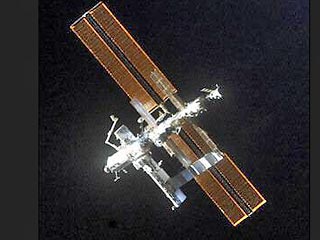
The Russian flight management center (TsUP) on Wednesday in the evening carried out the same -pulse correction of the ISS orbit and thereby increased the flight altitude by about three kilometers.
"For the correction of the ISS orbit, four engines of the M-54 progress cargo ship were used. They were turned on at the automation command at about 20:50 Moscow time and worked for about 16 minutes," the TsUP press service told Interfax.
The purpose of increasing the average height of the ISS is to prepare for the reception of the Soyuz TMA -8 manned ship, the start of which with the crew of the 13th expedition and the first cosmonaut of Brazil is scheduled for March 30 from the Baikonur cosmodrome, and the docking with the ISS - on April 1.
It was planned to raise the average height of the ISS orbit to about 348 km. "The way it will be possible to judge how accurately it was possible to reach the calculated parameters of the orbit in a few hours when the station makes a couple of turns around the Earth," the press service explained.
A similar correction of the ISS is carried out periodically to maintain the working height of the station's orbit. This is a planned operation that is performed as necessary 3-4 times a year. The ISS flies around the earth at an altitude of about 350 km. Depending on the flight conditions, its height decreases at a speed of 50-150 meters per day.
The Central Department Store explained that the ISS can be raised to a height of about 390-400 km. In this case, the station will practically not decrease and the need for the periodic correction of its orbit will disappear. However, American shuttles who deliver people and goods to the station cannot “climb” to such a height. In this regard, it was decided to reduce the height of the ISS orbit to 340-350 km.
Since October 2005, the crew of the 12th main expedition as part of the Russian Valery Tokarev and NASA astronaut William MacArthur has been working on board the ISS. Now they should be replaced by Russian Pavel Vinogradov and American Jeffrey Williams. Together with them, the first Brazilian cosmonaut Marcus Pontes will go to the ISS with a short -term visit to the visit.