
Translated material
Iran Foreign Ministry: we will not enrich uranium in Russia
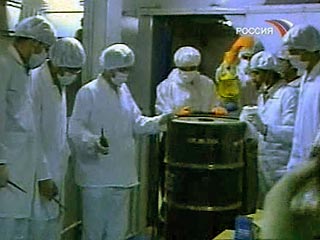
Tehran no longer considers the proposal to create a joint venture to enrich Uranus in Russia and intends to implement its own large -scale project in this area. This was stated on Sunday by the official representative of the Ministry of Foreign Affairs of Iran Hamid Reza Asefi. “Russia's proposal is no longer on the agenda,” Asef said, RIA Novosti said.
“The circumstances have changed,” said the representative of the Iran Foreign Ministry. “We need to wait and see how events develop in five countries with the right veto (in the UN Security Council).”
According to the representative of the Iranian Foreign Ministry, adopted at the last meeting of the Board of Management of the International Atomic Energy Agency (IAEA), the decision to inform the UN Security Council for the Iranian nuclear problem is "political and unacceptable."
He also stated that at present Iran’s parliament does not intend to ratify an additional protocol to the agreement on non -proliferation of nuclear weapons (day).
Moscow expects an official notification from Tehran regarding the Russian proposal to create a joint venture to enrich Uranus, the official representative of the Ministry of Foreign Affairs of the Russian Federation Mikhail Kamynin told Interfax on Sunday.
"The Russian side expects the receipt of the official statement of the Iran of the Iran, after that we will think about our position," Kamynin said.
According to the head of the International Committee of the State Duma of Konstantin Kosachev, the statement of the Iranian Foreign Ministry can significantly affect the upcoming discussion of the IAEA report in the UN Security Council.
"It can be assumed that this decision of Tehran significantly radicalizes the upcoming discussion of the IAEA report at a meeting of the UN Security Council, since Tiegran's trust in Tiegran’s true plans and intentions is now significantly undermined," Kosachev said in an interview with Interfax.
He noted that the statement of the Iranian Foreign Ministry cannot but cause "regret and disappointment, since it destroys the last real opportunity for a compromise."
At the same time, Kosachev emphasized that no matter how the situation develops further, it becomes "more and more obvious that Tehran never considered Russia's proposal about a joint venture as a replacement of its own national enrichment program of Uranus, but only as an addition to it."
This position was, Kosachev emphasized, initially unacceptable for both Russia and the international community, but for Iran was an excellent opportunity to "create the illusion of the negotiation process and tighten the possible transmission of nuclear dossier to the UN Security Council."