
Translated material
Handelsblatt: Merkel will decide the dilemma at a meeting in Putin in Tomsk
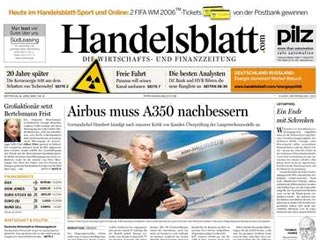
Angel Merkel during a meeting with Vladimir Putin in Tomsk will have to solve a difficult task: the federal chancellor should indicate the contours of further cooperation between Russia and Germany, and in this matter the line between imposition of friendship and keeping the distance is too thin, the Handelsblatt newspaper writes on Wednesday.
This task is also a difficult task because Russia has changed a lot in recent years. For the first years of Putin’s stay at the head of state, uncertainty was characteristic, and increased tones, on which Moscow sometimes spoke, were rather a compensation for the loss of the significance of the times of the superpower of the USSR. The West then feared that due to depression, Russia could become aggressive, the German edition continues.
Now times have changed. Economic growth, political stabilization and the growing power of the country as a supplier of energy resources served as a powerful impetus to strengthen self -consciousness. Russia's claims of an active role in world politics are more restrained, but they are voiced quite persistently. Moscow wants to have a word in the Balkans, in the Middle East and Iran, and this time there is real power behind the claims of Moscow. It is no accident that the United States and the EU took Russia in finding a compromise on the Iranian nuclear program, a special place, notes Handelsblatt (full text on Inopressa.ru ).
From this, according to the leading German business newspaper, the Merkel dilemma begins. On the one hand, it should enlist in Russia's support, since without it it will not be possible to resolve such a large -scale conflict. Russia is the second largest nuclear power, has the right to veto in the UN Security Council and has a growing power as a supplier of energy resources. Thus, without Russia, and this was still understood by Merkel Gerhard Schroeder, there will be no stability in Europe, Handelsblatt emphasizes. On the other hand, the Chancellor's responsibility dictates the need to show the Russian side that from the point of view of Western democracy, the country has chosen the wrong domestic political direction. Putin could not scatter the prevailing impression that Russia was rolling to an authoritarian state, the publication states.
The problem for Merkel also is that it is pressure on it from several sides at once, continues handelsblatt. Voices are multiplying in the United States, calling for a more stringent position in relations with Russia. The states are afraid, and it is not unreasonable that the strengthening of the positions of China and Russia will limit their own freedom of action. But Germany is not interested in isolation of Russia. In addition, in Germany there is a somewhat naive vision of the world. Indignation covers the German media only when Russia begins to lead and position itself as a superpower. But Russia, unlike Germany, is this and absurdly assume that Moscow will simply take and abandon its interests and beliefs if they do not coincide with someone else's ideas. Other large powers will not do this either.
According to the German newspaper, instead of trembling more and more, it is better to judge Moscow in its actions: the foreign policy balance of recent months does not look so bad, the pussy sprouts in Ukraine and Georgia Putin, despite all the fears, have not trampled, and the Russian line of behavior in relations with Khamas or Kosovo’s independence can simply be calculated by mistake. American and European concepts are also often unconvincing, notes the publication.
At the same time, Russia is conducting a conflicting policy towards Iran: on the one hand, it declares that Iran never recognizes as a nuclear power, on the other hand, Russia supplies Tegran anti -aircraft missiles. This kind of contradictions give rise to distrust, writes Handelsblatt.
Merkel has to find the necessary balance. It makes no sense to threaten Russia with a finger, it would be more useful to decisively indicate to the negotiation partner that the Russian leadership of such an ambiguous policy is harming first of all and his country. Russia needs cooperation with Europe in the same way as Europe with Russia, the publication emphasizes.
The policy pursued by Moscow should not cause a double game. Politicians, as well as Russian companies should monitor the tone of their statements. And it doesn’t matter that, for example, there were sharp statements about gas supplies - it is important how it was done: what is just a statement of facts for one, the other can be regarded as a threat, emphasizes Handelsblatt. The United States also miss this sometimes. An indication of this in Tomsk can help in the future. Criticism of Russia as a large power often begins with an erroneous point, the newspaper concludes.