
Translated material
Europeans offer Russians to drink while driving
The European Conference of Ministers of Transport issued a number of recommendations for increasing road safety . In addition to a significant increase in fines and the introduction of strict speed restrictions in the city line, European ministers proposed to establish the maximum permissible indicator of the amount of alcohol in the blood of the driver. As a result, this limit can be set at a level of 50 mg/100 ml, that is, 0.5 ppm. For young drivers, the upper limit of permissible alcohol content in the blood will be 0.2 ppm.
To a level of 0.5 ppm, alcohol in the blood can rise after taking about 100 grams of vodka. Russian experts say that such a norm can lead to the fact that there will be more drunken drivers on the roads, the newspaper New Izvestia writes. Today in Russia this indicator has not been officially established at all and therefore is considered equal to zero.
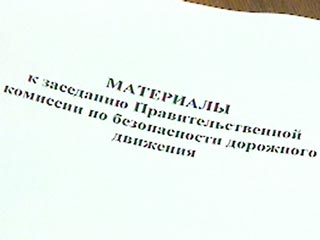
On Wednesday, the director of the Department of Road Safety (DobDD) of the Ministry of Internal Affairs of the Russian Federation, Viktor Kiryanov, said that the government will be considered the question of introducing this norm in the near future. Such an initiative was made by the Secretary of the European Conference of Ministers of Transport (ECMT) Jack Short.
“At the same time, it is necessary to ensure a high degree of execution of this rule and awareness about this extent,” Short said at the first meeting of the Russian Government Commission on Road Traffic Safety on Wednesday.
The idea of European ministers of transport was immediately supported by the head of the DODD of the Ministry of Internal Affairs of Russia Viktor Kiryanov. "We must return to this issue of ppm, using the public to work out this issue," he said.
Viktor Travin, President of the Board of Legal Protection of Car owners, calls a proposal to introduce such an "alcohol limit" by provocation.
“My attitude to the legislative establishment of an indicator of alcohol content in the blood of the driver is sharply negative,” Viktor Travin said. “Firstly, because there is no and cannot have clear criteria in this matter. 50 mg of alcohol on different people act in completely different ways. In addition, the Russian person does not know what it is to stop in time, that is, if you drank a little, this is a pure provocation in order to take it aside as it can be taken as it. A larger number of supposedly drunk drivers and thereby solve the problem of traffic jams in the city. "
According to Viktor Travin, if you introduce such a norm, this will allow the traffic police to demand an examination for any driver who will seem to be a road inspection at least a little drunk. And as a result, the issue will be resolved according to the corruption scheme - and give money in the form of bribes to the inspectors will be guilty and right.
In addition, experts believe that if the decision to introduce the "alcohol limit" will be made, the number of drunk drivers will increase sharply on the roads. And this, in turn, simply cannot but affect the increase in the number of traffic accidents.
Earlier, Russian experts proposed limiting the upper threshold of alcohol content in the blood of a driver with a level of 0.2 ppm, which corresponds to one glass of red wine or two bottles of beer with a capacity of 0.33 liters, drunk a middle -aged man and middle weight for an empty stomach. In Latvia, the permissible level is 0.2 ppm, in Belgium and Germany - 0.5 ppm, and in France - 0.8.