
Translated material
In Russia, they plan to cancel benefits when entering universities for schoolchildren-medalists
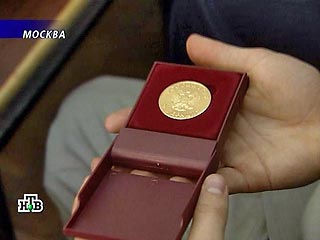
In Russia, the final battle for school gold and silver medals began: on Friday , the first exam was held at the graduates - an essay . If the candidates for medalists manage to get the treasured fives, then upon admission to the university they are awaiting serious benefits. However, it is likely that these benefits have been operating for the last year: officials from education plan to cancel them in the near future, since the number of medalists is growing unthinkable pace, the newspaper New Izvestia writes.
In Moscow alone, more than 5 thousand medalists are expected this year, and in some areas of the North Caucasus, absolutely all graduates of schools finish their studies with medals. With such indicators, more and more experts talk about the "false splendor" of school medals.
At the beginning of this week, during the “hot line” in the Ministry of Education and Science, the head of this department Andrei Fursenko said that in the coming years, benefits for medalists upon admission to the university will probably be removed. The minister argued his point of view by the fact that "the very possibility of benefits often" plays "at all the same as parents are counting on." Fursenko gave an example of his acquaintance of a graduate, who fundamentally refused the medal, as I am sure: in the university they will ask her ten times stricter.
However, according to experts, the desire of officials to cancel the medal benefits is primarily associated with the fact that too many “stuffy” excellent students have divorced recently. According to Evgeny Bunimovich, the chairman of the Mosgorduma Commission on the Education of the Moscow City Duma, we can now talk about the corruption of even this sphere of life - education. How else can we explain the fact that provincial towns in dysfunctional regions produce more medalists than the capital in which the number of round excellent students reaches 5-6 thousand.
The fact that medals are often not awarded, the teachers themselves are also recognized. “I believe that a person is simply not able to keep up equally well in all subjects. Another thing is that there are just diligent, hardworking guys,” the English teacher, the class teacher of one of the capital's schools Tatyana Zaitseva shared with the newspaper.
“I have to admit that many medalists are“ doing ”the principal of schools,” Galina Goryacheva, a teacher of mathematics, told the publication. “If earlier there was one or two medalist for one school, now ten to fifteen is not uncommon. In my opinion, local officials from education contribute to the increase in indicators. They encourage schools in which there are many excellent students. See how well children are taught.
The doctor of economic sciences, the head of the Department of Social Insurance of the Russian State Social University, Nikita Krichevsky, agrees with this point of view. “To improve statistics and maintain the prestige of its educational institution, the school must have a certain number of medalists - not too large and not too small,” Krichevsky explained. “By the end of the ninth grade, leaders are determined, who either study at four -five -year -olds, or are engaged in social activities, or have good relations with the leadership. After which they begin to“ pull ”the medal. They give an opportunity to retake the condensed exam, overtaken, overtaken Estimates, five are placed, as they say, by tradition. "
The right number of medals, according to the press secretary of the Department of Education of Moscow Alexander Gavrilov, is also taken into account when certification of schools. Therefore, often for children nominated for a medal, in fact, the possibility of choice is not given. “At the beginning of the 10th grade, the director called me to himself and explained in detail that I was obliged to“ go to the medal, ”said Alena K., who categorically asked not to name either her last name or the school number.“ I skeptically evaluated my strength and said that I could not cope. In response, the director gave me a long lecture about the prestige of the student, and then. He hinted unequivocally: either "you go to the medal," or slide down on the three. "
Many are trying to abandon the possibility of getting a medal, since not everyone has the strength to fully prepare for admission to the university and give all the full program at school. “Double stress for the child is very dangerous,” says Tatyana Mukha, the teenage psychologist of the Center for Development. “Fear of not going to the institute, not to justify the hopes of teachers and school principals can shake the health of a teenager. Against the backdrop of all this, neurotic diseases may develop, fainting will become more frequent.”
“I already managed to regret a hundred times that I agreed to the medal,” Anton V. admitted to the newspaper, who also asked to save him incognito. “I get up at seven in the morning to be in time for the first lesson at school. After classes, I’m returning to courses at the institute. I’m returning to school until two in the morning. The teachers, of course, constantly pulled me out, I would have overturned my grades without this. He did not reach the exams at all. "
All medal work is checked by an independent commission, and observers control compliance with the rules during the exams themselves. However, even in such conditions, teachers find a way to help their students.
“The observer who was supposed to control, as we write the graduation, we didn’t see the eyes at all,” said Irina Matveeva, a graduate of last year, “the teachers and parents of future medalists immediately took him to a separate office, set the table for five hours, even sang and danced. And at that time, a teacher of the Russian language read out medal essays, put it up for us, and corrected us, corrected us, corrected us. Spelling errors. "
An even more entertaining incident occurred in Nizhny Novgorod: there the graduates wrote an essay instead of five hours ... three days. “The teacher said that I have an order with the Russians, but the composition does not reach the five,” said Oleg Kashirsky last graduate last year. “And then I offered to take a notebook home and rewrite the work. I went about everything about everything. All this time we have corked over the task, and in the end I received the coveted five.”
But even if you can’t deceive the observers, school principals will always be able to agree with colleagues from an independent commission, the newspaper notes. “I failed in an exam in mathematics. It was decided to put me four,” Irina Matveeva continues her recognition. “Somehow it became known to the director of my school, and on the same day he sent a whole delegation of teachers to the commission. I don’t know if they gave a bribe, or simply talked, but in the end they put me up.”
They know the real price to modern medals in universities, so they do not have any special hopes for school excellent students. “I don’t have any illusions regarding the medalists. It all depends on a particular child,” said Natalya Malakhova, an assistant professor of taxes and taxation of the Russian trade and economic university. “Brilliant results at school can be a simple combination of circumstances. I am convinced that to know all objects is equally well. This is just the subject on which he is going to continue profile training? "
The colleague is also supported by the head of the department of mathematical economics and the economy of the HSE GSE Grigory Kantorovich. "Usually, medalists study at the institute above average, but there are exceptions to this rule. This is especially true for children from remote regions. It is really the best in his district school, but at the federal level, he can’t withstand competition," Kantorovich said. "The first exam is an excellent assessment for admission to the university, such children are often shiny, because they are preparing for it in a way. However, they already have in the first year. Places in knowledge can be found in the obligatory subjects, the delivery of which they escaped. "
But even if the medal is deservedly received, the former excellent student will not necessarily become a find for the university. According to Nikita Krichevsky, often the medalists have problems due to the fact that the institute makes graduates completely new demands. If at school the main thing is to understand the material and be able to adequately reproduce it, then in universities, especially technical ones, the ability to think non -standard, look for original ways to solve the problem, sometimes abstracting from memorized formulas. The free form of training often makes medalists slide into three. They are used to a clear discipline, a schedule that cannot be broken, they are used to studying from under the stick. Therefore, having learned that no one will force them at the institute and do not have to carry out their homework at all, relax and simply “score” to study.
“Our task is to select truly capable, talented children, from which large specialists can subsequently grow, but, unfortunately, the medal does not give such a guarantee,” Kantorovich is convinced. “The results of the Olympiads not only all -Russian, but also regional ones, which, unfortunately, are far from always accounted for.”
According to the psychologist Tatyana Mukha, there are really two types of children: those who are able to study well in all subjects, but have no special talent for anything, and those who lag behind in many disciplines, but in certain areas are truly talented. It is from the latter that large scientists, brilliant writers, famous artists and actors are more often obtained.
In general, all university representatives interviewed neither came to the conclusion that the medal benefits should be canceled, especially on the eve of the widespread introduction of a single state exam. And instead of medals, one could give special letters in one of the items. They could also be taken into account when enrolling in a university, the professor and associate professors and associate professors are unanimously. Directors of schools, tired of constant hype around unconfirmed gold medals, also advocate for the abolition of benefits.
Only high school students do not want to abolish benefits: the advantage of entering the university for a long time was one of the most good reason to diligently cram, and they are insulting that all their previous works would not be rewarded. “I very stubbornly achieved an excellent certificate,” said the schoolgirl Nina Makarova. “I worked for the future gold medal and the opportunity to enter the university with concessions, the competition is only growing from year to year. Is it really now that everything will go under the tail?” She is echoed by the candidate for the gold medal Stepan N.: "I would never have settled for textbooks so tightly if I did not know that I couldn’t do it in MGIMO without a medal. Some objects, such as physics, I would just skip. I think if the benefits are canceled, no one will study for five and would not want to study."
According to the president of the All -Russian Education Foundation, Sergey Komkov, in solidarity with schoolchildren, there is a more humane way to solve the problem of “false” medals. “To close the public institution in which corruption has started is the most primitive path,” Komkov explained. “Not all the medalists of linden. Many children really worked, tried, so why should they be responsible for adult games? You don’t need to cancel anything. It is just necessary to put things in order in schools and independent commissions. To tighten the control of graduates so that they do not help them on the exams and do not overstate their estimates during the year. Bring the program of universities and senior grades in line so that the teenagers do not overwork, working in two shifts - in lessons and in preparatory courses, and the problem will be solved. "
What benefits do school medals give
It is enough for the medalist to pass the first entrance exam “excellent” to be enrolled in the university. But even if the first test will not work on the "five", you should not despair. If the applicant-medalist does not get one point to the amount necessary for crediting, and free budget places will still remain, it will be credited on a free basis. Thus, in many universities, the medal is considered as an additional score on entrance exams.