
Translated material
The main methods of fraud in the exchange of cash currency
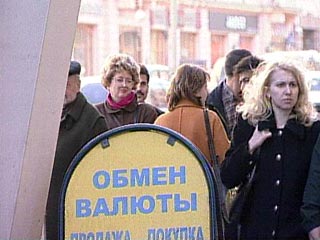
“The dollar is falling - the ruble is strengthened” - with such considerations, thousands of our fellow citizens suffered their dollar stagnacons and “stocking” savings in banks and exchangers. True, not everyone had a chance to calmly get rid of the unstable American currency. The newspaper “Version” tells about the most common ways to deceive the exchange of currency: they were counted, fakes, deceived with the course.
The first method: throw with a rebound
You can care for a gullible client and without risk of being convicted of fraud. The main thing is to properly put the money in the tray. The telling about this claims that in this way they are trying to “dilute” him in such a way with every second operation.
To crank this, do not have Copperfield talents. Only a few months of training - and you get a solid appendage to the salary. So what is this trick? The tray is an ordinary iron box with four walls. Honest cashiers lay out foreign currency or rubles to the wall, which is closer to the client. He pulled out a pack, put it in his pocket and went. However, very often it turns out that the pack is far from the entire amount you expected to receive. Two or three bills in some strange way find themselves at the back wall of the tray, where an unenlightened citizen will not occur to his hands. How is it that it turns out? The chip is that the cashier does not just put the money in the tray, but throws them with the trained hand of the hand, something like a throw of playing bones. When impact on the front wall, several bills are bounced into the depths of the tray.
The method is very convenient: if the customer of the exchange point recounts the money and finds a shortage, then the cashier will say that you need to carefully look at the tray. If you find that there is too much money after leaving the exchanger, then it will be unrealistic to return it at all. The main sign that they are trying to care for in this way is the extraordinary thoroughness and demonstrativeness with which the cashier counts the money before your eyes. A few will be recalculated a second time. That's what is the calculation. There is another lottery scheme of deception. It uses honey or syrup, which cashiers process money box. Everything works simple: the lower bill from the stack of money sticks to the bottom of the tray.
Second way: Magic zeros
The category of relatively pure ways of deception can include all kinds of fraud with currency courses. The “version” describes the case that occurred in one of the exchange currency points near the metro station “Oktyabrskoye Field”. “Having heard a lot about the“ scoops ”from Moscow exchangers, I previously calculated the amount that I should receive in return for the currency on the mobile phone calculator. What was my surprise when the amount issued to me was 700 rubles from calculated by me. Naturally, towards the decrease. The cashier in the best traditions of the Soviet trade answered that the cashier answered that I answered that the other traditions of the Soviet trade. "For the blind ads, I really have a tiny piece of paper on the armored glass of the exchanger, on which a different course has a different course for the rest of the operations, which was declared on the facade of the institution.
Another scheme of "divorce" is related to the designation of the exchange rate. For example, the exchange rate of the currency is 26.8 rubles per 1 dollar on a scoreboard or a shield can be designated as "26_8". In fact, this means that the rate is 26.08 rubles per 1 dollar. If the client discovers a shortage, then, as a rule, they say that enterprising currency merchants ended with zeros for the scoreboard.
Third method: "Your money is fake"
Russian legislation also helps to throw visitors to excellent cashiers. According to the law, the cashier must withdraw all suspicious bills, and if a clear fake is discovered, call the police with all the ensuing consequences - protocols and interrogations. In fact, she can be called false and suspicious any green banknote, at least that has just come down from the assembly line of the US federal reserve system.
As a rule, people who change very insignificant amounts become victims of such fraud: 10-30 dollars. For the sake of such money, it is unlikely that anyone wants to contact the police and at best to waste time. That's what is the calculation: customers, as a rule, leave money to the cashier and go home. But on "suspicious" bills they earn when exchanging large sums - from 3-4 thousand dollars. The client, for example, reports that several banknotes are “strangely glow” and they must be sent for examination. At the same time, it is added that these bills can still be exchanged, but with a small commission. On one such operation, the cashier can earn 500-700 rubles on average. The calculation that large amounts change, as a rule, people are very wealthy, and therefore employed. Few will become trifling because of several hundred "wooden".
Fourth method: "No dollars!"
Despite the fact that in most exchangers ads have been hanging for a long time, calling for citizens not to change the currency from the hands, and all kinds of “lumpers” and other drummers of the exchange-criminal labor have become much less, it is very simple to run into scammers. Moreover,, as a rule, the borrowing changer acts in conspiracy with the cashiers of exchangers.
The case described in the article occurred about a month ago near the Belarusian station. Victor decided to purchase $ 1800 in an exchanger. However, this could not be done the first time: the cashier said that there was only 1,200 in stock. Victor was already about to look for another exchanger, as for no reason, a man who expressed a desire to surrender 1.5 thousand green “drew” for no reason. At first, Victor at first responded to the proposal to change money without a cash register, he was afraid that fakes would be among them. To which the fraudster said that the money can be checked right there, in an exchanger. We checked the money, the deal took place. And already in the evening of the same day, Victor, carefully studying the bills, found that four 100 -dollar banknotes were fakes, and extremely low quality. Well, cashiers are also mistaken. Especially if it is beneficial for them.
However, some changers do not bother at all sophisticated schemes. There are frequent cases when fakes are simply handed to customers of exchange points under the guise of real money. True, here the case is already smelling of not administrative measures of punishment, but by a real term of imprisonment.
Fifth method: Neliquid drain
Many believe that a panacea from such troubles is banks. Like, the structures are solid and do not deal with all kinds of indecent things. However, in banks, as elsewhere, people work who seek to make a profit with a minimum investment of forces and means. Even if you are not read, they will not be deceived with the course and do not decline, you can easily hand you problem banknotes, with the sale of which sometimes difficulties arise even among credit institutions.
This story happened in one of the banks located on Arbat. The client put $ 100 in a tray, of which 50 wanted to change for rubles. It was alert that the cashier did not demand, as it should be, documents for the design of the receipt. And for a reason. The 50-dollar banknote, which he received with rubles for change, was later not accepted in any exchange point. According to the cashiers, she was "oiled" and she could only be exchanged in Sberbank with a large commission. In addition to "oiled" bills, gullible citizens often slip torn or dilapidated money.
With problematic money, there are even comic cases. So, one of the customers at the bank was issued as if an unremarkable 100-dollar banknote. When he later decided to change it to rubles, the cashiers of the exchange points were choked with laughter: the word "bribe" was visible in ultraviolet radiation on a banknote.
Money loves an account
It makes no sense for the hundredth time to call citizens to vigilance, carefully recount the money and rummage the trays in search of stuck banknotes. To spend earned on yourself or to increase the welfare of unclean cashiers’s hand is everyone’s personal business. Although it is gratifying that the state was finally interested in the situation around exchangers. The federal antimonopoly service conducted the largest check of the exchange market last year. After checking 90 metropolitan exchangers, the FAS instituted six cases against a number of banks . And the violations that are visible at first glance were found in every tenth exchange point .