
Translated material
Khristenko: The world must come to terms with high oil prices and stop being afraid of Russia
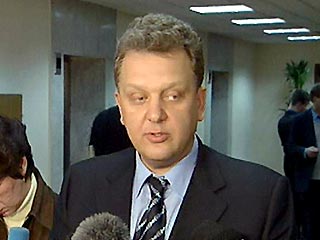
Russian Minister of Industry and Energy Viktor Khrtistenko talked with the correspondent of the British newspaper The Daily Telegraph . Khristenko described how Russia sees its energy cooperation with the West (full text on the website inopressa.ru ). According to the minister, one should not hope to reduce fuel prices in the near future. Also, Khristenko said that any attempts by European governments to prevent the expansion of Russian energy companies to the West will be considered by Russia as an intentional manifestation of an act of unfriendly.
Russia, which has gained significant benefits from the growth of oil prices, shares a common opinion that has developed in the oil and gas industry, according to which the probability of reducing oil prices is small. According to Khristenko, "forecasting in the field of hydrocarbons is an ungrateful task, but we can say with the confidence that the era of cheap hydrocarbons is completed."
Russian motorists can fully feel what the minister is talking about. According to Rosstat, consumer prices for automobile gasoline in Russia in May 2006 rose 0.3%. And in January-May 2006, gasoline for the population became 2.2%more expensive, however, compared to MAI 2005, gas prices in May 2006 rose by 15.5%.
As for the efforts of Russian companies to enter the European market, Moscow, according to Khristenko, will support this expansion with all its might and does not advise interfering with this process. According to Khristenko, the EU governments should remain aloof from the processes of merging and acquisition in the energy sector that go in Europe.
According to the British The Daily Telegraph, so Khristenko commented on the statement of the Minister of Finance of Great Britain Gordon Brown, who stated that any attempt of Gazprom to buy the British National Gas distribution network Centrica will be considered a political rather than a commercial step.
“The fewer political issues in this area, the easier and calmer it will be suppliers, consumers and enterprises,” Khristenko said. In today's global market, the national affiliation of the company is less and less, he emphasized and gave an example of the British company British Petroleum: "There are global companies - it may be difficult to indicate where the company is from the British company from, and in America this is an American company. There is nothing contradictory in this, because its assets are scattered around the world."
One way or another, but Russia is aimed at "expanding its participation in the assets of other countries." In this regard, Khristenko said that he understands the nervousness of other countries about the strengthening of Russia's influence - for example, according to some estimates, by 2030, almost two -thirds of the EU gas will receive from Russia.
According to Khristenko, this issue can be solved: “If the dependence on Russia is not good, then you need to move off this dependence,” he said. “So it is reasonable to support Russia's participation in other markets, such as China, Japan and the United States.”
As for the reliability of Russian partners, Khristenko assured that there can be no interruption of fuel from Russia: "No one should worry about gas supplies from Russia. None of our contracts have never been violated. This did not happen, does not happen and will not happen." Khristenko also denied the assumption that Russia uses energy domination as a "weapon."
According to Khristenko, just as the European governments should not be afraid of Russian partners, so British companies should not be afraid to come to Russia. In Russia, a decent corporate culture and normal business relationships in the government are taking shape. As an example, Khristenko led to the calm attitude of the President of Putin to the merger of the metallurgical companies Arcelor and Severstal.