
Translated material
The DPRK claims that the USA's launch reports are fabricated by the United States, but is ready to start dialogue
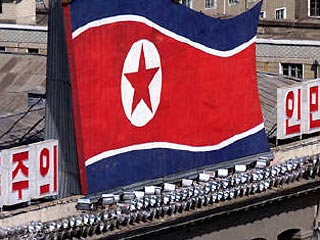
North Korea expresses the willingness to discuss with the United States issues related to the alleged testing of a new Taepodong-2 high-range ballistic missile, and demonstrative preparation for which was going on last week.
The Permanent Representative of the DPRK at the UN Khan Song Rel did not exclude the possibility of delaying the launch of the rocket in exchange for negotiations with countries that express concern to the test, Interfax reports.
“The United States was given to know about its anxiety related to our testing rocket. Our position is as follows: well, let's discuss it,” the South Korean media cite the words of the North Korean diplomat.
- The DPRK says that the launch of the missile is fabricated by the United States
At the same time, Khan Song Rel emphasized that Pyongyang’s moratorium on the test of large -range ballistic missiles acts only for the duration of the dialogue with the United States.
"Some argue that our missile test is a violation of the moratorium, but this is not so. As a sovereign state of North Korea has the right not only to develop, unfold and test, but also export missiles. And this is wrong when someone else indicates how to do our sovereign rights," the North Korean diplomat said.
According to ITAR-TASS, Khan Song Rel made it clear that Pyongyang intends to solve this problem by conducting negotiations with the United States. He also emphasized that he was aware of the anxiety of the American government about the possible conduct of missile tests. Recall that North Korea announced a moratorium on missile testing in 1999.
Meanwhile, the United States discuss with other countries possible options for actions in response to the launch of the DPRK of the ballistic missile, but are not going to disclose to publicly the content of such measures, said the press secretary of the White House Tony Snow.
The official representative of the American leader and his national security assistant, Stephen Hadley, confirmed that the United States hoping for Pyongyang's refusal from missile launch plans. “Many send a signal to the North Korean side that a missile test would be a bad idea that it does not need to do this,” Hadley said. “Many states have their own ideas about what should be done if North Korea ignores the world community council and launch.”
As Snow noted in turn, if the reporters are not told about potential steps in response to a missile test in the DPRK, then this does not mean that they will not hear about them in Pyongyang. As Hadley later admitted, the US intelligence services still cannot say with confidence that the North Korean authorities are really preparing for missile launch. “There is no irrefutable intelligence data at this stage,” the president’s assistant said.
He also found it difficult to give an unambiguous answer to the question of what motives in this case is guided by the DPRK government. Hadley suggested that in this way it may seek to create a “feeling of crisis” in others and recalled the test of a ballistic missile in 1998.
“We are trying to convince North Korean officials that this kind of attention to them will not be constructive in terms of the resumption of six -way negotiations, the implementation of the agreement adopted on them in September last year and the long -term interests of North Korea and its people,” the high -ranking American official emphasized.
The DPRK claims the launch of the missile fabricated by the United States
Messages about the launch of an intercontinental missile in the DPRK with the conditional name Taepodong-2 are fabricated in the United States and mislead the public, says the North Korean newspaper Chonbo, which is published in Japan.
"Rumors of Taepodong -2 are fabricated to mislead the public," the newspaper writes on his website on the Internet.
Koreans call this missile “Pectusan”, both in the DPRK and South Korea, when, as the Japanese conditionally call it Taepodong-2, according to the old name of the area, where the DPRK is now located to launch it.
At the same time, the Korean publication, reflecting the official point of view of Pyongyang, notes that "theoretically, the Pectusan-2 rocket with an artificial satellite Kwanmenon-2 can be launched at any time." “This can happen in a month and a year later,” writes Choson Sinbo.
In 1998, North Korea announced the launch with the help of Paktusan-1 satellite Kwanenen-1.
Recall that the other day there were new evidence that the military DPRK will nevertheless produce a test launch of their new Taepodong-2 ballistic missile, which can hit the targets in Alaska in Russia and neighboring Asian countries. In South Korea and the United States, it was reported that the rocket standing on the launch pad was seasoned with fuel.
The most powerful Pyongyan missile Taepodong-2 reaches a height of about 35 meters and is able to overcome a distance of 3.5-6 thousand km. Currently, it is assembled in a two -stage configuration and installed on the launch pad of the DPRK missile base at Cape Musudan.
In response to this, the Pentagon brought into combat readiness its new missile defense system (OM). The new system includes two terrestrial missile bases - in Alaska and in California. In the case of the launch of the North Korean ballistic Taepodong-2, American distant interceptor missiles will be able to destroy it.
Taepodong-2 will be tracking the flight path from long-range radar, based on two warships that patrol the water area in the Korean Peninsula area.
US Secretary of State Kondoliza Rice said that any launch from the territory of North Korea would be seriously reacted and perceive him as an “act of provocation”. The press secretary of the White House Tony Snow refused to give comments when he was asked if the Pentagon is considering the possibility of intercepting the North Korean missile.
President Bush phoned more than ten states to discuss the preparation of North Korea for testing, Snow said, although he refused to name the names of the leaders who called Bush.