
Translated material
The author of the "Adjutant of his Excellency" for 20 years could not believe that the war was over
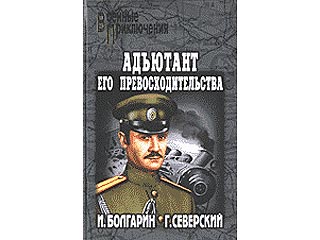
One of the authors of the legendary novel about the Civil War "The Adjutant of his Excellency", according to which the famous film with Yuri Solomin was shot in the title role, George Seversky could not believe that the war was over. The newspaper "Version" writes about what Seversky told about the Great Patriotic War.
Georgy Seversky was the head of the partisan movement in Crimea. Talking about the war, he did not consider it necessary to varnish reality. Seversky prepared memories of the war. He died in 1997, without waiting for the complete publication of his memories. The newspaper publishes his stories about the war.
The beginning of the war
“The fact that the war began, I learned in the early morning of June 22. I was an Officer of the NKVD, and our office in those days was informed first of all. I still remember my sensations: I didn’t believe it. Yes, we were told that we would have been preparing for this. But here is a day, the sun, greens around, grace, and suddenly,” I had recalled Seversky. I got used to the war that ours recede, that the Germans would soon advance to Moscow.
According to Seversky, they were immediately instructed: it is possible that the enemy has already abandoned his agents to us, and we must show vigilance. As a result, the NKVD officers decided to take their wards from among the buyers of gold and currency and reached a small agent network. They took them and transported them to Moscow on an airplane.
According to Seversky, at first the population was in a panic: “People were so out of their own that they sold their property for a penny and fled, taking a suitcase with a minimum of hits with them. There were those who, in a senses, bought up property feverishly,“ did a business. ”And no one knew some kind of madness. Nobody knew what would be with us. The others will not agree: everything will be even better, and only Jews will be shot.
“They say that in those days the NKVD was engaged only in the executions of civilians. This is a lie. Mostly our officers did what the psychotherapists were doing: they reassured people. They walked around the enterprises, explained,” Severovsky added.
About the partisans
As Seversky said, the partisan movement in Crimea was perhaps the most dramatic. "If the Germans had information about the deployment of our detachment in a certain place, say in the Zui forests, the following tactics were used: several hundred prisoners of war under the leadership of the policemen forced the forest. Office were arranged. After the war, they considered losses and it turned out that three quarters of the forest lands were cut down, struggling with the partisans. It would not be possible to restore these forests and after 50. years, ”the writer recalled.
On Mount Mangup, the German command was located. Our detachments also acted there. Sometimes they spent the night literally a five -minute walk from each other - German sentinels and we, partisans. According to the veteran, there were curly moments: for example, a German cook once wandered into the partisan camp, and he was released.
There was also a curious case. In Zua there was a grandmother-doctor. She treated our partisans, but did not refuse the Germans if they turned to her. It happened that her wounded Germans and Russians lay at her courtyard in different sheds. Such was a neutral territory.
Partisans, as you know, took prisoners only in special cases if the relevant orders from the authorities came. Usually the Germans were interrogated and shot. The partisans did not have prisons. But they still left one prisoner, and he was a SS. When he was interrogated, it turned out that he was Italian, but he knew both German and Russian. The detachment did not have a translator, and he was left as a translator. This prisoner stayed with them almost to the very end of the war, and then donated near Yalta, married, got the children. I got a job in one of the sanatoriums by an electrician.
About policemen
George Seversky spoke about the policemen. They, as you know, did not favor the partisans. Sometimes they burned their houses with their family, hatred of traitors was so strong. In response, the policemen of captured partisans were not just shot, but arranged an indicative execution.
“The guys once brought to a detachment of two local ones. The boys, 18 years old. They were searched, they found the bandages of the policemen. Naturally, they immediately brought them out“ into expense. ”After some time, we learned that someone killed two policemen in a neighboring village, it turned out to be our boys and they were. They fled from Feodosia and made their way to the north, but fell out, and then deprived of life, but then they were deprived of life, but then they were deprived of life, but then There was no time to figure it out, ”recalled Seversky.
About the help of shuler and prostitutes
As Seversky recalled, the help of the partisans often came "from where they did not expect." In the Yalta and Simferopol restaurants, which did not close even during occupation, many shools, women of light behavior and criminals worked. “And these people, it would seem, did not like, to put it mildly, the Soviet regime, very often helped us. With the help of Yalta cartes, for example, one day we managed to get very serious staff documents of the Germans,” the writer said.
How did the partisans feel
It is generally accepted that the civilian population referred to the partisans with love and gratitude, however, as George Seversky recalled, this was far from the case. The partisans were afraid, many inhabitants who lived in the occupation really believed that the Germans came forever and only bandits resist them. So they treated the partisans as armed tramps from a large road.
“After the war, I could not believe that the war was already over,” the writer said. “Honestly. It was happiness - to get out of this hell alive. And the worst, of course, these are the first days. What will the Nazis will win with us? There was nothing worse than this unknown in the war.”