
Translated material
Putin decided to amnesty the participants of the second Chechen campaign: both militants and federals
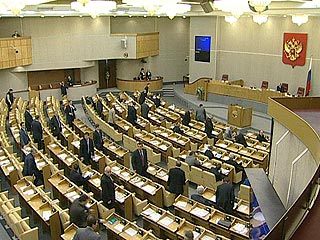
The presidential draft decree on the announcement of the amnesty participants in combat operations in the North Caucasus was submitted on Monday to the State Duma of Russia. "Today, the State Duma received the draft decree introduced by the President of the Russian Federation" On the announcement of an amnesty against persons who committed crimes during the period of counter -terrorist operations in the territory of the constituent entities of the Russian Federation who are within the Southern Federal District, "the chairman of the State Duma Committee on Civil, Criminal, Arbitration and Procedural Legislation, Pavel KraSheninnikov, told Interfax.
He noted that in this document there is no amnesty for those militants who committed serious and especially serious crimes. At the same time, the amnesty will be extended not only to militants, but also to military personnel, Krasheninnikov noted. He clarified that she "applies to persons who participated in those criminal organizations who fought against the federal troops, as well as military personnel who committed crimes during the period of the counter -terrorism operation in the Southern Federal District."
Krasheninnikov specified that the amnesty covers the period since December 1999, when an amnesty of participants in the counter -terrorist operation in the North Caucasus was also announced, and to date.
- amnesty in Chechnya: from Yeltsin to Putin
In addition, Krasheninnikov noted that the decree on amnesty does not apply to foreign citizens and stateless persons, ITAR-TASS reports.
Krasheninnikov added that the courts of amnesty will be carried out by the courts if the case of amnesty is under their consideration. In the event that the case is at the investigation stage, the investigating authorities are carried out by the amnesty. At the same time, the text of the document contains the provision that "participants in the hostilities must pass weapons and special military equipment," Krasheninnikov summed up.
Krasheninnikov also noted that the deputies will consider this document in the very near future. He recalled that the decree on amnesty is an act of direct action and enters into force after the adoption by the State Duma. He added that the amnesty will operate within 6 months after the publication of the Decree of the State Duma.
Recall that on July 15, Nikolai Patrushev, on behalf of the National Anti -Terrorism Committee (NAC), invited the militants until August 1 "to enter into negotiations with representatives of the legal authorities of Chechnya and the federal center, put together weapons and go over to the side of the people." According to him, in connection with the liquidation of the leader of the militants Shamil Basayev, a chance appeared for those who have not yet returned to a peaceful life. However, the leaders of the Chechen militants through their information sources rejected the proposal of the Russian authorities to terminate hostilities. On July 31, Patrushev decided to extend the deadline for the voluntary surrender of militants until September 30, 2006 .
For his part, the President of Chechnya ALU Alkhanov on July 19 addressed the leadership of Russia with a proposal to extend until January 1, 2007 , during which militants will be able to voluntarily lay down their weapons and return to peaceful life. The Chechen human rights defenders, parliamentarians, and representatives of the clergy also turned to negotiations on the extension of the terms of entry into negotiations.
After that, the President of the President of the Russian Federation in the Southern Federal District Dmitry Kozak said that such a decree could be prepared in September. According to him, the country's leadership made a political decision once again to give a chance to NVF members to return to a peaceful life.