Date
Author

Preserved copy
Translated material
Punitive conspiracy
Most Kadyrovites, Yamadayevs and Kakiyevites are fighting on the side of the federal forces to get away from blood revenge or take revenge
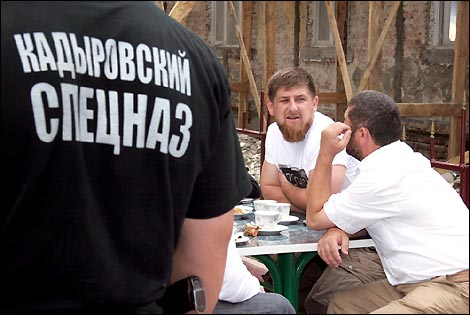
Recently, a conference was held in Stockholm dedicated to the problems of the North Caucasus. Political scientists, journalists, human rights activists were invited. At this meeting, a report was read out, the fragments of which we publish today.
Vakha Ibragimov, researcher, Chechnya:
- A significant number of local residents perceive the “activity” of detachments formed from Chechens, much worse than what the so -called federals did before them. "Those are Russians, but these are their own, how can they relate to us?" -Such a half-industry affirmation has repeatedly heard from the lips of people. Nevertheless, the people who hate them would not want to return the 3-4-year-olds critical in relation to the Kadyrovites, when the Russian military and employees of the special services controlled the republic, sovereignly and unanolically.
Their enemies are not ethnic Chechens and not even real separatists, but specific families and people with whom they have personal scores. Therefore, it can be argued that for most Kadyrovites, Yamadayevs, Kakiyevtsev and others, participation in the war on the side of the federal forces is a not politically motivated decision. This is a convenient way to solve your own problems with the help of a state that ensures their security and for some time relieves material issues.
What are these units, who are they consist of? The media from the filing of power structures position their members as former militants, who, "realizing the futility of continuing resistance," switched to the Russian side. This statement is far from the truth.
It was the Russian leadership who considered it possible to bet on them in their policy. A significant number of the current so -called power structures of Chechnya were created with the participation and under the immediate principle of people who committed deliberate murders and abduction. Immediately after the seizure of the territory of the republic, for example, the group of Movladi Baisarov went into service to the Russian military. Its leader was in the gang of a recidivist criminal Ruslan Labazanov, which Chechnya’s power structures defeated in the summer of 1994. Between the two wars together with his henchmen, he was noted by the captures of people in order to obtain a ransom.
As a battalion "West" in the same division, a detachment of Said-Magomed Kakieva is also included. This man also entered the gang of Ruslan Labazanov and was accused of committing a number of criminal offenses and terrorist acts.
Initially, this structure included several dozen people. Mostly from among the closest relatives and villagers of the former mufti of the republic (Kadyrov Sr.-Ed.) . As they enlargement there, they began to include members of criminal gangs who came out of the underground. And then, and now the backbone of Kadyrov’s formations, first in the form of “anti-terrorist centers”, and now, as the battalions “South”, “North”, the 2nd regiment of the Police Patrol and Poster Service, etc., co-acting in the power structures of the Russian Federation, were people who committed murders and abduction. Commanders were appointed from them, they also entrusted the recruitment of recruits.
It seems that it is in this that the essence of leaky is manifested, initially conceived in order to push the Chechens, to prevent the conflict, transferring it to the plane of the civil war. It is clear that when promoting such a policy, it is best to rely on those who, having stopped once, will do this more than once. Nobody is going to cancel blood feud in Chechnya, persecution for crimes is possible after many years, which connects such people with the Russian authorities much more than ideological views.
In the Chechen environment there were always people who position themselves as supporters of the republic’s location in Russia. They had organized movements and armed detachments. Under the command, for example, Buslana Gantamirov have had hundreds of people opposing the separatists since the beginning of the 90s. At the beginning of the Second Chechen War, even before the security service of Akhmat Kadyrov was created, the militia detachments arose in some areas, thanks to which Russian troops took possession of the mountainous part of the republic without large losses.
Since the summer of 2000, they began to get rid of the "unreliable" allies. The militia of the Vedensky district, for example, was first dismissed, and then most of those who participated in it, either abducted or killed. A rifle company was destroyed at the Shatosk district commandant’s office, the basis of which was people who, for ideological reasons, rose under Russian banners. The reason is the refusal to join the West battalion, formed largely from criminal elements.
The publication was prepared by Anna Politkovskaya,
09/28/2006