
Translated material
In the Moscow City Duma, they plan to tighten the rules of maintenance and breeding of dogs
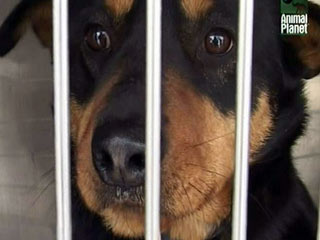
Moskhordum deputies panen to adopt a law tightening the norms of maintenance and breeding of dogs in Moscow, said the chairman of the Duma Vladimir Platonov on Monday at deputy hearings as part of a joint meeting of commissions on security, legislation and environmental policy.
It is proposed to increase penalties for violation of existing rules for the maintenance of dogs, and, in addition, prohibit the sale of dogs in stores and markets, Interfax reports. Moskhordum deputy Mikhail Moskvin-Turkhanov proposed equalizing fighting dogs with weapons and introducing their compulsory licensing. He suggests taking homeless dogs into shelters. “And if after some time no one takes them, to sleep. This is done in many countries,” the deputy said.
In Moscow, the number of homeless dogs is growing. According to the census, there are more than 26 thousand in the capital, the newspaper "Version" writes. Dandemists adhere to a slightly different point of view and believe that stray dogs in Moscow are about 100 thousand. According to the Department of Housing and Communal Services and the improvement of Moscow, only 8 thousand homeless dogs are sterilized a year. The case of rabies was identified one, for the first time in the last half a century, near the metro station "Boulevard Dmitry Donskoy". The situation is much worse in the region. 17 districts of the Moscow Region during 2006 were declared zones of dog quarantine.
According to Rospotrebnadzor, in 2003, 26, 8 thousand Muscovites suffered from dog attacks, in 2004 - 27, 3 thousand people, in 2005 - about 30 thousand. However, the total destruction of dogs is not a way out. According to scientists, the complete disappearance of stray dogs will lead to catastrophic consequences: at once the population of rats will increase. And they are much more effectively in the infection and successfully restore their population than dogs.
According to the head of the slave service of wild animals, Marita Arenat, if the danger that dogs carry, can be called potential, you should contact the DEZ. And more specifically, in the improvement department, and make every effort so that its employees accept the application, according to which the catching team will arrive in the place, pick up and sterilize the danger of the dog.
Output - tightening legislation
The only possible way out is the maximum toughening of the legislative framework: the introduction of the mandatory registration of all large pets and large fines for inadequate maintenance and violation of walking rules, the “version” believes.
Recall that at the end of October, a bill on amendments to the criminal and administrative codes was submitted to the Moscow City Duma. If it is accepted, then a census of domestic dogs will be carried out with the appropriation of three degrees of danger: potentially dangerous, dangerous, subject to prohibition.
The owners will also be criminally responsible for the attack of large dogs on people and administrative in such common cases as the dog’s walking by the master in a child and walking the dog with a child under 10 years old, barking, facing passers -by, cyclists or motorists.
The animals of hazardous categories will be forcibly seized and euthanized at the expense of the owners, the rest will be implanted with a microchip with information about the breed, the degree of danger, place and date of purchase, on accounting in the cynological club, on vaccinations and about the owner to be assigned the dogboard code.
Attacks occur everywhere
Internet forums are full of angry messages. "The surroundings of our house are teeming with homeless dogs, especially in the early morning and evening. Dirty, often sick dogs go down into flocks (sometimes five or more), cut, rush into home dogs, when the owners are walking. Sometimes they rush to passers-by. In the morning it is impossible to sleep from the house in the evening. It is sometimes fearful to walk out of the house with my daughter. The district council of the Sokolina Gora with a request to advise where to turn, but they didn’t get an answer, ”one of the forum participants writes.
Another member of the forum writes: “My son was 6 years old, and he went to ride in the sled in winter. The“ dog wedding ”ran past the slides where the children rode, and the bitch-bride banged at my son. The whole pack rushed to her son and began to tear him out. And the male was not stray, many with their colleagues and their own masters. He closed his face and was in a hat, tied up under the chin, in the Tsigacian fur coat and unte, the man went through the “KAMAZ”, the man drove this business, he ran up with a mount and, from two strokes, “bride”.
Student Alexei Fedorov almost torn the dogs in the center of Moscow. He told how in the evening he walked home along the lane. Suddenly, stray dogs rose from their seats, three or four slowly approached from behind, several more cut off the road in front. Fedorov went forward, right to those dogs who blocked the way home. Alexei intuitively turned around and “caught” the dog flying on him. The dog clung to his hand and fell. After that, a few more ran up and tried to bite Alexei by the legs. Fedorov tried to protect his head and neck. The appearance of a foreign car saved Alexei, the driver of which stopped and ran out of the steering wheel with a baseball bat in his hand. Dogs fled. At home, Fedorov discovered several bites, deep scratches on his hands and an open wound on his leg. He did not do injections from rabies.
On the Internet, on the one hand, there are constant mention of ordinary citizens about the attack of dogs and calls to destroy all the dogs “without trial and investigation”, on the other hand, the rigid defense of animal owners. They sincerely do not believe in the existence of the danger that their pets carry, as well as their street relatives.
Shelters for stray animals contain enthusiasts
The question with homeless dogs could partially solve the shelters, but in Moscow there are very few of them, only 16. Many are full, as they are designed for several hundred dogs. It should be borne in mind that animals in shelters are subjected to sterilization, and then returned to the "original habitat". Many die, put up many. Such a phenomenon as antisanitaria is very common among metropolitan nurseries.
One of the most poor dog shelters is in the village for millionaires. In the capital and region, shelters for stray dogs in their absolute majority are private, supported by volunteers and existing on personal savings of these people, as well as voluntary donations.
Olga Milyugina is a woman who almost alone contains a ruble -assigned shelter. The nursery consists of several corrals, a house for maintenance staff and booth. A similar sight is opened upon arrival of 90% of Moscow and regional shelters. They exist only thanks to the enthusiasm of individuals.
Assistance is also provided by the International Veterinary Clinic, led by Simon Goldman, located in Gorki-10. Doctors of this clinic are completely undertaken to perform operations for vague dogs. In addition, for the efforts of Olga Milyugina over four years, 350 dogs and cats were carried out, both homeless and domestic, loneless old people.
The metropolitan city hall, according to dog owners, allocates no more than 1/5 of the necessary funds for shelters. As for the Rublevo-Assumption shelter, it is expected to purchase equipment, official registration and a quick move to a more well-maintained place.