
Translated material
The State Duma has prepared for a new convocation of deputies the Code of Parliamentary Ethics
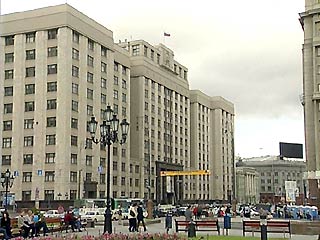
The State Duma of the Russian Federation has prepared a draft Code of Parliamentary Ethics, according to which deputies may lose their salary for absenteeism in plenary meetings. The document, to which the parliamentarians themselves are ambiguous, can be adopted in the current spring session. But to work in accordance with this code will already be a new convocation of deputies.
Periodic fights and sharp statements of deputies have already become a tradition of Russian parliamentarism. The current regulations of the State Duma provides for only one punishment for unethical behavior - deprivation of a word for up to one month for insulting other deputies by the deputy. In practice, deputies from United Russia are usually offended, and representatives of opposition factions are violators. So, last year, the Communists Viktor Tulkin and Valery Rashkin were deprived of the words for a month. The first - for the phrase about "Comrade Wolf, Comrade Bear and other jackal", which supposedly consist in "United Russia", the second - for the assertion that most corrupt officials are "united Russia". In the fall of 2005, during the celebration of the centenary of the State Duma, the word was almost deprived of the independent deputy Vladimir Ryzhkov, who , in an interview, called the current Duma of Kholuyskaya in an interview. However, the leader of the LDPR Vladimir Zhirinovsky, everything safely got away with. After a fight with the deputy Andrei Savelyev in March 2005, he was only offered to apologize, to which he refused. When Zhirinovsky insulted veterans in September last year, saying that "if the Germans were given as many vodka as ours, then it is not known who would win," the LDPR leader escaped with an apology.
At one time, the proposals of introducing the Institute of Duma bailiffs sounded, but this idea was not perceived by deputies. "It is believed that each people's chosen one must restrain the need to re -elect. But among some deputies, the electorate is specific, and all hooliganism perceives with approval. And the others in the Duma are provided by definition, and the elections are an empty formality," the newspaper "New Izvestia" writes.
Nevertheless, the problem remains, and on the eve of the election, deputies were worried about their own ethics. The corresponding code was prepared in the bowels of the Duma commission on mandatory issues and issues of deputy ethics. The document contains the rules of the conduct of deputies at meetings, on foreign trips, when communicating with voters, officials and journalists, it also prescribes measures to influence violators. The document states that the absence of a deputy at a plenary meeting is not allowed without a good reason, and during the meeting it is forbidden to interrupt the speaker and use "rude and incorrect expressions, abnormitable vocabulary in his speech. The deputy is of moral responsibility to voters for election promises and does not have the right to "evade communication with voters", taking citizens and considering their appeals. The folk chosen one should also not use for personal purposes the possibilities that the status of the deputy gives. First of all, we are talking about the notorious deputy requests. Yes, and abroad, he is obliged to behave in such a way that with his behavior "strengthen the high reputation of the Russian Federation and the deputy corps."
For violation of the Ethics Code, deputies are invited to make censure, as well as inform the media about the fact of unworthy behavior, which is much worse for a politician. The guilty deputy will be able to not only deprive the words, but also drive out of the hall for up to 10 meetings. At the same time, part of the monthly salary, a multiple of absence in the hall, will be withheld. Since the State Duma usually holds 6-7 meetings per month, the commander’s deputy may lose his one and a half-month earnings. For absenteeism they will also deprive salaries. If the deputy has missed more than 30% of the meetings for the session, he will hold 25% of the salary, 50% of the meetings - half the salary, 70% of the meetings - the entire salary.
The Code can be accepted into this session. As Gennady Raikov, the chairman of the Duma Commission on Manda issues and issues of deputy ethics, is now being approved by the legal department of the State Duma, and will be sent to deputies in the next two to three weeks. The main innovation of the Code is the opportunity to deprive the deputy of the salary for the non -frying meetings. At the same time, Gennady Raikov admits that under the current organization of the work of the State Duma it is impossible to determine whether the deputy was at the meeting, or was not. "Deputies transfer a power of attorney to each other. 357 are present on the screen, and 157 in the hall. They can count them on their heads? And then the deputy can say that he just left the hall," says Raikov. However, in addition to voting cards that deputies pass to each other, they have electronic passes for entering the hall. It is by them that one can judge a visit to the deputy of the plenary meetings. However, these data are classified and available only to the State Duma leadership. Last year, the first vice speaker Lyubov Slisk promised to present the public list of 93 deputies who either do not go to meetings at all, or there were a few times a few times. But this threat remained unfulfilled.
However, experts are sure that this measure is unlikely to intimidate our deputies. Almost all of them are considered far from poor people. In their opinion, the adoption of the code is unlikely to radically improve the situation in the State Duma. Moreover, the current Duma has almost worked out its term, and deputies of the next convocation will have to pay for absenteeism in plenary meetings. Political scientist Dmitry Oreshkin said neither that the deputies had his own goals and objectives of stay in the State Duma, and, for example, "a billionaire Suleiman Kerimov, a deputy of the LDPR, did not abuse the deputy from the LDPR." According to the political scientist, they go to the State Duma in order to "negotiate with the executive authorities and lobby for the interests of their business." “In this case, the adoption of the Code will turn into a“ PR action ”, and the Code itself, in the end, will not interfere with anyone, because if the deputy has good relations with the Kremlin, no one will offend him, no matter how many times he walks,” concludes Oreshkin.