
Translated material
The nerve cells of the human brain are nevertheless restored, Swedish scientists say
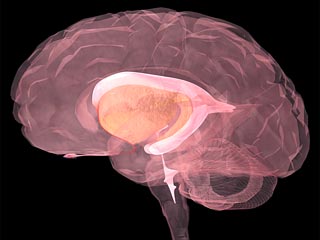
Contrary to human nerve cells, the previous ideas are restored in the same way as in animals, Swedish scientists say. As it turned out, in the human brain, which is responsible for the sense of smell, mature neurons are formed from the predecessor cells. Once they will be able to help "fix" the injured brain.
The human brain is able to reproduce new neurons thanks to the activity of stem cells. The latter in the course of intrauterine development of the fetus are responsible for the formation of the brain, and in an adult can create nerve cells of the brain, writes Spiegel magazine about the results of a joint study of doctors from universities of Auckland (New Zealand) and Gooteborg (Sweden).
It is known that the human body has enormous opportunities for regeneration. Every day the skin grows by 0.002 millimeters. And the new blood cells in the bone marrow a few days after their appearance perform their main functions. In addition, nerve cells are able to recover in the limbs and in the subcutaneous layer, however, in the central nervous system - in the brain and spinal cord - this does not happen. Therefore, a person with a damaged spinal brain will not be able to run anymore. Finally, the nervous tissue is irrevocably destroyed as a result of a stroke (full text on the Inopressa website).
“We have discovered a kind of autobahn for stem cells in the brain,” says the author of the study by Peter Ericksson from the Neuronauk Institute and Psychology at the University of Goetheborg. We are talking about a tubular structure with a length with a phalanx of the finger, which connects the two areas of one hemisphere of the brain: a lateral ventricle, where the cerebrospinal fluid circulates, and the so -called Bulbus olfactorius is a nasal bulb.
Near the ventricle filled with liquid and there are those same stem cells. Scientists are aware of this tank for cores of irritants from animal research, and the fact of the existence of this organ in humans is not news. However, now it has become clear that the pipe cells, which scientists called the Rostral Migratory Stream, migrate to the olfactory bulb that crosses the olfactory impulses that occur in the nasal mucosa into the deep parts of the brain for processing.
"Thus, the human brain is able to supply material for the production of new neurons," Ericksson says.
It is curious that already in 1998, scientists discovered in a very old brain section from the point of view of evolution - in Hippocampus - similar phenomena. In this department, which is also associated with memory properties, new nerve cells can also occur.
As part of the study, scientists examined the brain of 30 dead men and women. The international team used antibodies in their research, which, connecting with stem cells, made them visible. Electronic microscopes could fix the cells in this way and show that they get from their tank into the ventricles of the brain and into the nasal bulb. There they developed to mature neurons. This phenomenon has already been known for animal research: so, scientists from Center of Nervous System Repair at the Central Hospital of Massachusetts and the Boston Harvard Medical School have recently proved that different smells lead to the rats that new nerve cells fall into the nasal bulbs. “Now we can rely with more confidence on the results of our animal research,” Ericksson testifies. “Most likely, we are more like rats than previously expected.”
In 2006, scientists have already put forward a hypothesis about the possibility of restoration of nerve cells after brain damage. Then the Chinese scientists led by Kun Lin Jin from the University of Shanghai found new nerve cells in patients who suffered a stroke. A new study brought the scientific world closer to mastering the process of forming the most complex human organ - the brain. “Perhaps in the future we will be able to influence stem cells and force them to create neurons,” Ericksson concludes optimistically.
It should be noted that in the summer of 2006, the US doctors in practice carried out the regeneration of the brain in a seriously ill person. However, they were in no hurry with general conclusions, since additional studies are needed for this.