
Translated material
The viewer is as a customer
The viewer is as a customer. I often hear: who pays, he orders music. This can be fair for Karaoke, where the costs of the car paid at the end of each song are rewarded with exclamations of the car: “You sing great!”, But it is detrimental in such a subjective business as art in general and the theater in particular. Today's mass Russian viewer, who tasted all the fruits of the consumption society, knows exactly what he wants. The viewer pays for a ticket to get a maximum pleasure ...
Moscow. The voice of the artistic director - a beloved people's artist - persistently convinces 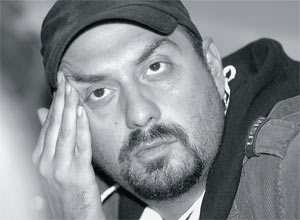
Indifference to each other, total distrust and alienation does not lead to the formation of a single body a hall - a scene. The general breath of the public and the performance, without which the theater is not alive, is extremely rare today. And then it looks more likely to the breath of Chain-Koksa, so intermittently and unstable.
At the end of the twentieth century, director Georgio Arrival wrote an essay about “phagocytosis” - the applause of the audience in the place where they are undesirable. He thought about success and failure. And today it is difficult for us to imagine that once the sacred concept of success was called into question by someone and its presence was considered a tribute to vulgar bourgeois and looked at all a negative result.
We have already forgotten the times when a magical unity arose between smart people on stage and smart people in the hall, for which one could stand in night lines and be persecuted from the side of mutually hated power. We no longer know this. We do not hear the manifesto of the reformers and the declaration of the overthrows. We dream of satiety and a full consumer basket. We are glad that we finally live in a consumer society, without thinking that it is the most wild and barbaric model. The main national idea, the ideology of such a society is to consume. Use. Demand. For demand. They explained to us that “life has become better,” we want to become “more fun”. In all state subsidized theaters, I only hear all the time about fees, about increasing seats, about quantity, quantity, quantity ... It is quite understandable - because the theater does not exist separately from life, complete thirst for accumulation at all costs. Advertising, social and political practice speaks about this. Quantitative indicators have finally replaced the already unsteady qualitative criteria. And the audience, fully formed by the laws of this society, came into the taste of its rights and behaves as it behaves in a restaurant, a store, a hairdresser, as a customer.
The audience orders the topic (it is not necessary about sad and unpleasant, better than comedy and melodrama), the duration of action (the leaders of theaters, which are sensitive to the audience, will not allow the “inhuman” timing of the performance), the sexual and social type of actors (the main composition of the public is a middle-aged woman, and it follows that preferences will be given to male actors with a pronounced Sexual-aggressive charm, type of intellectual the neurostenic rare and not in honor). The theater is ready to serve the audience at all costs. Still - in response, the theater receives the illusion of the need and involvement in the daily works of society in the field of profit. The order for the theater leads to a formal division into commercial and non -profit and the crowding out of all that is not enough “commodity” into marginality. At the same time, the theater is very often an alternative to the “custom-made” theater, an antonymic one is not a theme, not an ideology, not a conviction, but a set of techniques: you have velvet chairs-we have shops, you have special effects-we have their absence, you have famous, good artists-we have unknown and some, you have a normative vocabulary-we have a mat ...
This alternative is creatively so uncontrolled and ideologically slurred that it only emphasizes the “achievements” of the theater-order, rich in the audience and state support.
The theater has always been guided by the public - and this is his weakness and greatness. His narrowness and vitality. Another thing is that in the theatrical history of the twentieth century, written mainly by great directors, you can find cases of rebellion against the dictatorship of the Holy Monster - the public. These attempts to break out of the order are associated with a different understanding of the role of the theater as a place of power, and not just a place of amusement. The Service theater is forever losing the right to say serious and bitter things. Where cancan are dancing today - there they will not hear preaching tomorrow.
In state institutions in Soviet times, a plastic bag with a can of canned food, a bottle of vodka and chocolate tiles were issued for the holidays. This was called "order". The average happiness of the average consumer. The theater, offering only a set of expected, convenient and easily digested, is also an order. By the way, the word "order" in modern jargon has another meaning. “Order” means “kill”.