
Translated material
In London, the Alexander Litvinenko Foundation was established to search for his poisoners and help victims
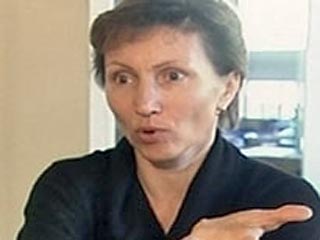
The widow and relatives of Alexander Litvinenko established the Litvinenko Justice Foundation fund in London, which will seek the investigation of the murder of the ex-lieutenant colonel of the FSB and help the victims of Polonium-210.
The presentation of the new fund took place on Tuesday in the building of the prestigious London Public Institute Royal United Services Institute (RUSI), RIA Novosti reports. It was here that five years ago the book of Alexander Litvinenko "FSB is exploding Russia" was presented to the public.
“I will not calm down until Sasha’s killers appear before justice,” Marina Litvinenko said at the presentation of the fund. The widow of the murdered ex-officer of the FSB hopes that the fund will influence the British and Russian governments to establish the perpetrators, BBC reports.
The founders of the fund were the widow of Litvinenko Marina, entrepreneur Boris Berezovsky, human rights activist Alexander Goldfarb and human rights lawyer Luisa Christin. The Litvinenko Justice Foundation Limited is registered in London on March 2, 2007. The fund will function for a donation of 500 thousand pounds made by one of its founders - Boris Berezovsky.
"It is very difficult for me to convey what I feel. It happened not in an instant. I saw how he died within a month," said Marina Litvinenko at the opening of the fund. “I’m not to say what I feel about those who did this, because I don’t know exactly who they are,” she said, emphasizing that she wanted to know who is worth the murder. According to Marina Litvinenko, she acts "for the sake of Sasha and in memory of him, for the sake of his son and to help people, because I do not want this to ever happen to someone else."
With its goals, the fund denotes three main directions. The first is to help in the disclosure of the crime and bring customers, organizers and performers to judicial responsibility.
The second is to do everything possible to avoid repeating such crimes in the future.
The third is to help the victims seek compensations, state payments, as well as to assist in conducting legal actions against states and state structures in ships or tribunal, to consider such claims.
In an interview with the BBC Radio 4 radio station, Goldfarb emphasized that "hundreds of people were subjected to the exposure to Polonia-210 in this terrorist attack in London." “We want to gather everyone together to see if we can help the justice can happen,” he said, explaining that claims with the requirements for compensations will be filed “collectively to anyone who will be found guilty of this crime.”
The human rights activist also noted that the fund will maintain political pressure on the Russian government. In turn, Boris Berezovsky at the opening of the Fund said: "I am sure that we are doing the right thing, trying to convince the British government not to stop the investigation of this murder."
The founders of the Fund sent a letter in the name of the Prime Minister, Minister of Internal Affairs and General of the British Prosecutor, in which they expressed the hope that the Royal Prosecutorial Service would soon make a decision in the case, which was transferred to it more than two months ago.
“We all deeply admire the British system of justice and have already experienced its independence and honesty from our own experience,” the authors of the letter recall. In their opinion, "it would be a tragedy for the reputation of Great Britain to be a victim of intimidation because of this case."
“We will continue the campaign in order to convince the British government and international organizations to get the attraction of the executors of this murder to justice,” Louise Christine lawyer assured.
Former FSB Lieutenant Colonel Alexander Litvinenko, who fled to the UK in 2000 and received political asylum there, died on November 23, 2006 at the 44th year of his life. The autopsy established that the cause of death was exceeding many times a deadly dose of the amount of the radioactive isotope of the Polonium-210.
In his statement, published after his death, Litvinenko accused the Kremlin and President Putin of his murder. In the Kremlin, any involvement in the poisoning of the ex-officer of the FSB was categorically rejected.
The police found traces of Polonia in 17 places in London, the most noticeable Pine bar of the Millennium hotel and the ITSU-sushi in the center of London. Later, more than 700 people were examined in the body, and 17 of them found increased doses of this element, which, however, do not pose a direct danger to human life and health.
The investigation of the death of Litvinenko, which is qualified as a murder, led the anti-terrorist unit of Scotland Yard for more than two months. As part of the investigation, the detectives visited Moscow, where they held conversations with a number of witnesses, including businessmen Andrei Lugovoy and Dmitry Kovtun.
On January 31 of this year, the London police referred to the investigation of the murder of Litvinenko in the Royal Prosecutorial Service of Great Britain. This agency will conduct a thorough analysis of the collected evidence before making a decision on further actions in the case and the advisability of charges.