
Translated material
The House of Representatives of the US Congress approved the withdrawal of troops from Iraq no later than April 2008
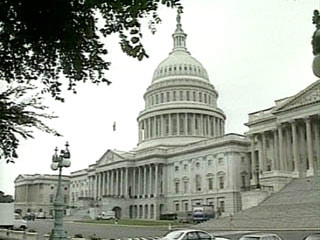
By ignoring the threat of US President George Bush to apply the right of Veto, the House of Representatives of the US Congress at a meeting on Wednesday approved a bill on the withdrawal of American troops from Iraq no later than April 2008. The bill was supported by 218 congressmen, 208 members of the chamber voted "against." The White House is dissatisfied with the decision of the House of Representatives of the United States.
The Regulation on the withdrawal of American troops is included in the budget bill on additional expenses for the war in Iraq and Afghanistan in the amount of $ 124.2 billion.
The document states that the Iraq authorities must fulfill a number of tasks to ensure security, as well as the political and economic development of their country. In case of failure to fulfill the Iraqi side of these conditions, the withdrawal of American troops from Iraq will have to begin on July 1 of the current year and end within 180 days, RIA Novosti reports.
If the Iraq government withdraws the reform schedule and the US president will be able to confirm this in writing this to the Congress, the withdrawal of American military units from Iraq will begin to begin "no later than October 1 and end within 180 days" - until April 1, 2008.
The White House said that, supporting the bill on the withdrawal of American troops, American lawmakers "voted for failure in Iraq."
"The House of Representatives adopted a defiant bill, which insists on the date of surrender, constrains the hands of our generals and includes not related to the allocation war of billions of dollars," the press secretary of the White House of Dana Perino, who was widespread in Washington, said in Washington.
“The House of Representatives voted for failure in Iraq, and the president will impose a veto on this bill,” Perino emphasized.
Having stated that "the democrats forced this process to last too long", the spokeswoman George Bush said that the head of the White House "calls on the US Senate to quickly accept this bill so that the president could impose a veto on him and then begin to work with the leaders of Congress on a clean bill that will finance our troops, respecting the opinion of our commanders and will help ensure the security of the American people."
George Bush over the past weeks repeatedly, including in a sharp form, warned Congress that he would not sign any bill containing the withdrawal of American troops from Iraq. The head of the administration announced that he would impose a veto on such a document and immediately return it to the legislators.
After voting in the House of Representatives, the bill is now being sent to the US Senate, where the vote is scheduled for Thursday.
The Secretariat of the House of Representatives reported that out of the total allocation of the allocations of $ 124.2 billion, the bill provides for more than $ 100 billion by the Pentagon for current combat and auxiliary operations in Iraq and Afghanistan, including the allocation of $ 3 billion for new armored vehicles (Mine Resistant Ambush Prootechededed Vehicles - MRAP) designed to protect American soldiers from improvised explosions used by rebels in Iraq and Afghanistan.
Within the framework of the expenses permitted by the Pentagon, funds of $ 25.5 billion were allocated in the document to purchase military equipment, including, in particular, the purchase of nine UH-60 Blackhawk helicopters, four CH-47 heavy helicopters, five CV-22 OSPREY aircraft, as well as for the purchase of three F/A-18 fighters F/A-A-A-A-A-A-A-A-A-A-A-A-A-A-A-A-A-A-A-A-A-A-A-A-A-A-A-A-A-A-A-A-A-A-A-A-A-18 and one EA-18G electronic intelligence aircraft for "replenishing combat losses" in Iraq and Afghanistan.
At the same time, it is also provided for the allocation of 1.6 billion dollars to provide American soldiers with body armor and new advanced combat protective helmets.
The bill includes funds in the amount of $ 9.7 billion for training, weapons and equipment of the Armed Forces and Security Forces of Iraq and Afghanistan, as well as $ 12.1 billion to combat illegal production and drug trafficking in Afghanistan.