
Translated material
Hackers blocked the work of sites of bronze soldier defenders in Estonia
In Estonia, sites created by the defenders of the Bronze Soldier were subjected to hackers. Materials posted on sites in defense of the monument to the warrior-liberator Tallinn from the Nazis and criticism of the actions of the Estonian authorities in relation to the monument on Wednesday were removed.
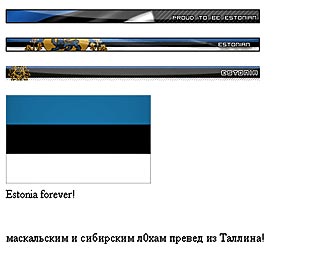
From the website of the organization "Night Pattering", which conducted mass protests against the transfer of a bronze soldier from Tynismgy Square, all the information was removed, and instead of it there were banners of the flowers of the Estonian flag with the inscriptions of Proud Be Estonian and Estonia Forever!. At the same time, when entering the main page of the site, the state anthem of Estonia begins to play. The site 1-net.ru was also attacked. The normal work of both resources has not yet been restored.
Recall that at the end of April, after the Estonian authorities decided to start work on the exhumation of the remains of Soviet soldiers buried by the monument to the warrior-liberator in the center of Tallinn, as well as to transfer the monument itself, servers of the Government of Estonia, the Chancellery of the President, the Ministry of Foreign Affairs and a number of other state institutions of the country were subjected to mass attacks . The work of these sites was paralyzed for a while. Then Estonian Foreign Minister Urmas Paet said that hackers acted from Russia, including from computers of its state institutions.
The Central Criminal Police of Estonia last Sunday detained on suspicion of cyber-ataks to the country's weapons of the country of a 19-year-old resident of Tallinn Dmitry, who has a higher technical education, the press service of the State Prosecutor General of Estonia said earlier.
Last Wednesday, the Estonian State Development Center said that the cyber attacks on the sites of the Estonian government institutions resumed with renewed vigor late in the evening of May 8 and continued on the 9th. According to the Center, the main object of attacks are sites of Estonian government institutions, RIA Novosti reports. Hackers seek to block external access to Estonian sites. The internal Internet traffic attacks do not have much influence, the center notes.