
Translated material
"It's time for Bulgakov to get into the ranks of smart reptiles"
"It's time Bulgakov to get into the ranks of smart reptiles." May 15 - Birthday of Mikhail Bulgakov. The New Times publishes the minutes of the meeting in the Komacademia, held on October 25, 1926, on which the work of Mikhail Bulgakov was first subjected to “academic” criticism. To help reporters, fiercely attackers of Mikhail Bulgakov in the Soviet press, came “scientific thought”. Only short excerpts from the protocol were published in the press. The New Times first publishes extensive fragments of the transcript of the meeting.
The publication of Grigory Fayman The text of the dispute in the mosquito, held on October 25, 1926, is stored in the archive of the Russian Academy of Sciences. F. 350. OP. 2. xp. 101
| Meeting participants: Frice Vladimir Maksimovich (10/15/1870 - 09/04/1929) - Soviet literary critic and art critic. He graduated from Mos-Kovskiy University. Akamik since 1929. The manner of the literature section of the Comademia. Nusinov Isaac Markovich (2.07.1889 - 11/30/1950) - Soviet critic. Illegally repressed in 1949. Rehabilitated posthumously. Pereverzev Valerian Fedorovich (10.10.1882 - 05/05/1968) - Soviet literary critic. In 1938, repressed. After rehabilitation in 1956, he was engaged in the study of ancient Russian literature. Orlinsky Alexander Robertovich - journalist, critic, editor of the Modern theater magazine. Asilov, Lunin- employees of the literature section of the Community Academy. |
The meeting opens comrade Frice:
Let me open a meeting of the literature and art section and provide the word comrade Nusinov for a report on the topic 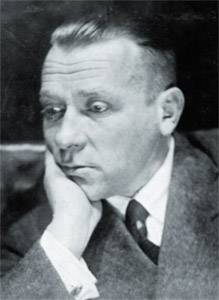
Comrade Nusinov:
Comrades, writer Bulgakov in one place of his novel “White Guard” speaks of a special sense of the word “defeated”, which is only experienced by the one who has experienced defeat, who once and fully realized his death. And under this sign of awareness of the death of his class, Bulgakov entered his literature. He was faced with the problem of reflecting the being of the defeated class ...
Firstly, he talked about how his native class endlessly hated the Russian people ... This hatred of the Russian people is for him-then at least-one of the reasons for the death of the White Guard ... And he considers this death before the justified that when the Germans die, he adds like this: “The Germans are defeated,” said stupid reptiles. “We are defeated,” said smart bastards. This is the word he finds at his class. Gades, smart bastards ...
We will subsequently return to a special dice of anti -Semitism, which is imbued with all the work of Bulgakov and which gives his culture of a somewhat tipsy second ...
The whole book is permeated with caste hatred for everything that is not his class ... It was necessary to justify his reconciliation, because from the point of view of ideology it was a betrayal, from the point of view of past ideals it was necessary to commit suicide, and not go to the service of the Bolsheviks. It was necessary to justify this reconciliation, and this reconciliation could not be justified otherwise, as an awareness of the justice of his death ...
The first part of the book, where you have memoirs of a talented journalist who creates a general picture of what was Kyiv in 1918, is the main part of the book is the most interesting ... Then the second part of the book, which consists of stamped retelling of the old noble novels created according to the epigonous type ...
Bulgakov addresses his second main topic - to Soviet reality, and Bulgakov sees this Soviet reality as he called it in his first story on the Soviet theme - this is the Deviliad. All Soviet reality is for him the "devil", he sees it only as a devil ...
Is the death of the White Guard and its class right then? And then Bulgakov writes his great utopia. These are “fatal eggs” ... This feuilleton is about how it is built, we will talk still - this is a feuilleton, clearly propaganda, which must say that from all the work of rock, and this figure for him is the personification of the revolution - from his work will eventually come out of bastards, from which we will be saved only by such a miracle that in August there will be a frost of 60 degrees. All the work of rock, all the work of the revolutionary people will eventually lead to the fact that bastards will go to us ...
All this is in the last account, because he had the second task, even less grateful: to show the Russian reality in such a way as to take revenge on the winner for the defeat that he inflicted. Bulgakov accepted the victory of the people not with joy, but with humility, with great pain and now he wishes for this victory, the actual, tactical victory, to avenge the winner with a moral defeat ...
Now, summing up, we must say that, perhaps, if for cheap popularity this drama was extremely into the hands of Bulgakov, then to assess his literary reputation, it is hardly. If now in the light of his drama to think through his work, it will become clear that we have an epigon in front of us when he describes the fate of his class, and a geeking feuilletonist when he speaks of his reality. And, finally, we have a perversion of all that reality, to a certain extent, a decrease in all the creative upsurge, which, after all, Bulgakov rose in his novel.
I say - two ways of creativity in front of Bulgakov: the path of awareness of the collapse of his class and the path of observation over a new reality. If he really had brought all the necessary lessons from the collapse of his class, if the inevitability, justice and the need for the death of his class really understood to the end, then he would be able to understand our reality to the right. Now Bulgakov is yearning for the most frank way through the past of his class, and now Bulgakov most frankly tells that this shift of the milestone turned out to be extremely unstable and fragile ...
But once, when he was honest and sincere, he told us that his environment, his class is divided into two groups - into stupid reptiles, who said: “The Germans are defeated,” and into smart reptiles that said: “We are defeated”. And it's time for Bulgakov to understand, to get into the ranks of these smart reptiles, to understand that they are defeated and no caricatures for our reality can take revenge ...
Debate on the report of Comrade Nusinova Comrade Orlinsky:
... Here one question arises. Was it worth the work of Bulgakov, who, I believe, is generally not known, wrote only two books and does not at all represent such a significant phenomenon on the surface and in the depths of our literary life, so that they were talked about as a large -order phenomenon? I think that in general, it would not be worth it, if he had not played now a very definite, consciously thought-out and, obviously, rather independent role of the organizer of his own opinion of a number of elements of the new bourgeoisie, which, of course, we have, would not play the role of a consolidation factor for a certain, stronger group of people-specialists living in old ideology, old liability. And now, against the backdrop of the revitalization of petty -bourgeois ideology, from this point of view of Bulgakov, of course, to disassemble, judge, expose and stigmatize a large meaning and meaning ...
In the "Days of the Turbins", he is moving, perhaps consciously or unconsciously, with a completely actively acting White Guard somewhere on the east-yield road or in China, so accurately and in this play he moves with the White Guard Press of the Cadet Passion ...
The meaning of the fact that now Bulgakov is not so much writes for reading as for the theater should not be understood. This season, Bulgakov gives three productions: “Turbine Days” in the Moscow Art Theater, “Zoikina Apartment” in Vakhtangov Studios and “Crimson Island” at the Chamber Theater. Theater season
| From the letter of M. Bulgakov “The Government of the USSR” (March 28, 1930): Bringing many-numerical abusive reviews to the play “Turbine Days”, Bulgakov wrote: “I hasten to report that I am not at all in order to complain about criticism or enter into any polemic. My goal is much more serious. I prove with the documents in my hands that the entire press of the USSR, and with it and all the institutions that are entrusted with the control of the repertoire, during all the years of my literary work unanimously and with extraordinary fury proved that the works of Mikhail Bulgakov in the USSR cannot exist. And I declare that the press of the USSR is absolutely right ... I ask the USSR government to order me to urgently leave the USSR, accompanied by my wife Lyubov Evgenievna Bulgakova. ” |
Academic theaters, as you see, go under the sign of the Bulgakovschina, and he grows as a playwright. It is enough to refer to such an authoritative statement as Meyerhold and others, who consider him one of the talented playwrights who can scenat the material. Moreover, Bulgakov was opposed exclusively on the stage of academic theaters. It is characteristic that some revolutionary directors are not averse to taking it, but he does not want to. He did not want to give other theaters, he gave only to theaters that follow him, obviously, in some point, in the preservation of which he is not sure about other theaters, other directors ...
On the literary surface, agents of the new bourgeoisie begin to stand out chemically, as the party says, and inevitably adjacent the old and new intelligentsia, which tries to mobilize its broken will and tries to connect it with someone's nascent energy in the person of the new bourgeoisie. Academic theaters are for us, as it were, evolving in this matter, and meanwhile, everyone ideologically rushes to Bulgakov and Bulgakov. And here we are facing one problem: is it possible for our criticism, our analysts, our strength, can they seriously, while struggling with Bulgakovshchina in literature, exposing, analyzing, signaling about it, whether they can be equally seriously approaching the issues of theatrical policy ...
The first point of view is this: masters, they need to be handled extremely carefully, they can not be touched, they can be offended, scared, come in a bad mood and stop working for us, or something like that, somewhat in a diminis. And another point of view, which believes that something more decisive needs to be done. I personally belong to those who think that a deep internal process is taking place inside these theaters, and I have a number of data for this ...
I propose to interpret the Bulgakovshchina as an ideological manifestation of the onslaught of the new bourgeoisie and from here to draw a number of practical conclusions according to the tactful, deep, serious struggle with it both at the front of the literary, in the narrow sense of the word, and without this we can find ourselves in a position when theatrical scrapes replace them that are missing for the new bourgeoisie and their singers, which is Bulgakov, they have no newspapers ...
Comrade Pereverzev:
On my part, I boldly take the word according to the report, because, to my embarrassment, I must admit that Bulgakova almost did not read, except for this “Deviliad”, he did not see anything and had no pleasure in ripening him on stage. Therefore, I can’t talk about Bulgakov himself, because I just don’t know what kind of figure it is ... if I believe the speaker that Bulgakov is that he is according to the report, I don’t know how he can exist in Soviet reality ...
Most often, writers of the dying class are pessimists. And Bulgakov, if he knows how to brightly depict the spontaneous destruction of his class, if he makes a kind of harakiri courageously, if he is a good artist and does it well, he does a great thing ...
I wanted to say all this for the fact that now Comrade. Orlinsky said that it was necessary to conduct a critical struggle and direct critics to fight Bulgakovshchina ... of course, to do this is the easiest way. But then, when we talk about Bulgakov himself and his own trends and his personal moods and experiences, and not when we pour out our own moods and experiences and convictions about Bulgakov ...
I repeat, I do not know Bulgakov, I don’t know if there is positive in it - maybe it was not worth writing critical articles or reading a report, this is possible. Maybe everything that we do is the result of the fact that Bulgakov with some turn of the Wheel of Fortune fell on the scene of the art theater, maybe that's why they started talking about Bulgakov. This is another matter. Maybe this is such an insignificant value that you should not spend powder of genuine scientific research. But from the point of view of methodology, in my opinion, this report could cause significant objections ...
Comrade Asilov:
... I do not agree with the speaker in his statement that Bulgakov is very talented. I believe that Bulgakov is not a talented writer to any extent. Talent always reflects primarily an era. This determines the significance of talent ...
But here we have a different phenomenon: that the play itself, plus the art theater, plus the audience of the art theater - and we know the face of this audience - all this creates a play ... the nature of the social event ...
I say, comrades, that the play, like Bulgakov himself, is, if you want, a stow -a -stow passenger in the Soviet train, and an impudent passenger who, without the right to place, requires a place that this is the voice of the layman, an offended bourgeois, even the bourgeoisie, this is undoubtedly ... Here the comrades are interested in how such a thing was missed. This is smuggling on the Soviet stage. Did Bulgakov inflate the chief reperture? ..
I believe that here we have instead of a story about the death of our class an ideological attempt to revive this class. And we have a fact. The author, however, to a very small extent, achieved success. Some tantrum in the Press House finished her performance with the words: "All the people are brothers." I asked and asked: "Who is it?" They say to me: "Absolutely Soviet man." As a result of Bulgakov’s processing, the Soviet man came to the conclusion that the White Guard bastards in uniform were brothers. The speaker woke up concerns ...
The intelligentsia, philistinism and the small bourgeoisie, which rushes in the grip of modernity, wants to find fresh air in the Moscow Art Theater and is grouped around the Moscow Art Theater. The Moscow Art Theater is a horn of old Russia. The Moscow Art Theater, led by honored Soviet actors, does not go forward and left, but back and right. We had the same thing in the history of the French Revolution, when the bourgeoisie was grouped around the National Theater. The same thing in Georgia. There is also a national theater, and shift people are also grouped around it. The same in Moscow ... What should we do? It is clear - to organize public opinion, to organize counterparties by the opinion of the Art Theater and Bulgakov, to break the banner that Bulgakov threw away, organize a rebuff, a decisive rebuff ... As you can see, our press clearly exposed this performance, officer sentiments of Bulgakov and Theater. Maybe I am somewhat sharply posed by the question, but we need to support this mood in the future, show Bulgakov that the real working community is not sleeping ...
Comrade Lunin:
I think the speaker did the right thing, that I wanted to expose Bulgakov. Indeed, this is a misunderstanding, not a writer ...
Bulgakov is a good businessman, he caught the desire to see many on the stage of the White Guards, he does it, and only we must talk about it. This is not a literary phenomenon, but a political one. In this regard, the comrade said correctly that it was necessary to break this banner, and nothing more. And nothing more.