
Translated material
NATO will help Estonia in cyberova with Russia
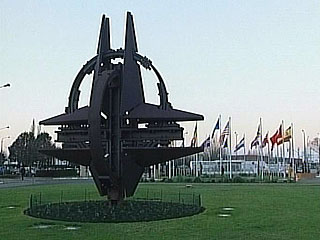
Estonia plans to attract NATO specialists to the fight against Russian hackers. At the moment, experts of the North Atlantic Alliance are studying the proposal of the Minister of Defense of the country by Yaak Aaviksoo to equate the attacks of hackers on the servers of NATO member countries to military aggression. In the territory of Estonia, the center of the NATO cyberborne Cyberborns will soon appear, which will help Tallinn in Cyberwall.
After removing the blockade from the Estonian embassy in Moscow, the most painful shares for Tallinn were the continuing hacker attacks against Estonian servers that began on April 27 of this year after the transfer of a bronze soldier, Kommersant writes.
On the sidelines of the North Atlantic Alliance, they say that soon changes in legal acts regarding the attack of hackers will follow. NATO Secretary General JaAAP de Hoop Scheffer joined the opinion of the Minister of Defense of Estonia and admitted that this issue would be resolved. EU, NATO and US experts are already visiting Estonian state institutions that have been attacked by hacker attacks, studying the nature of these attacks, and help to fight them.
Now cyber attacks are not considered military actions. The state, which has undergone such attacks, cannot count on defense by NATO. According to Aaviksoo, so far there is not a single Minister of Defense in NATO, who would definitely recognize the attacks of servers by a military action. However, in Tallinn they say that they will insist on this. According to the head of the Department of Information Technologies of the Ministry of Defense of Estonia Mikhkel Tammet, Estonia raises the question that the EU and NATO develop a general convention that will explicitly indicate that hacker attacks are equated with military aggression.
Nevertheless, it is unlikely that the countries of the North Atlantic Alliance are officially recognized by the current hacker attacks by the act of aggression, but certain lessons in NATO have already extracted, the source of Kommersant in Brussels noted. Already now, under the leadership of Mr. Tammet in Estonia, a special NATO center is being created in cyber protection. In addition, the other day it was announced that the topic of threats emanating from the Internet will be one of the main at the meeting of the defense ministers of NATO countries in June.
For the "electronic state" of Estonia Kiberataki worse than economic sanctions
Recall that the topic of the hacker war against Estonia was brought to the international level by the Minister of Defense of the country, Jaak Aaviksoo, who last week took part in the meeting of ministers of the EU countries in Brussels, where, among other issues, he proposed to regard the cyber attack on NATO Member as military actions . He called these shares "an attack by hostile forces." “This is no longer a simple hooliganism, it is a blow against the state. If a stranger state by its ships blocks our ports or its fighters - our airspace, this would be understood unequivocally. And I do not see the fundamental difference when hostile forces block state information channels,” said Aaviksoo. At the same time, the head of the Estonian Foreign Ministry, Urmas Paet, demanded to separately raise the question of cyber attacks at the Russia-Es summit on May 18.
It should be noted that the attacks of the president, government, parliament, the Ministry of Foreign Affairs, the police and other departments, as well as the ruling reformist party, were subjected to attacks. On May 9, when Russia celebrated Victory Day over Hitler, the sites of Estonian ministries of justice and foreign affairs became unavailable. Others were disabled by spam or with images of Prime Minister Andrus Ansip with a mustache A la Hitler placed on them.
As noted by Le Temps , not a single country has yet been subjected to such an electronic attack, motivated by political disagreements and carried out on such a scale - after all, its victims were both government sites and private companies, for example, Eesti Uhispank, associated with the Swedish SEB (full text on Inopressa.ru ).
The Estonian government has repeatedly stated that cyber attacks on Estonian servers are carried out not only from civilian servers, but also from servers of the Presidential Administration and the Russian government.
Estonia has long been famous in Europe with its electronic state system: government meetings are broadcast via the Internet, most of the state office work is conducted in electronic form - the pride of the Cabinet of Ministers is that in his work it does not use papers at all. On the network you can fill out profiles for receiving a passport by putting a digital signature under it, register at a new place of residence, pay utility bills and even vote in the elections. Estonia considers himself the birthplace of computer geniuses, including the creators of the Internet telephone Skype and leading employees of Microsoft. So the IT sphere for the country is as priority as oil and gas for Russia.
Therefore, for such a small high -tech state as Estonia, the attacks of hackers can be worse than any economic sanctions. It is already believed that the total damage will certainly exceed those 30-50 million Estonian crowns that the state will have to pay, compensating for the losses caused by looters at night from 26 to 27 and from April 27 to 28 .