
Translated material
Bashar Assad will rule Syria for another 7 years
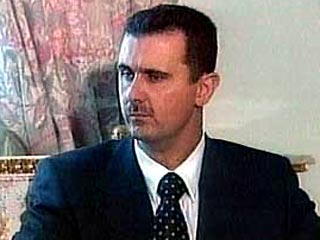
Syrian President Bashar Assad was elected head of state for a second term. As the Minister of Internal Affairs for the Bass, Abdel Majid, curled today in Damascus, at 97.62% of voters voted for him on May 27 , ITAR-TASS reports.
11.19 million Syrians participated in the vote, or almost 96% of those who have the right to vote, announced on Tuesday the Minister of Internal Affairs of the country by Basam Abdel Majid. 19,653 people voted against Assad’s candidacy and another 253 thousand ballots were invalidated.
As noted by New Izvestia , a high turnout of voters for Syria is not news. In 1999, in the fourth, according to the non -zalternative elections, almost 100% of the Syrians voted for the then head of state - the father of the current president Havez Assad remained at his post for another seven years.
According to the Constitution, the term of powers of the president is 7 years. The candidacy of Assad as the only contender for the Higher State post was approved by the People’s Council (parliament) in early May. The term of the previous mandate of Assad, chosen in 2000, expires on July 17.
After the announcement of the results of the plebiscite, according to the procedure, the head of the Ministry of Internal Affairs will send them to the chairman of the parliament. Abdel Majid emphasized that the choice of the people was democratic. It should be noted that in the electoral ballot on the referendum in Syria, only one question was included - whether you trust the Office of the country Bashar Assad for another seven years or not.
Recall that the father of the current president of Syria suddenly died in 2000, and in order to ensure the continuity of power in the country, the Syrian parliament in an emergency chose the new head of state the son of the late president - Bashar al -Assad.
The Assad dynasty has ruled Syria for 37 years. The father of the current president Hafez Assad, who passed military training in the USSR, was among the conspirators in 1963, who overthrew the Syrian leadership of the then. In the new government, Assad received a portfolio of the Minister of Defense. But in this post, he stayed only until 1970, when he already made a palace coup, first taking the position of prime minister, and a year later-the presidential chair.
Bashar Assad heads the ruling party of the Baas socialist revival, which came to power in the country in 1963 as a result of the coup. Since then, the opposition parties have been banned, and the figures of the Democratic camp were sent to jail, which caused the fire of criticism from Washington and the European Union. The most severe sentence to the opposition during the reign of Bashar al -Assad was issued by Kamal Labwani, who was sentenced to 12 years in prison on suspicion of relations with the United States.
In Syria, the so-called political stability, based on repressive methods, was established during the years of the decades of the Assad Sr.. His son Bashar, who received a higher medical education in London, turned out to be a more democratic ruler than his father. Although Assad Jr. did not dare to change political changes, he still headed for economic reforms, and many Syria citizens already note a significant increase in living standards in the country.
The coming to power of Bashar al -Assad, a refined ophthalmologist, was perceived as hope for a liberal turn after an iron reign for three decades of his father, Hafuz Assad. However, a short period of freedom of opinion, known as the Damia spring, ended with repression and arrest of 10 oppositionists in 2001. The last years of Assad’s reign have been marked by attempts to resume relations with the United States, which introduced economic sanctions against Damascus, accusing him of destabilizing the situation in Iraq and Lebanon.