
Translated material
At a summit in Germany, Blair decided to force Putin to discuss the extradction of meadow
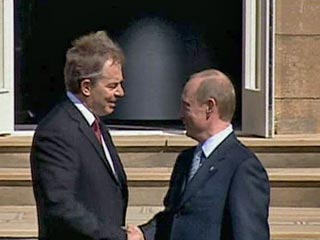
British Prime Minister Tony Blair during a meeting with Russian President Vladimir Putin as part of the Eight summit in Germany intends to raise a question about the extradition of Russian businessman Andrei Lugovoi. The British authorities, as you know, suspect a meadow of poisoning in London of the ex-officer of the FSB Alexander Litvinenko.
“We will have to talk about this,” Blair said in an interview with the Air Force on the eve of the Eight summit on Wednesday. Blair said he considers it necessary to solve this problem.
“We know what arguments here are Russians. But we cannot allow someone to kill someone in Britain in this way (as Litvinenko was killed), and that nothing followed,” Blair said.
- Foreign Minister of the Russian Federation: Britain politicizes the "Lugovoi case"
- Ambassador of the Russian Federation to Britain about "megaphone diplomacy" in the "Litvinenko case"
- Blair "openly talk" with Putin about the relationship of Moscow and the EU
Alexander Litvinenko, a former officer of the FSB of the Russian Federation, who fled to the UK in 2000 and received a British passport in October 2006, died on November 23 last year in the hospital of the University College of London. After his death, the specialists of the British health protection agency claimed that they discovered a “significant” number of radioactive Polonium-210 radioactive element in the Litvinenko body. However, no official conclusion on the causes of death and the results of the autopsy did not make public, although more than six months passed after the death of Litvinenko.
According to the results of this investigation, the Royal Prosecutorial Service of Great Britain charged to the murder of the ex-commissioned officer of the FSB to Russian businessman Andrei Lugovoi.
Lugovoi rejected the prosecution and stated at a press conference in Moscow that Litvinenko and Boris Berezovsky were recruited by British intelligence . Lugovoi put forward three versions of the murder of Litvinenko - the special services of Great Britain, the mafia and Berezovsky.
The Deputy Minister of Internal Affairs of Russia Arkady Svylev stated on June 1 that Litvinenko came to Chechnya to eliminate witnesses of Berezovsky’s ties with international terrorist Shamil Basayev.
Ambassador of Russia to the UK about "megaphone diplomacy" in the "Litvinenko case"
Meanwhile, on Wednesday, the Russian Ambassador to the UK Yuri Fedotov, in an interview with the British newspaper Financial Times, said that the British authorities should stop politicizing the Litvinenko case and use Megaphone Diplomacy.
“In relation to the“ case of Litvinenko ”, we call on the British authorities to abandon the excessive politicization of this issue. It was a crime, and we are very regretted that some people could suffer from radioactive infection, and this crime should be investigated. And those who planned and carried out this crime should be brought to criminal liability,” the ambassador said.
According to Fedotov, British and Russian investigators supported and continue to maintain contact in order to search for ways to investigate this mysterious case.
“But instead, unfortunately, megaphone diplomacy was used through official statements, press conferences, and a request for extradition (meadow) was made at the very beginning in order to emphasize the political aspect of the case,” he said.
According to the ambassador, persons who demanded the extraction of the meadow, knowing that Russian legislation does not provide for such actions against citizens of the Russian Federation, or ignored the existing reality, or intended to turn the "Litvinenko case" into political.
Fedotov said that, according to him, in the next few weeks, the Russian Prosecutor General would give a response to a request from the British side of extradition.
Blair intends to "openly talk" with Putin about the relationship of Moscow with Europe
The Prime Minister of Great Britain intends to "openly talk" with the President of Russia about the relations of Moscow with Europe. According to Blair, the meeting of leaders of the G8 countries begins on Wednesday will be a good opportunity to "frankly talk about Russia, with Russia" on the sidelines of the summit.
“I don’t think that there is a danger of the beginning of a new Cold War. But it seems to me that if Russia wants the right relationship with Europe, America and so on, then it should be based on certain common values and principles,” Blair said. He noted that "over the past couple of years or so in Europe, people appeared in Europe who began to disturb the direction in which Russia is moving." In this regard, he said that "on the part of the Russians it would be very reasonable to dispel these fears."
According to Blair, difficult relations with the West do not meet the long -term interests of Russia.
Speaking about his attitude to the policy of the Russian leadership, the British Prime Minister said that he was understanding with such problems facing the Kremlin as the situation in Chechnya and extremism, RIA Novosti reports.
“But with regard to the issues of democracy and how Russia builds relations with the outside world, I think our position is extremely clear. I believe, it is very important, as I said that we frankly talk about this,” the head of the British cabinet noted.
Speaking about the acute issue for Russia about the deployment of elements of the American missile defense system (PRO) in Eastern Europe, Blair noted that "the Americans told Russians that they would share technology and that they would behave absolutely transparently in this matter."
Foreign Minister of the Russian Federation: Britain politicizes the Lugovoy case "
Russian Foreign Minister Sergei Lavrov believes that in London they are trying to politicize the investigation of the Lugovoy case.
“It gives it a little with politicization,” he said on Wednesday at a press conference following negotiations with his Serbian colleague Vuku Eremich.
Responding to the request of Interfax to comment on the statement of the US State Department that Russia should more actively cooperate with Britain in this case, the Russian Foreign Minister emphasized that Russia has "actively and conscientiously collaborated with the British side."
So, according to him, a delegation of the British prosecutors was adopted in Moscow as soon as possible, but there was no response to such a step by London.
Lavrov also added that Russia learned about accusations against Andrei Lugovoy from public statements. “The documents themselves came to us only a few days later,” Lavrov noted.