
Translated material
In the Persian Gulf, the largest hurricane "Gonu" in history paralyzed oil exports
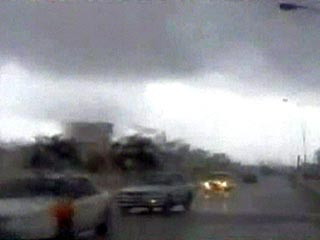
The largest hurricane "Gona" in history, raging in the Persian Gulf, paralyzed oil exports. In the victim more than other countries, ten thousand people were evacuated, as well as a large port of Sohar, from which oil is exported. Now the storm has paralyzed the shipping in the Ormuzsky Strait, where the artery of the transportation of oil from the Persian Gulf is taking place. In this regard, experts predict a further increase in oil prices.
The pouring rains forced to evacuate 11 thousand workers and transfer the oil refinery and petrochemical plants of Sohar into emergency operation at reduced capacities. At the same time, the authorities consider the possibility of closing the production completely, according to the Associated Press with reference to the press secretary of the Oman port Dirk Yana de Vink.
The employee added that, among the other 60 thousand inhabitants of the coastal line, he is forced to leave his house, which is threatened by huge waves of increasing storm. “These people (residents of the coast) know the strength of the sea and do the right thing. Most of them leave or have already left,” added de Wink.
For his part, the Minister of Internal Affairs of Oman Saud Ben Ibrahim Albusaidi urged residents to leave their homes and look for salvation on hills.
The Oman Minister of Oil and Gas Naser Ben Hamis Al-Yamy said that the excitement at sea does not allow tankers to transport oil to consumers and therefore exports were stopped. But production in this country is not stopped in the country, with the exception of one small area, the minister added.
At the wind speed of 100 km/h, at noon of the medium of the de -energized, the capital of the country, the city of Muscat. Flows of floods are demonstrated on local television, as a result of which the streets of the city and its buildings were subjected to flooding. According to the Minister of Health Oman Ali Bin Ben Bin Muhammad, even rescue services are experiencing difficulties, trying to get to the injured areas.
“Even helicopters cannot fly, since piloting in such conditions is almost impossible,” the minister explained. In the neighboring city of El Emriyat, due to the caused by the flood of the Rasputer, it became impossible to drive along the main highway.
Flights at the City Airport of SIIB are canceled, the official of Hamad Ben Ali El Abri confirmed. All planes that were supposed to land in the Muscat are redirected to other airports.
In the Fujira port, belonging to the United Arab Emirates located to the northeast and third largest, all works are also stopped. The courts are allowed only to drop anchor, but they cannot carry out loading and unloading work and refuel fuel, local officials said.
"The entire area is dangerous. The courts that were supposed to come (to the port) change the course (due to storm). But some still pass (Ormuz) Strait," said the representative of the shipping company Suresh Neur.
Natural cataclysm can make oil exports seriously in the region, confirms an analyst from the British Center for Global Energy Research in London Tekin Manucher. “About 17-21 million barrels of oil are transported from the Persian Gulf day. Even if the delay affects only some tankers, oil supplies will be reduced, which will lead to an increase in prices,” she said.
According to the police, the rampant elements have already led to the first victims: in the coastal city of Sur in the east of Oman, the drowned man was nailed to the banks of the wave. In addition, there are reports of residents who were isolated by surging water in their homes.
The maximum fixed wind speed near the hurricane "Gon", which is translated from the language of the inhabitants of the Maldives as a bag of palm leaves, amounted to more than 160 km/h. Witnesses report that in places the downpour led to "almost zero visibility."
The first "blow" of a storm on Tuesday was an American base located on the island of the Mazirs. The military announced a state of emergency, providing medical care and evacuating residents.
The hurricane has become the most powerful for the entire period of conducting climate statistics in the region, which has been conducted since 1945.