
Translated material
American scientists, "transplanted" by the genome bacteria, came close to the artificial creation of life
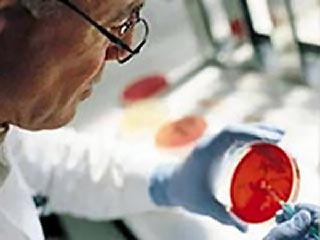
In the coming months, scientists will artificially create a new form of life. The key to this discovery was the successful experiment of American microbiologists to turn one bacteria into another, writes the British newspaper The Telegraph with reference to Science magazine.
From the publication it follows that scientists took a full set of genes (genome) of the bacterial cell and transplanted its bacteria of a closely related species. The cell hybrid received in the laboratory, which was obtained in this way, began to grow and share, in the end turning into a bacterium that has become a genetic donor (full text on the Inopressa website).
Researchers who performed the first operation on the “biological type transplantation” say that in the coming months they are going to do the same with an artificial genome made in the “from scratch” laboratory. If the experiment is successful, it will be possible to talk about "the origin of an artificial form of life on the planet Earth."
In the heads of scientists, thoughts about the creation of such varieties of bacteria are already roaming, and on their basis and new types of living organisms, which can be used as a “green” fuel instead of oil and coal or to process toxic waste, absorption of carbon dioxide and other greenhouse gases from the atmosphere.
At the same time, the creation of living cells based on artificial genomes consisting of laboratory production DNA requires the development of methods for moving genomes and manipulations with them.
A breakthrough in bacteriology was carried out by a group of scientists led by Craig Venter, whose genome was first deciphered entirely. Participates in the work of this scientific team and Nobel laureate Hamilton Smith. The base for the research was the Institute of J. Kreg Venter in Rockville (Maryland).
"We definitely hope over the next ten years - and possibly five - to create the first fuel of artificial organisms," Wenter said.
It should be noted that since the 1970s, scientists have mastered the transmission of genes responsible for the production of certain proteins between various living organisms. But this is the first time that the entire “complex of instructions” was transplanted, which has more than a million “letters” DNA, and thus the bacterium of one species has turned into a bacterium of another species.
Now scientists are trying to create microorganism with a minimum set of genes necessary to maintain life. In the future, adding several additional useful genes to its genome, they expect to get the body with fundamentally new abilities (like production of biofuel).
The Venter group recently submitted applications to patent the methods of creating artificial laboratory DNA genomes.
Moreover, the technique used by scientists is not yet reliable. In total, of the millions of bacteria, which scientists tried to transplant the genome, only one attempt on 150 thousand successfully ended.
Craig Venter himself figuratively described this process as “transforming a computer” Macintosh in a PC due to the installation of one new program ”and emphasized that in the use of cells (non -bacterial origin), the process will be more laborious, since they have enzymes (enzymes that accelerate certain cellular processes) that destroy the DNA of the invaders. Nevertheless, the Wender continues, to make a focus with the transformation of one bacterium into another, not using anything but pure DNA - "this is a huge step that opens up new horizons."
Other microbiologists agree with him. “This is an important and unexpected achievement,” said Robert Holt from the Scientific Center for the study of Michael Smith's genome in the Canadian city of Vancouver. “This is a necessary step towards creating an artificial life,” adds the microbiologist Fred Bettner from the University of Wisconsin. And Antoine Danshen from the Paris Pasteur Institute called the experiment "an unprecedented technical achievement."
However, according to the same Danshen, "there are not enough many control mechanisms." It was this, as Hamilton Smith admitted, that prevented the research group from understanding the mechanism by which the DNA introduced from the outside reprograms the "owner" cell.
“We are one step approached (creation) of artificial organisms,” said Marcus Schmidt from the organization for the international dialogue based in Vienna.
At the same time, the experiment that became unexpectedly successfully caused as much delight as anxiety. With their discovery, microbiologists woke old fears about how far a person can go in an effort to become like a demiurge creator. Perhaps once someone wants to use the technology received for bad purposes, the newspaper writes.
The scientific community is already conceived about the future consequences of this discovery. Marcus Schmidt said that the experiment would entail new discussions about safety problems associated with biological synthesis and its consequences for society.
And the author of the discovery Venter emphasized that the work was suspended for a certain time in order to make sure of their ethics. He recognized the non -reasonableness of fears that biological synthesis could pave the way to create new biological weapons models.